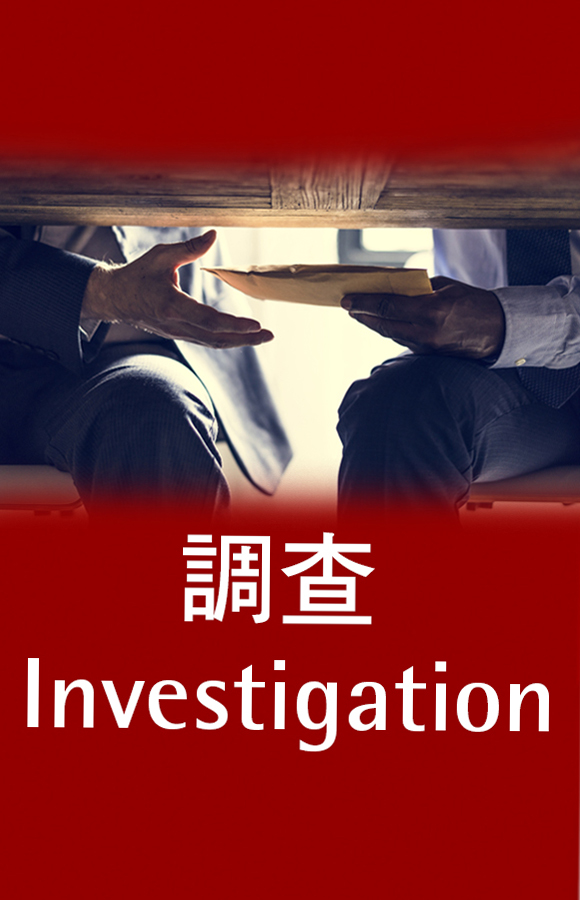








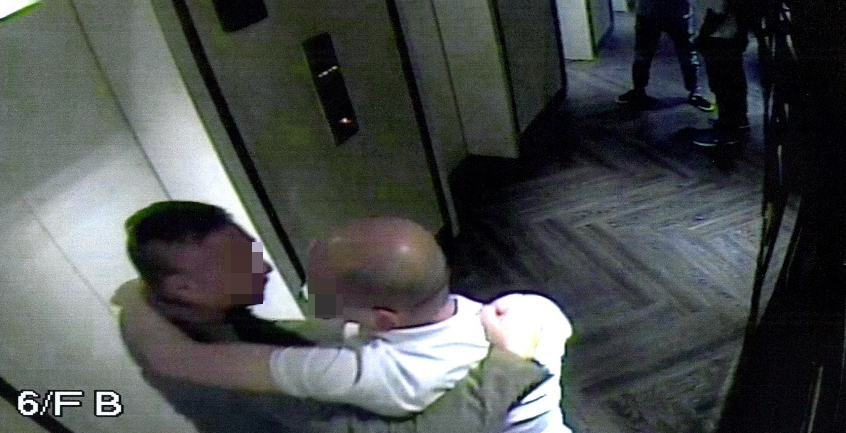




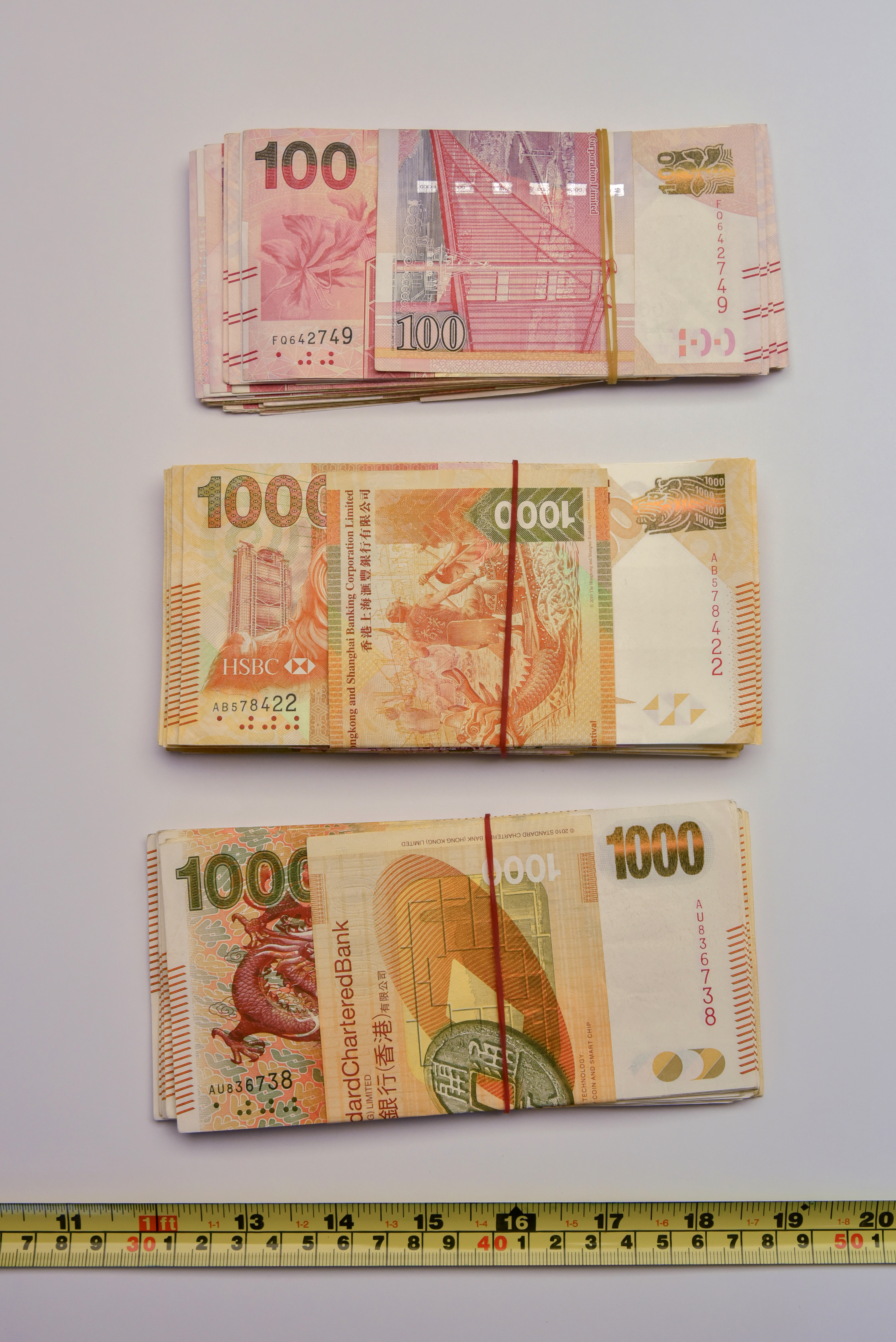
ICAC inquiries revealed that a Superintendent of Police (SP) posted to the Hong Kong Island Regional Headquarters had maintained corrupt dealings with two private clubs operators. During the ICAC investigation, the SP was seen to have met the two operators on 11 occasions and visited one of the private clubs twice. In two of the meetings, the SP disclosed to an operator police confidential information relating to the private clubs and gave advice for evading police inspections. An ICAC operation was triggered off after the last meeting between the SP and one of the operators inside the SP’s vehicle. Cash bribes of HK$351 000 in total were recovered from the vehicle, residence and office of the SP. Eventually, the SP and the two operators were convicted of corruption offences at the District Court and sentenced to jail terms ranging from 12 to 28 months.
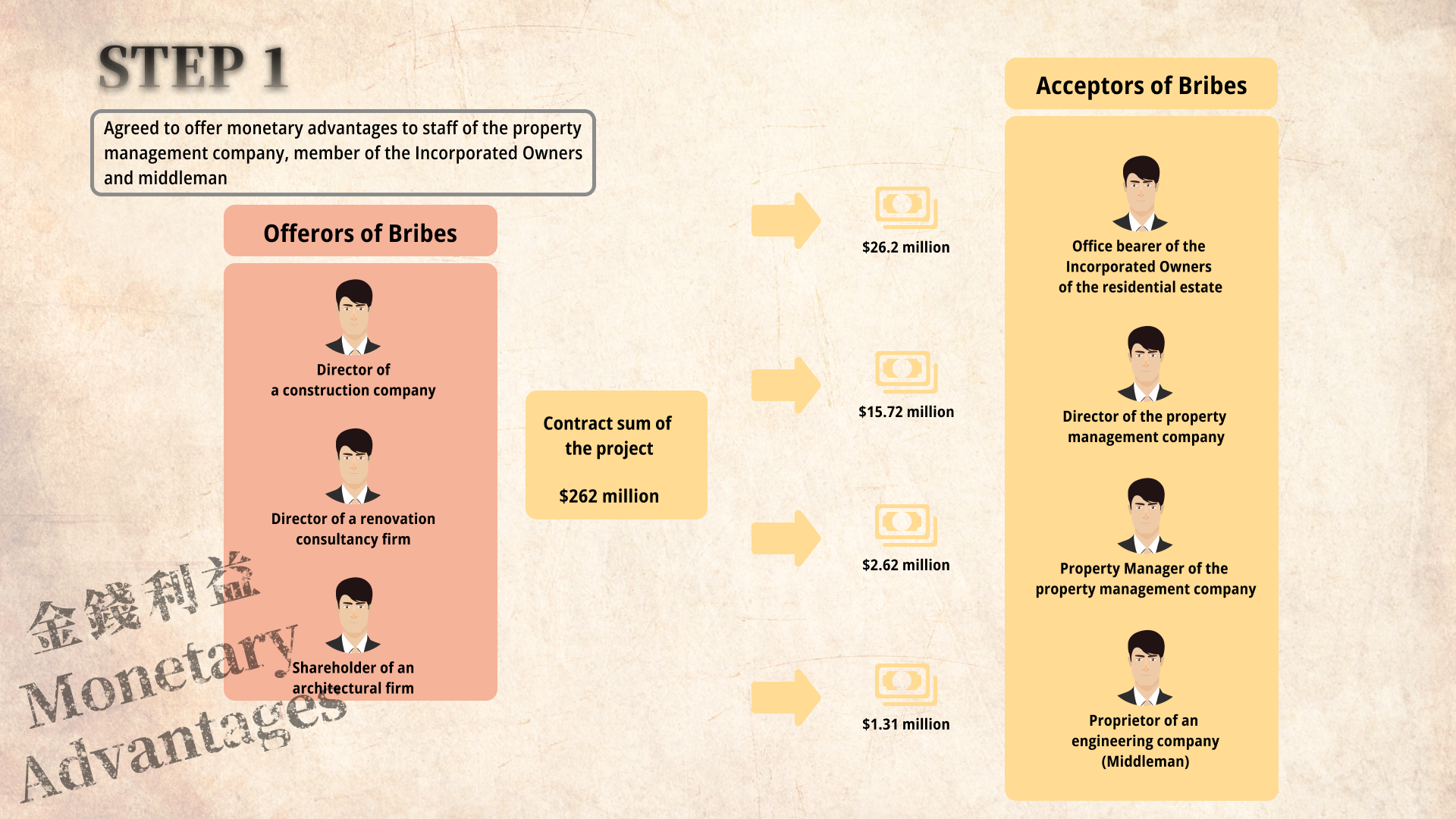
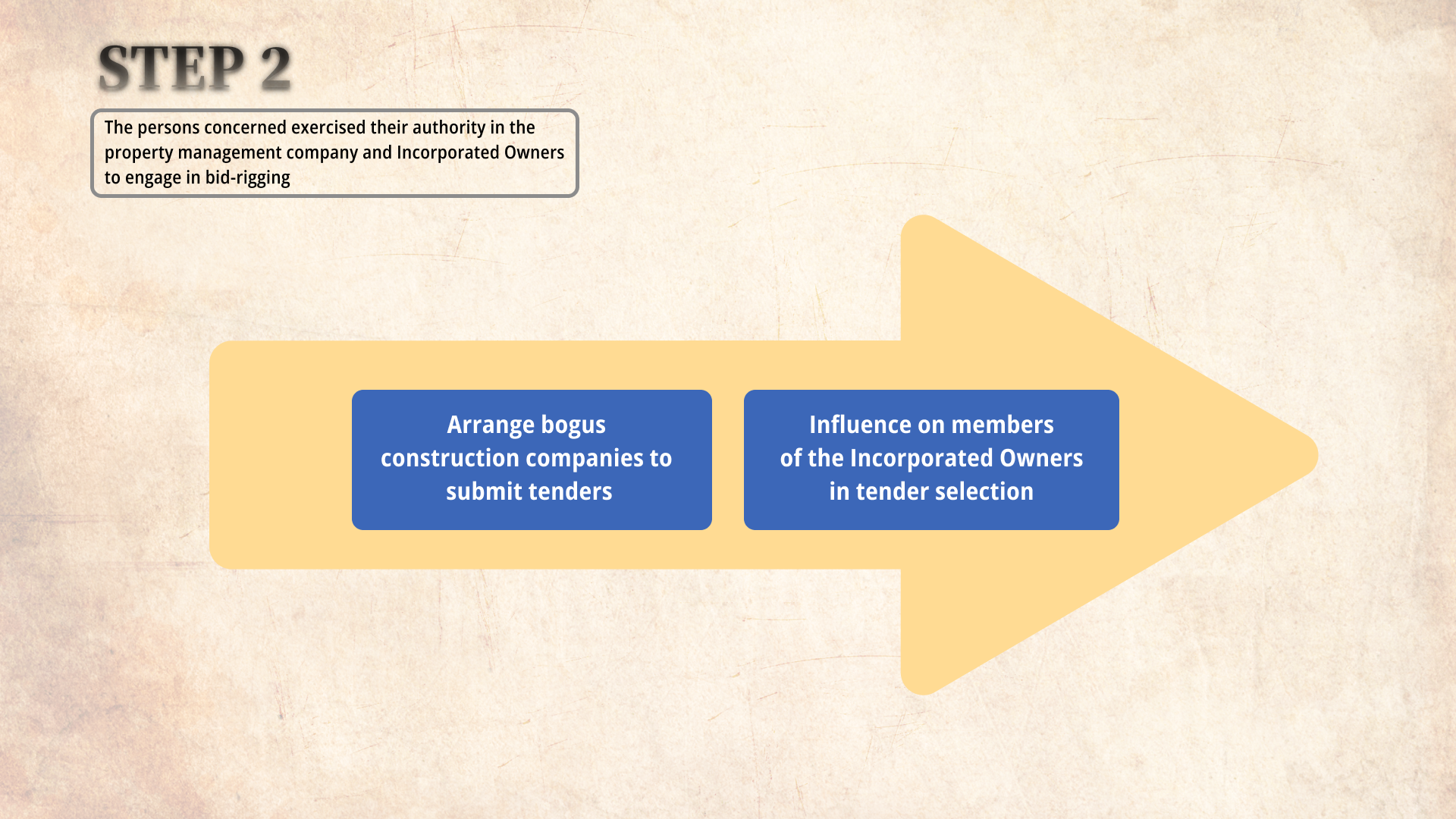
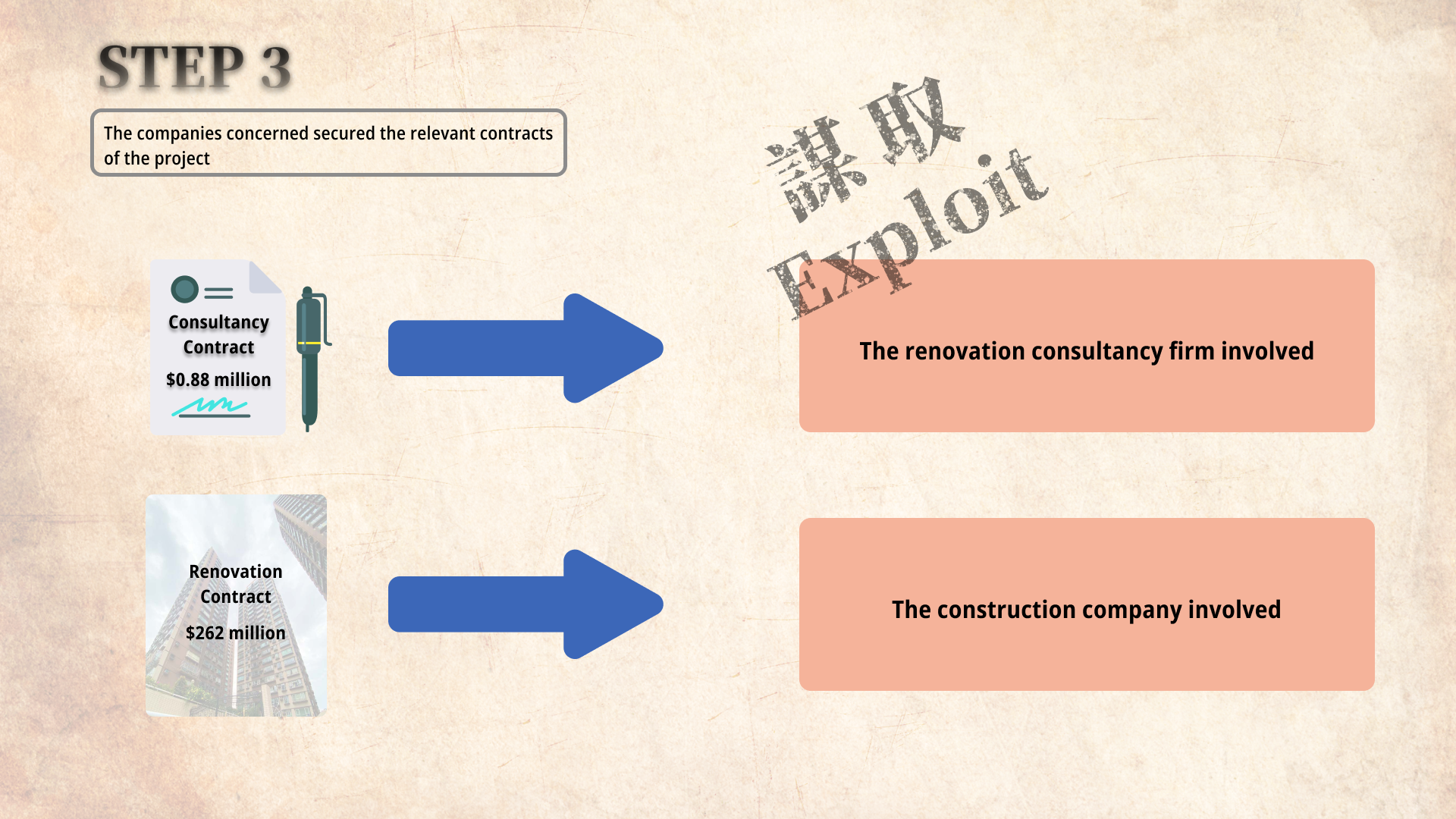
As Hong Kong’s buildings are ageing, the public has a strong demand for building maintenance works. Amid this trend, bribery was detected by the ICAC. In a case regarding a $262million-worth renovation contract, the total amount of bribes amounted to 17% of the contract sum. A member of the corrupt syndicate was subsequently sentenced to imprisonment and restitution of the bribes to the Incorporated Owners of the estate.
In a dinner meeting, the corrupt syndicate reached an agreement on the bribe amounts for perpetrating a 3-step bid-rigging corruption scheme.

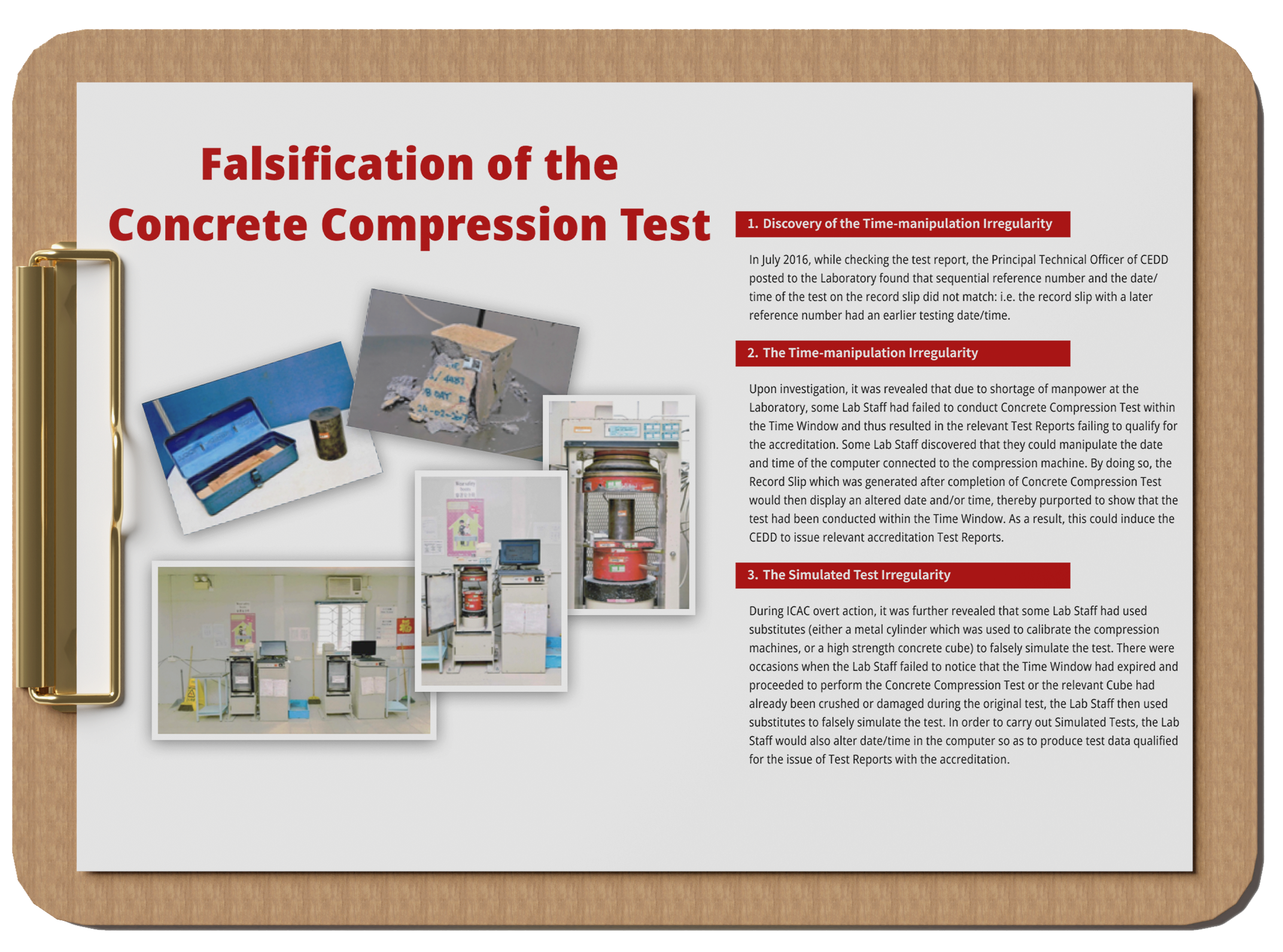
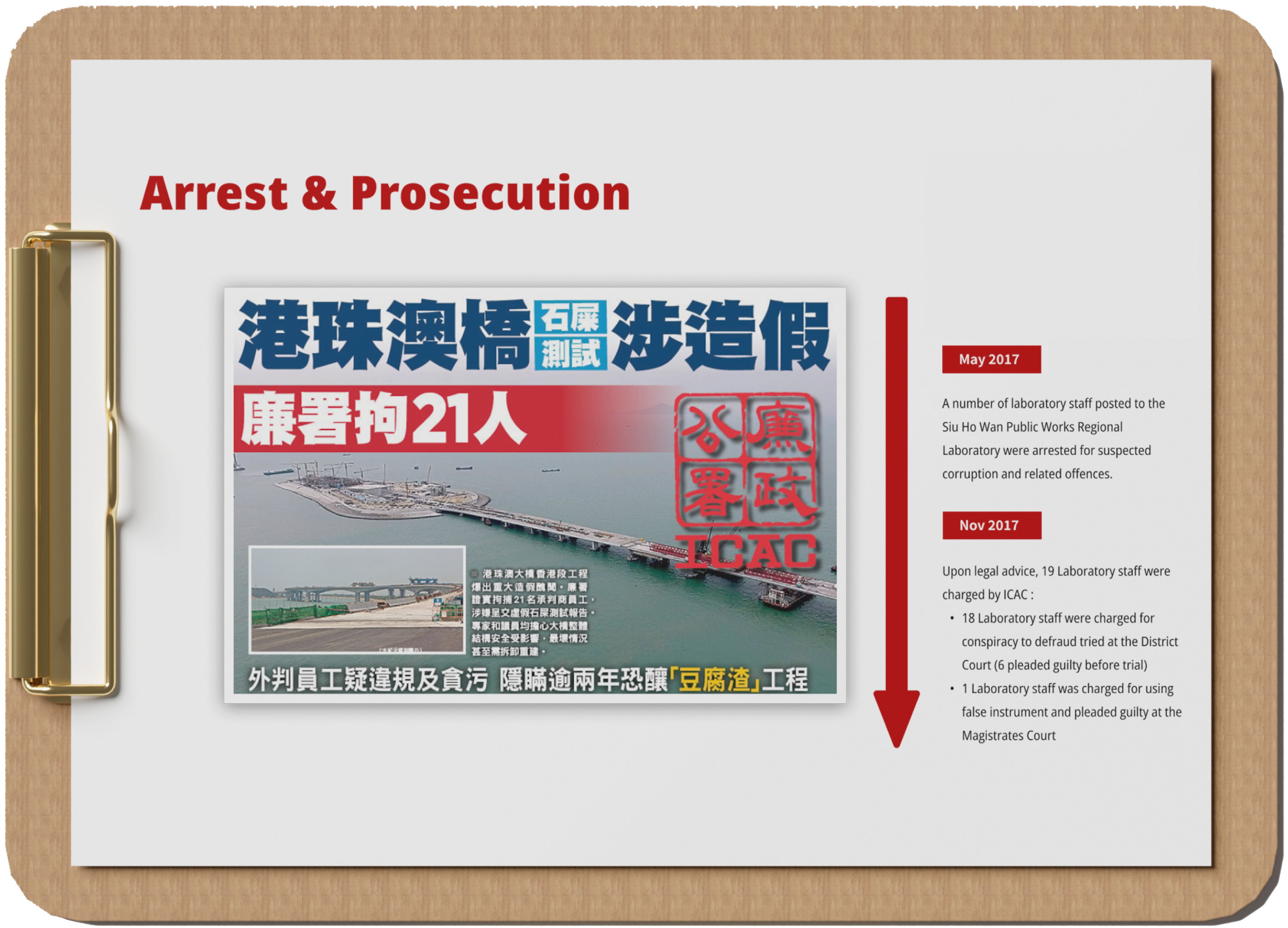
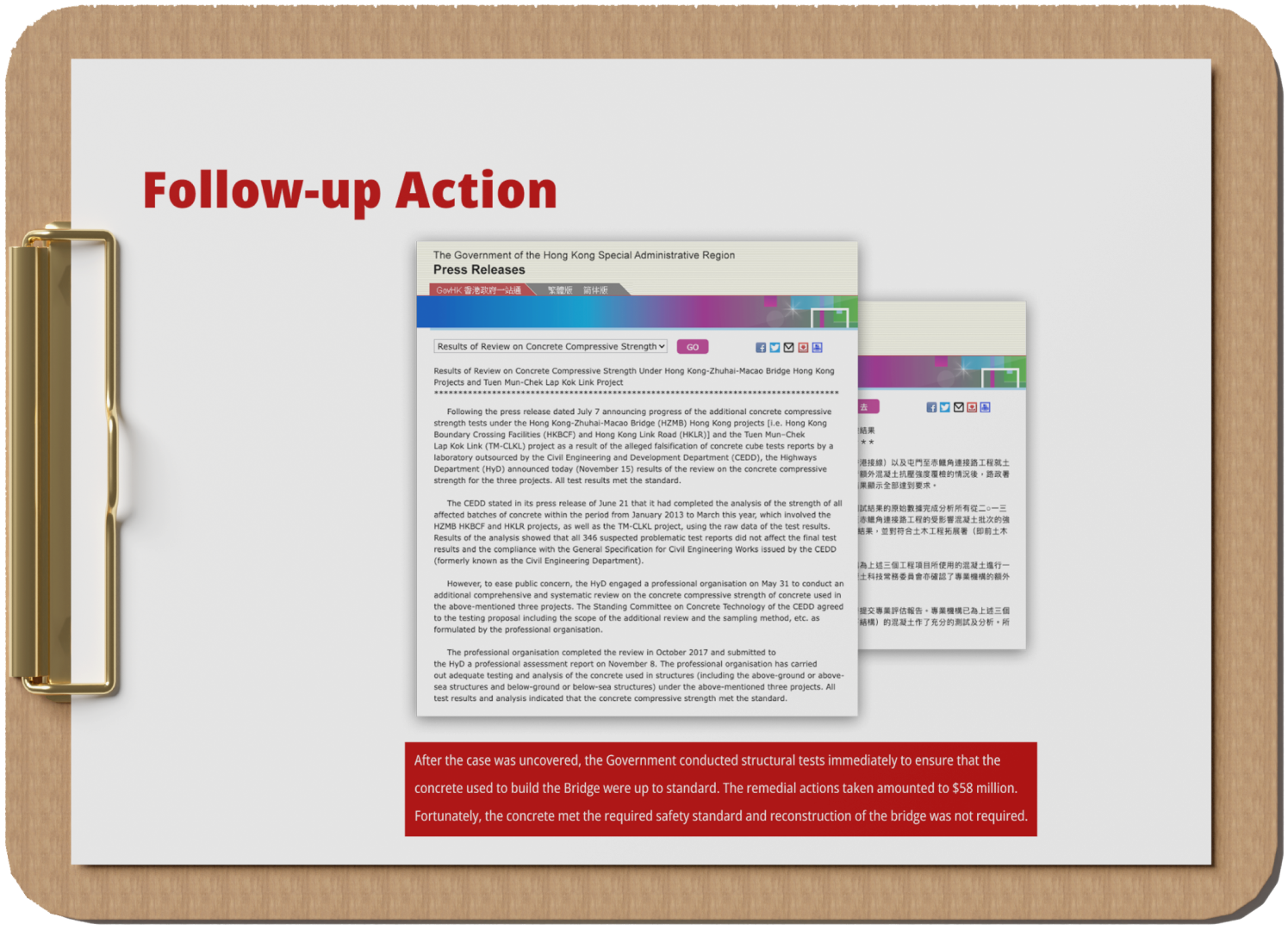
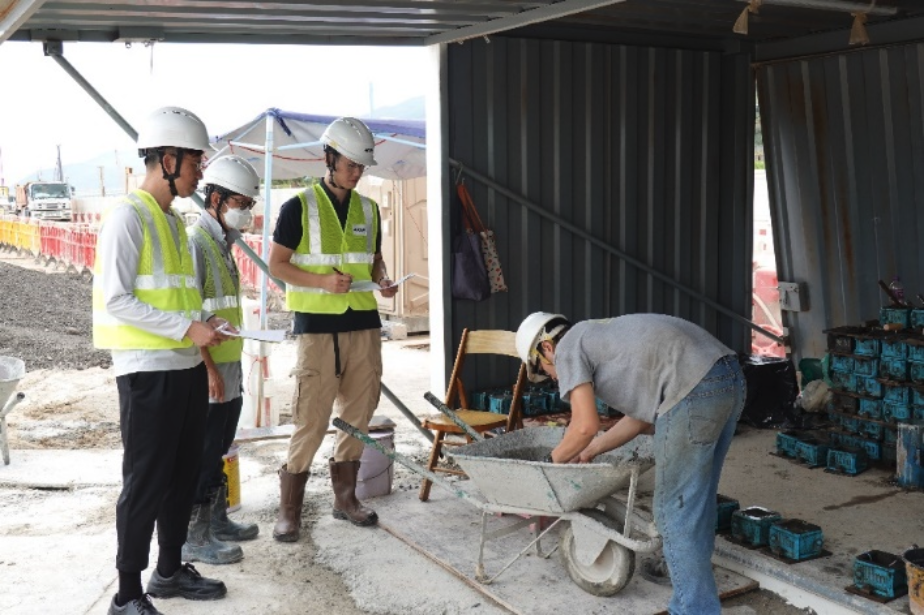
Concrete, the main building materials for the Hong Kong-Zhuhai-Macao Bridge Project, have to be tested by a consultancy engaged by the Civil Engineering and Development Department in advance.
In 2012, the Civil Engineering and Development Department (CEDD) established the Siu Ho Wan Public Works Regional Laboratory in order to meet the demand for construction materials compliance tests arising from the construction of Hong Kong-Zhuhai-Macao Bridge Project. In the same year, CEDD entered into a consultancy agreement with a construction consultancy company for managing and operating the said Laboratory. Pursuant to the agreement, the construction consultancy company was required to man, operate and manage the Laboratory. The construction consultancy company was fully responsible for the quality of the testing services, including the integrity, validity, accuracy and reliability of the test data and results.
During the construction of the Bridge, various laboratory staff of the consultancy were found to have altered the testing time in order to falsely show that the test comply with the testing requirements.
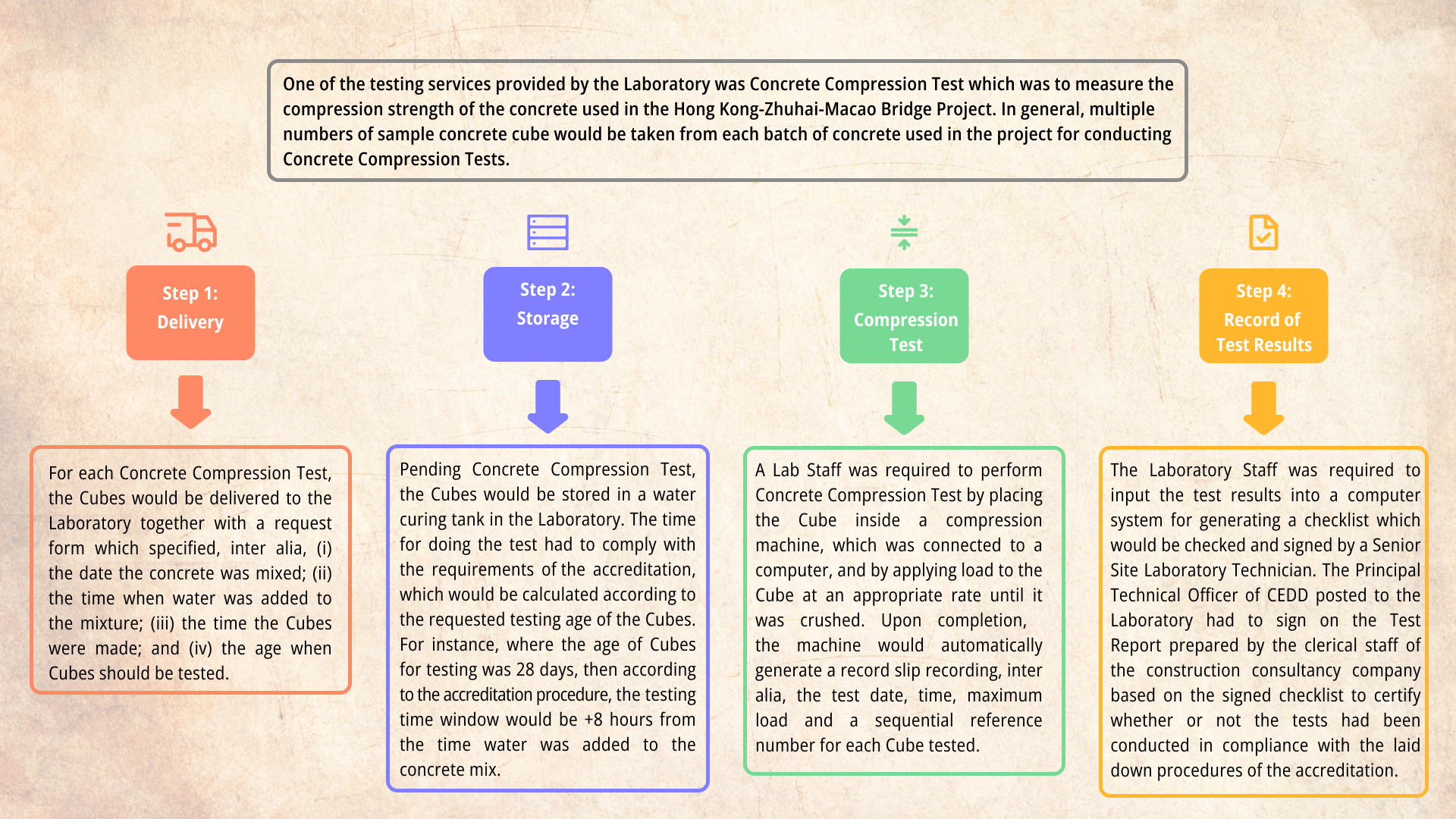
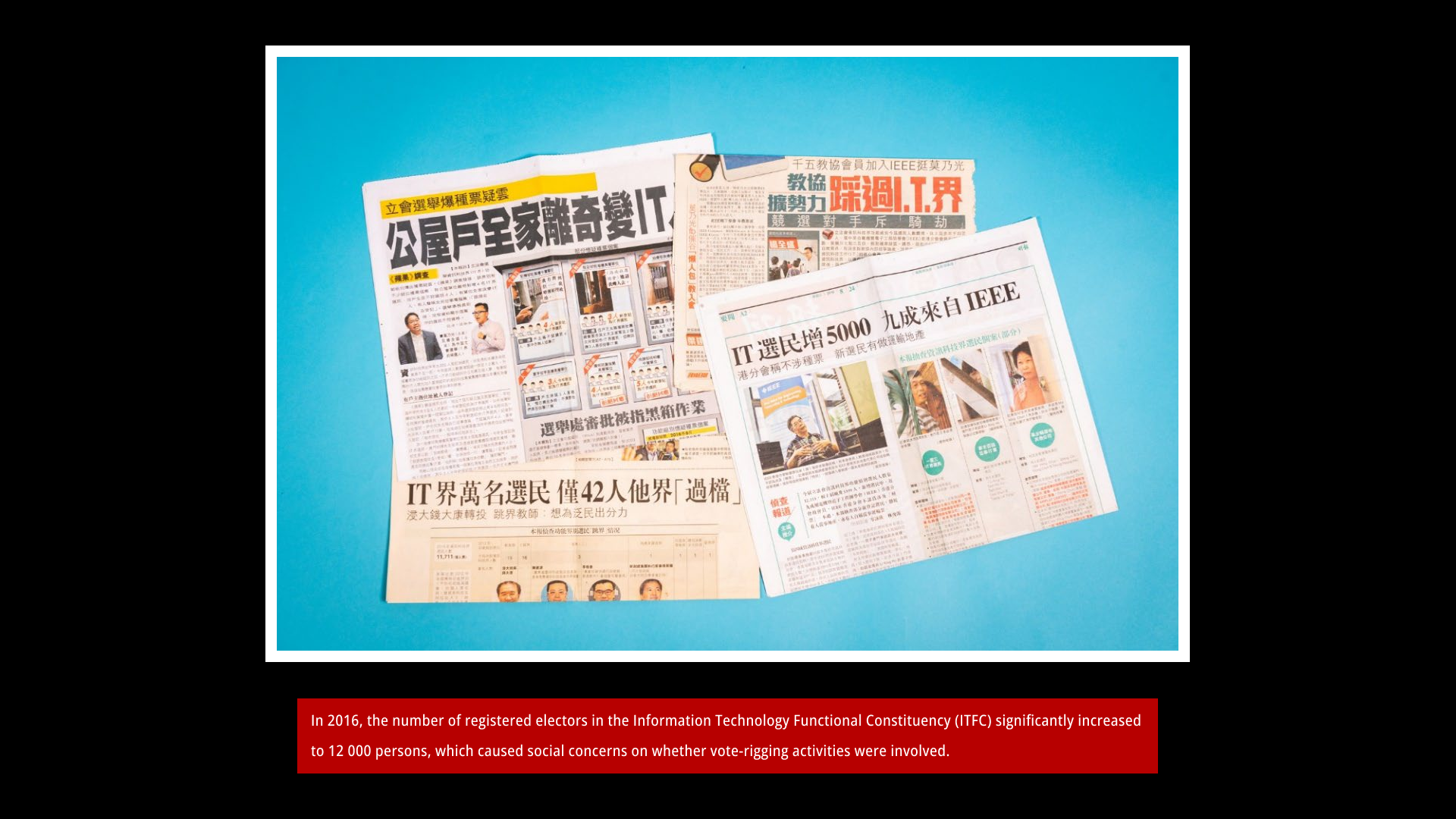
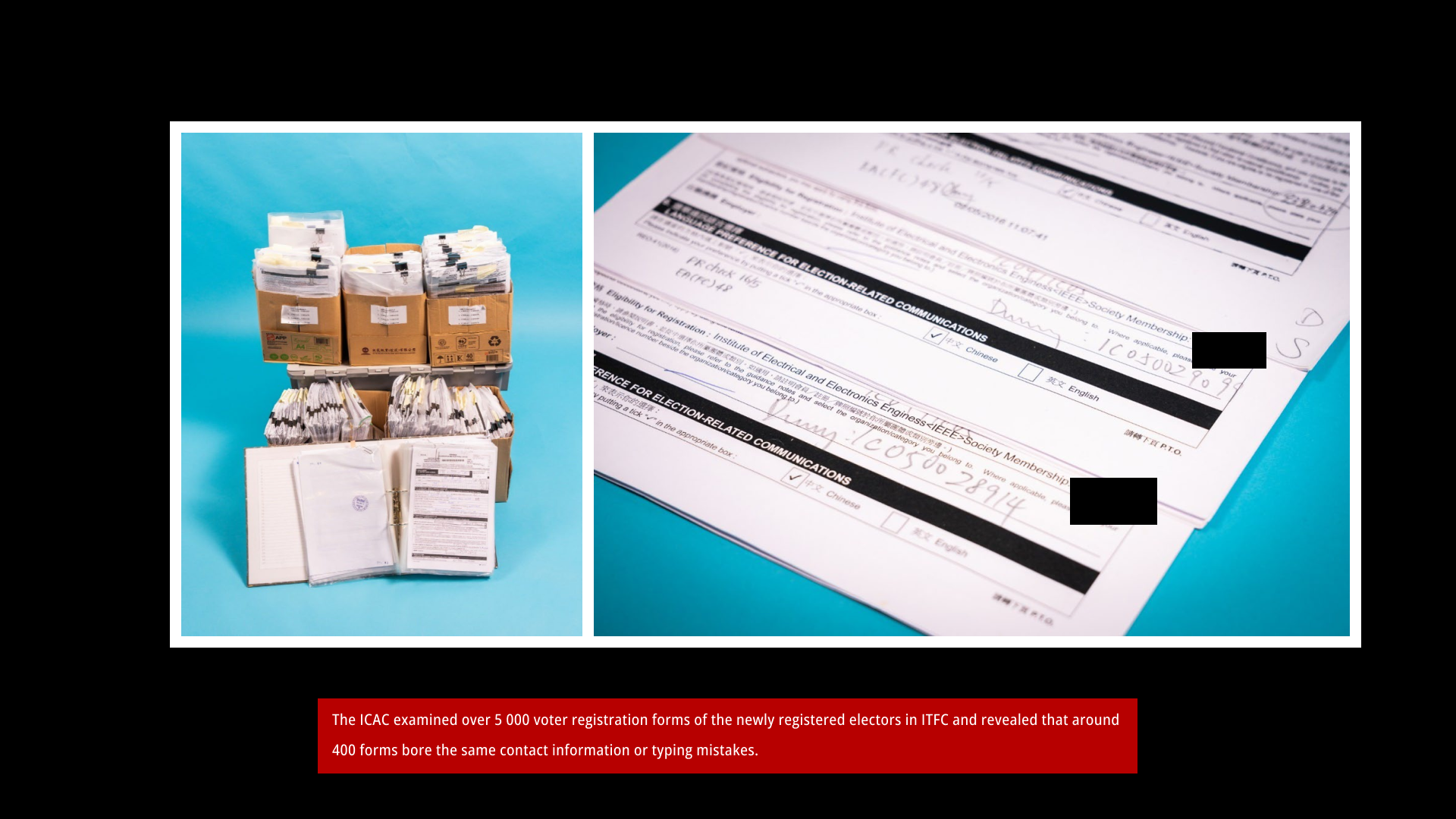
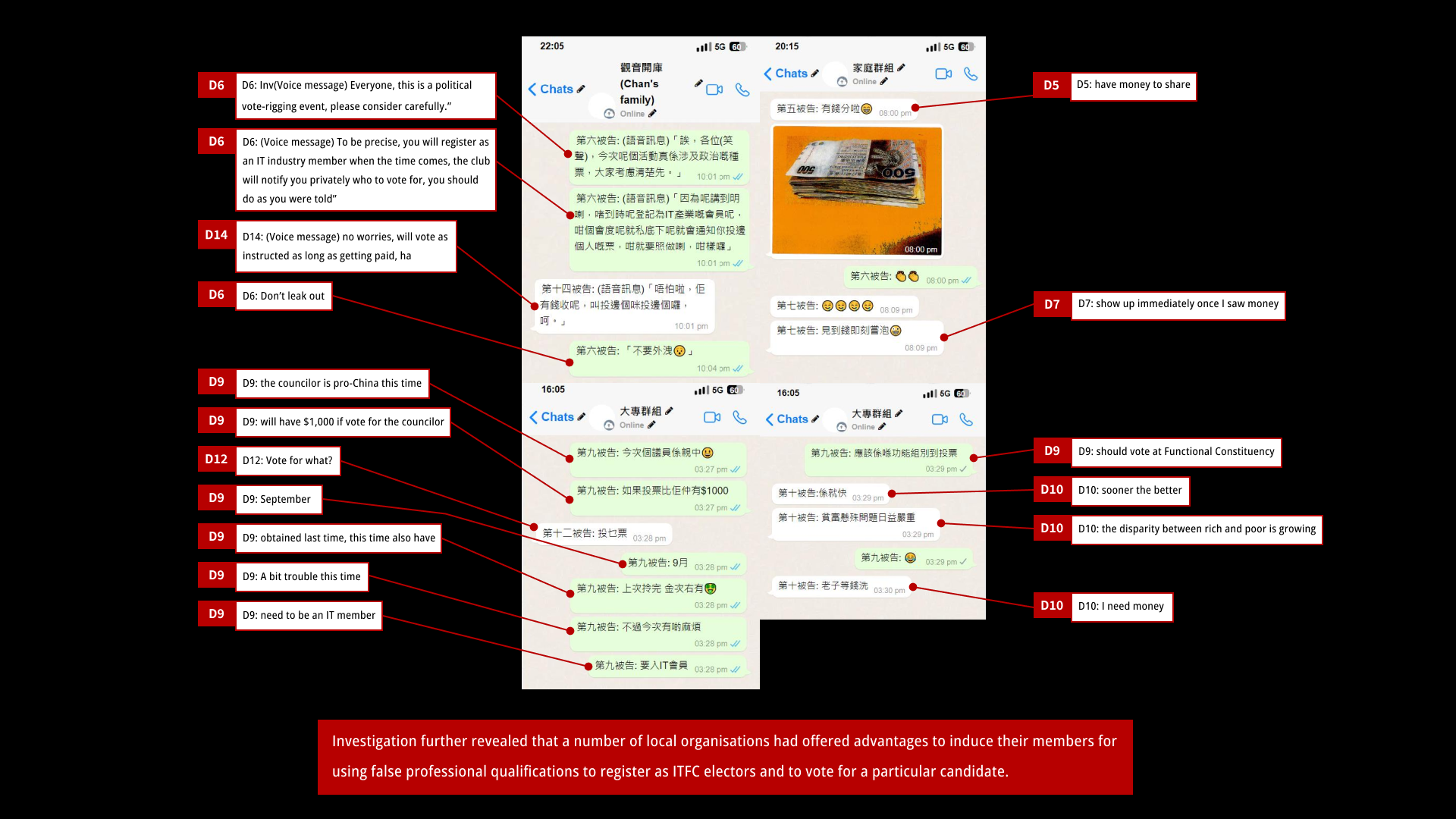
In 2016, the number of registered electors in the Information Technology Functional Constituency (ITFC) significantly increased to 12 000 persons, which caused social concerns on whether vote-rigging activities were involved. The ICAC examined over 5 000 voter registration forms of the newly registered electors in ITFC and revealed that around 400 forms bore the same contact information or typing mistakes. Investigation further revealed that a number of local organisations had offered advantages to induce their members for using false professional qualifications to register as ITFC electors and to vote for a particular candidate. Eventually, the ICAC arrested a total of 225 persons and 14 of them were convicted of the offences of vote bribery and conspiracy to defraud. After a review of sentence, the Court of Appeal increased the sentences of six defendants to jail terms up to 23 months. This is also a case in which the largest number of persons were arrested for vote bribery or vote-rigging since the establishment of the ICAC.
Brief Intro
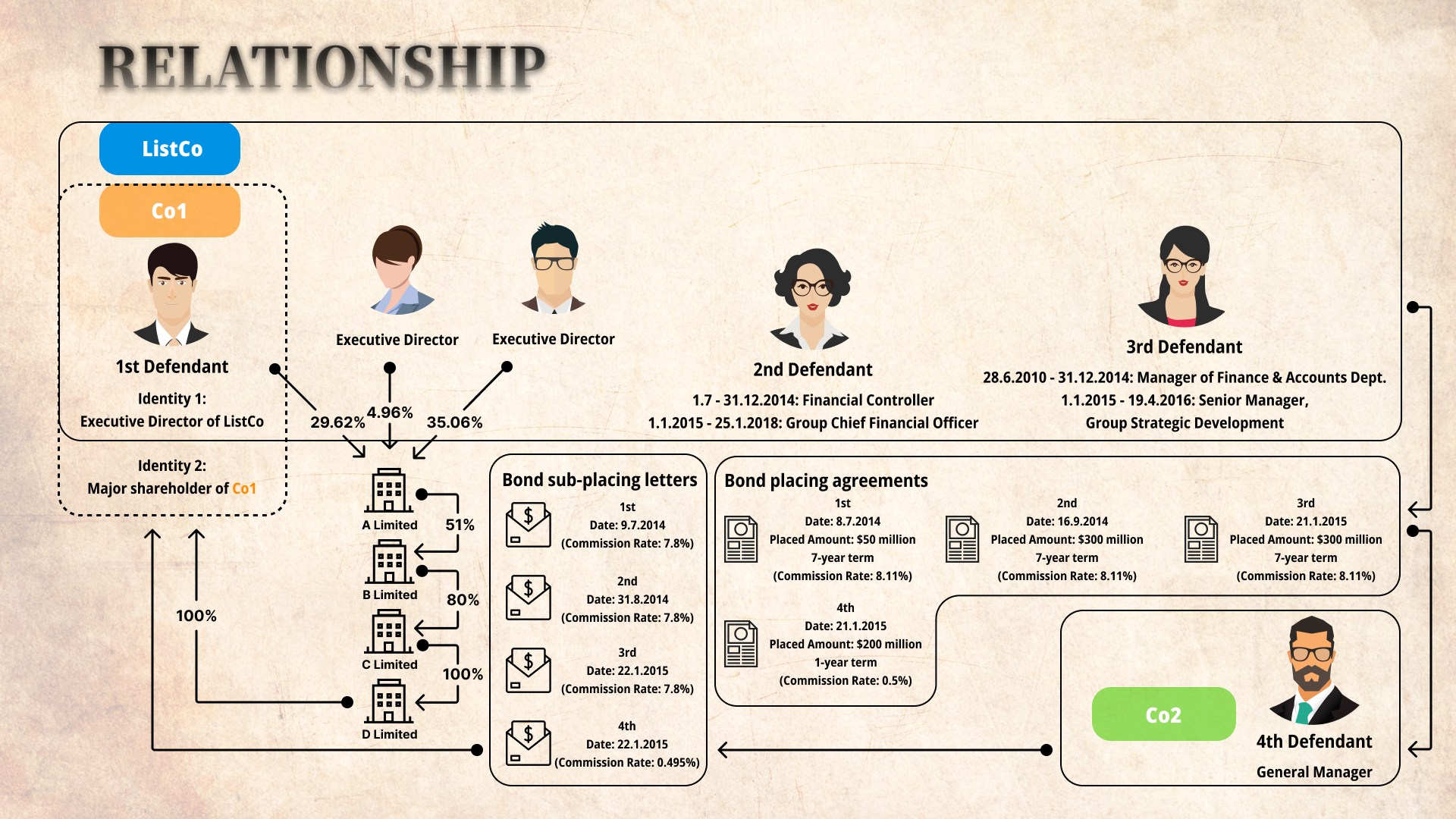
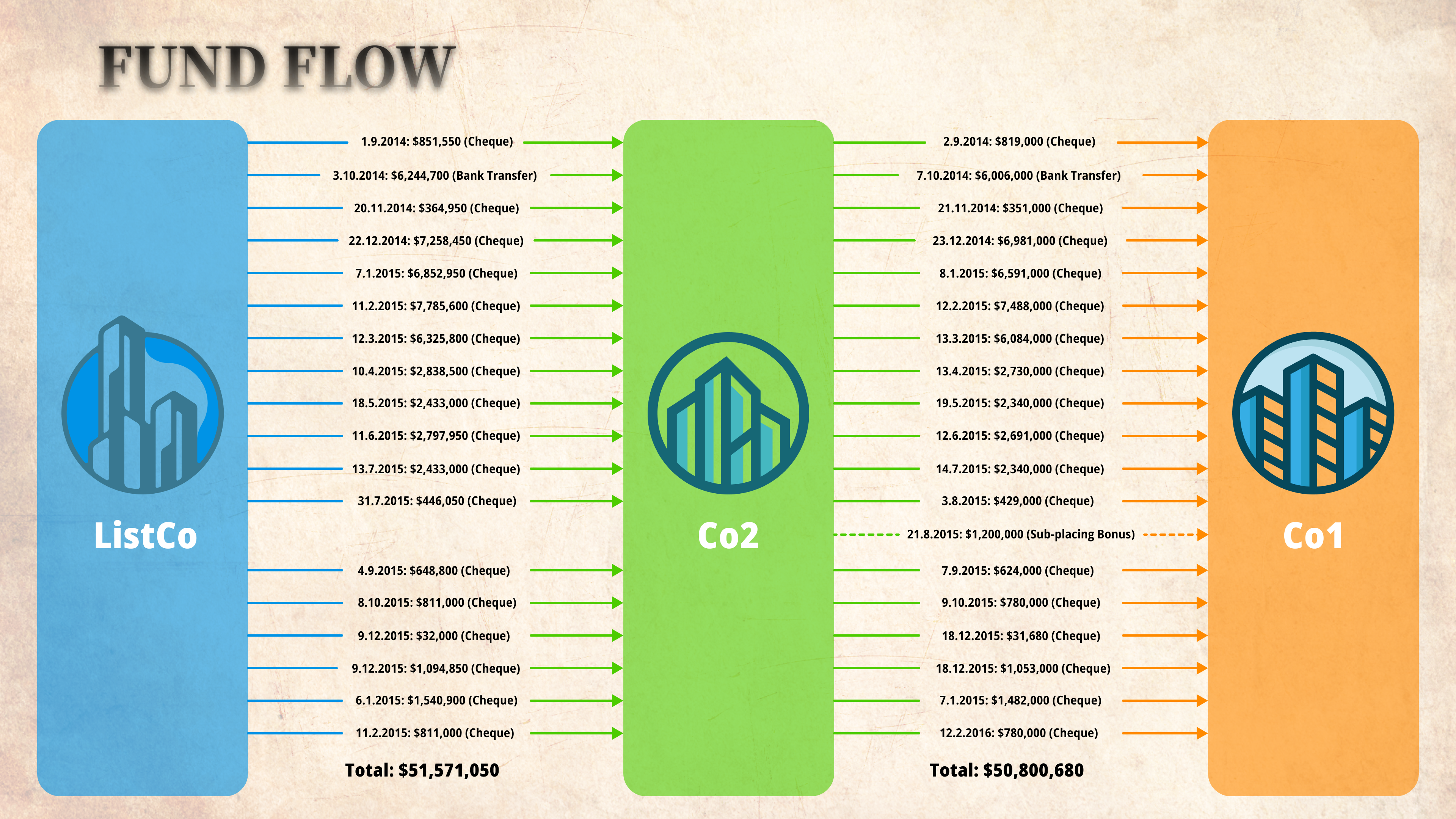
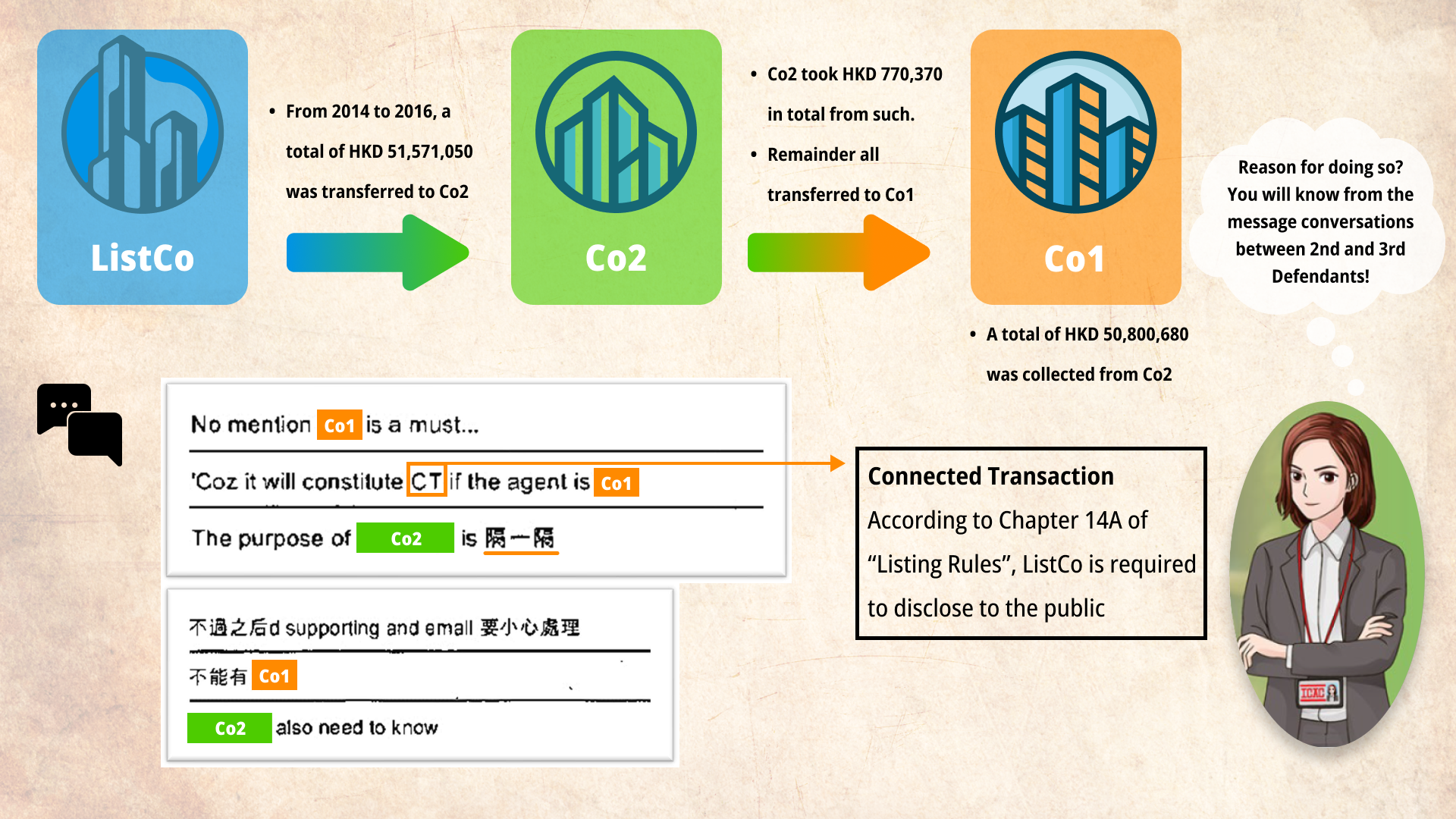
An Executive Director (ED) of a listed company (ListCo) held substantial shares of a company (Co1). Between 2014 and 2015, ListCo engaged another company (Co2) as placing agent of its four bond placements. The ED, two employees of ListCo and a General Manager of Co2 arranged to engage Co1 as the actual placing agent, but never disclosed such. The non-disclosure of the same deprived ListCo’s shareholders of right to vote against the sub-placements, and hindered Stock Exchange of Hong Kong’s enforcement of Listing Rules.
The four defendants were convicted of conspiracy to defraud, and sentenced to jail terms up to seven months.





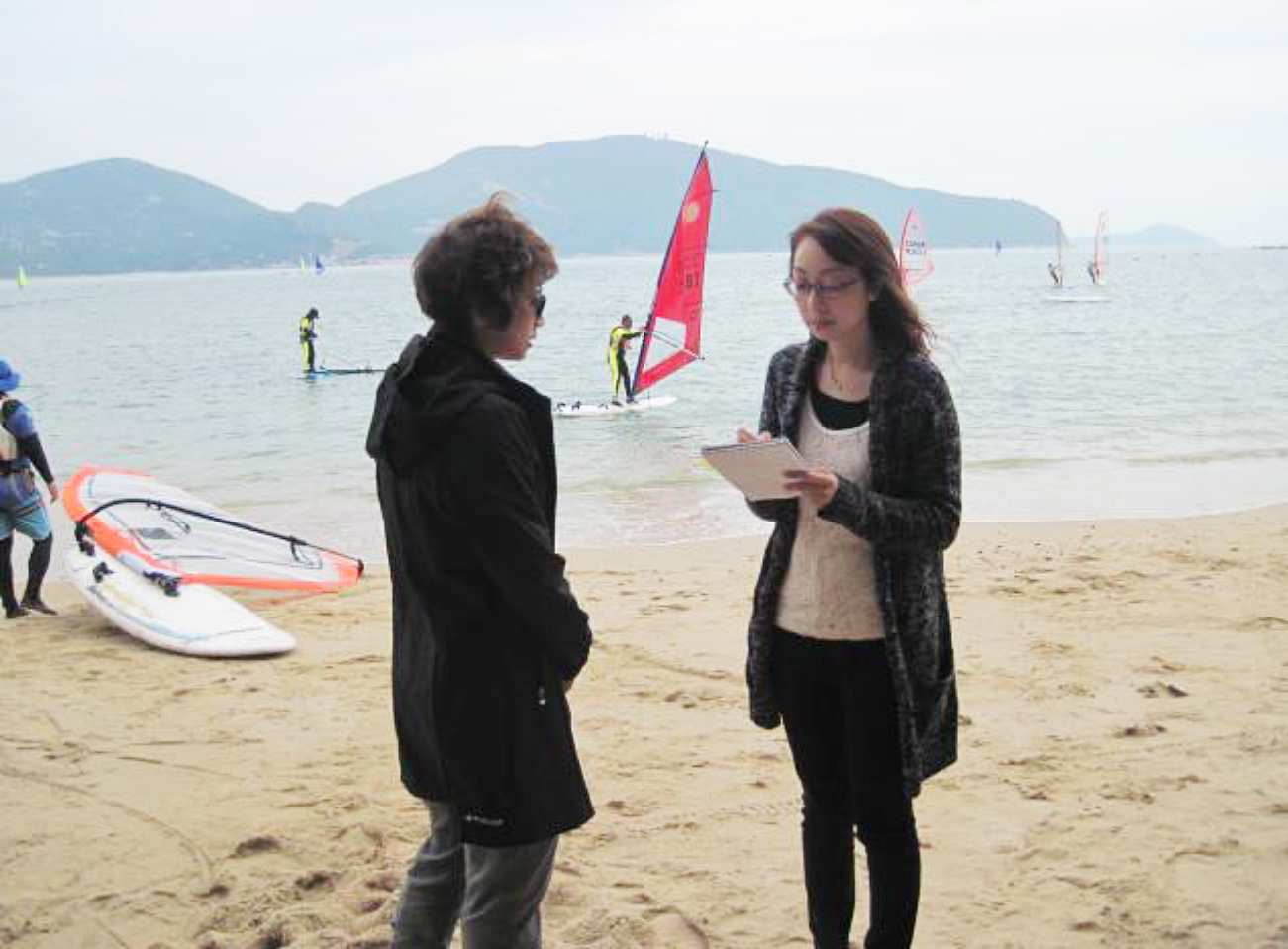

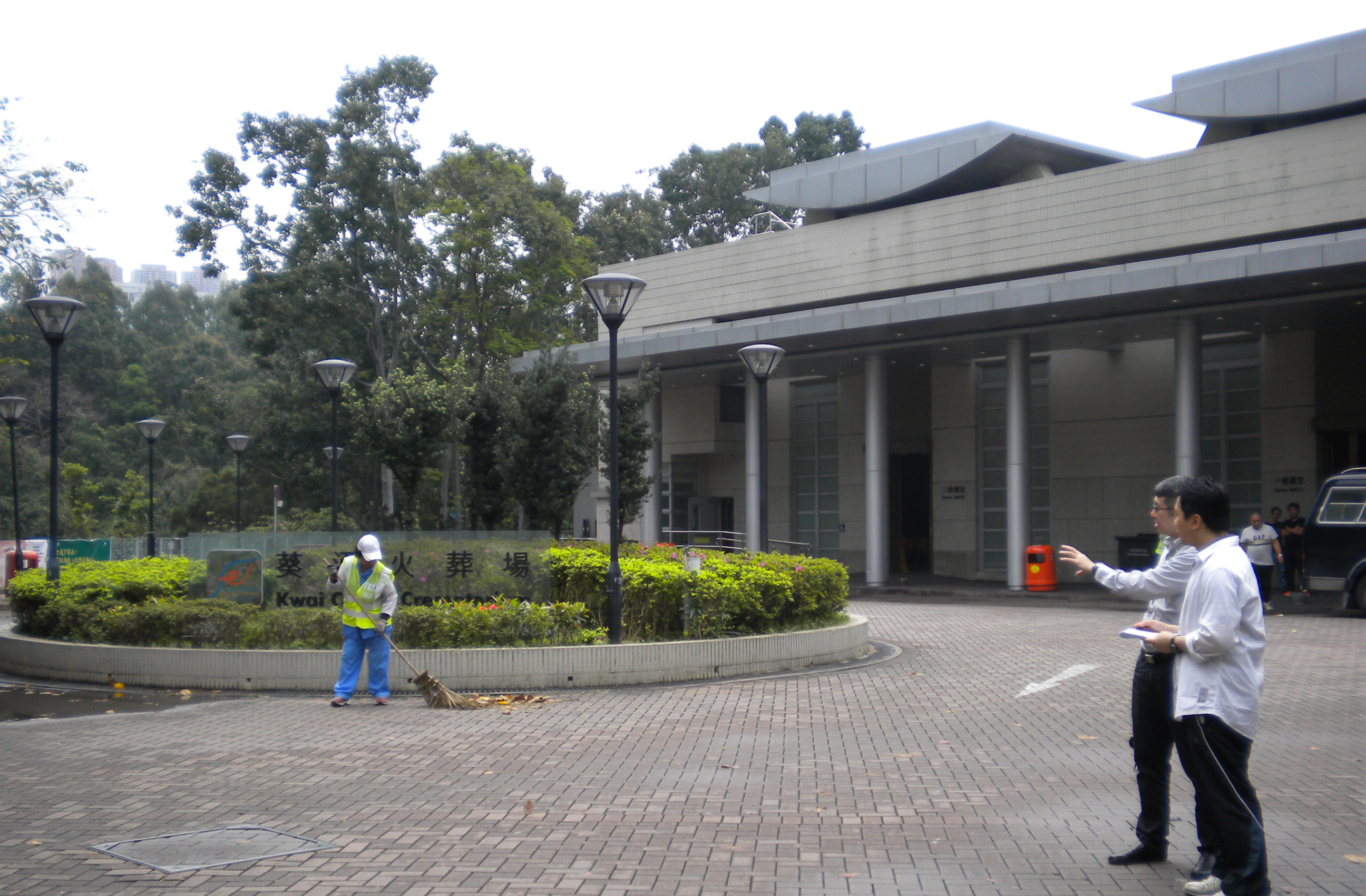



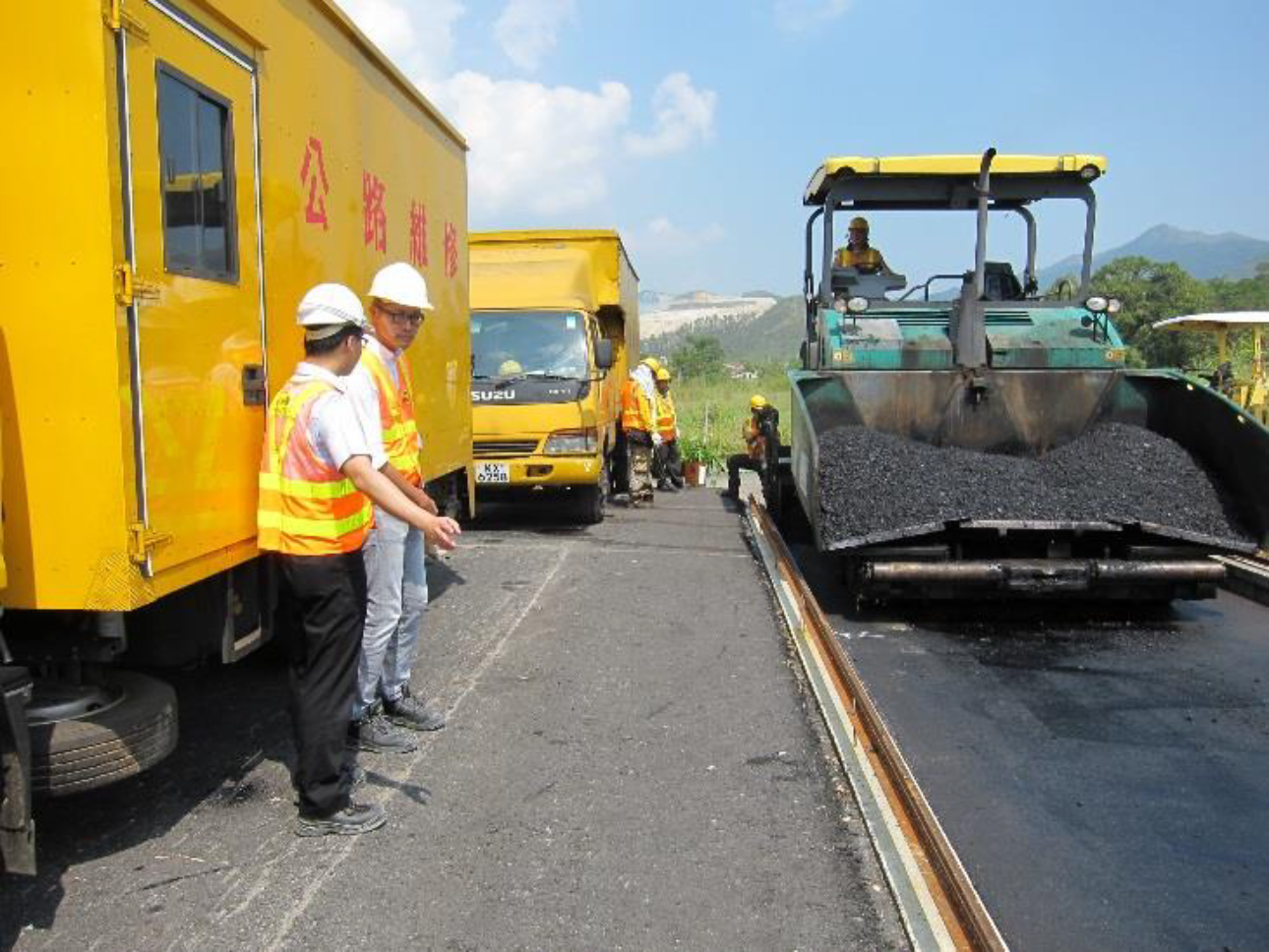
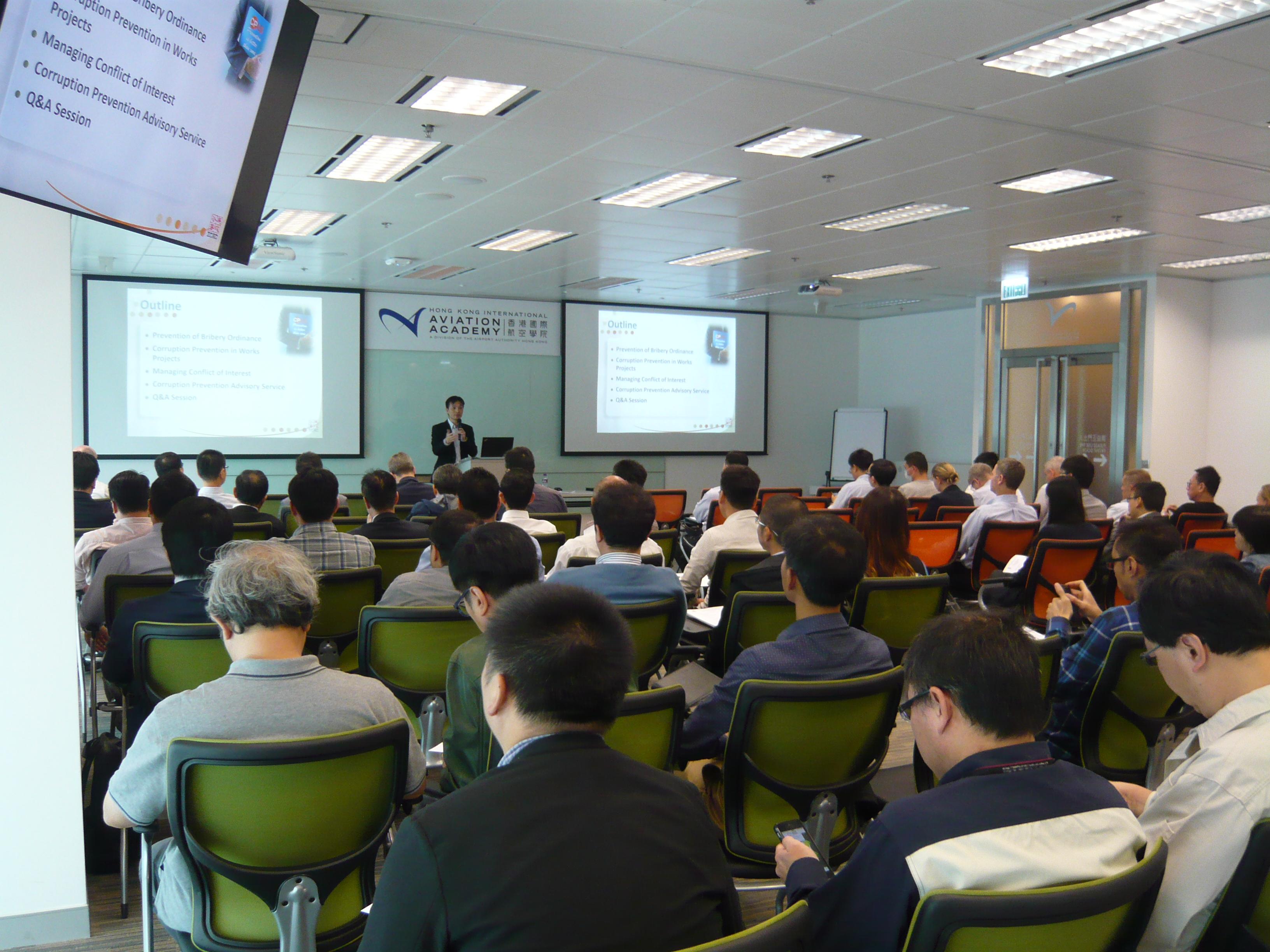








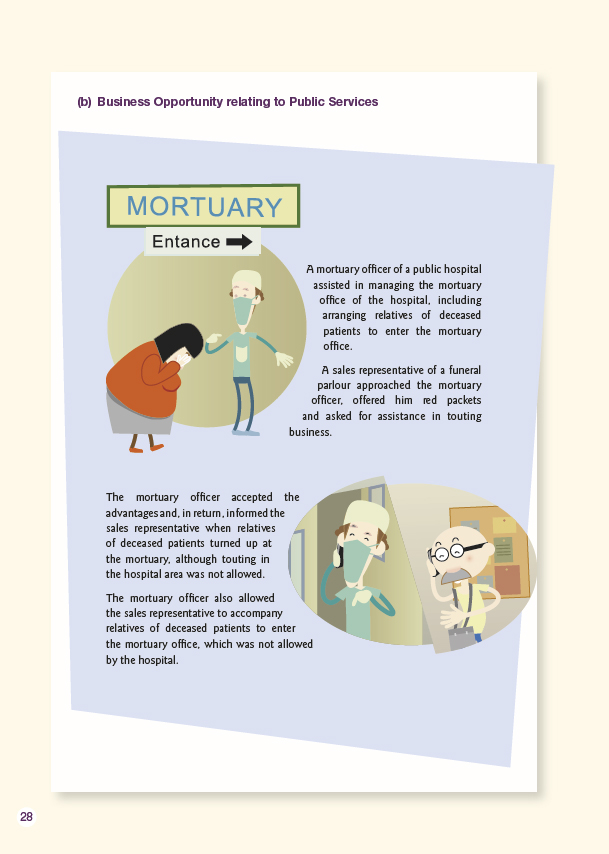



In 2015, CPD published the "Integrity and Corruption Prevention Guide on Managing Relationship with Public Servants" to help business operators' and their staff's understand the legal and integrity requirements when dealing with public servants.
This aims at protecting the former from committing bribery and preventing temptation for the latter.
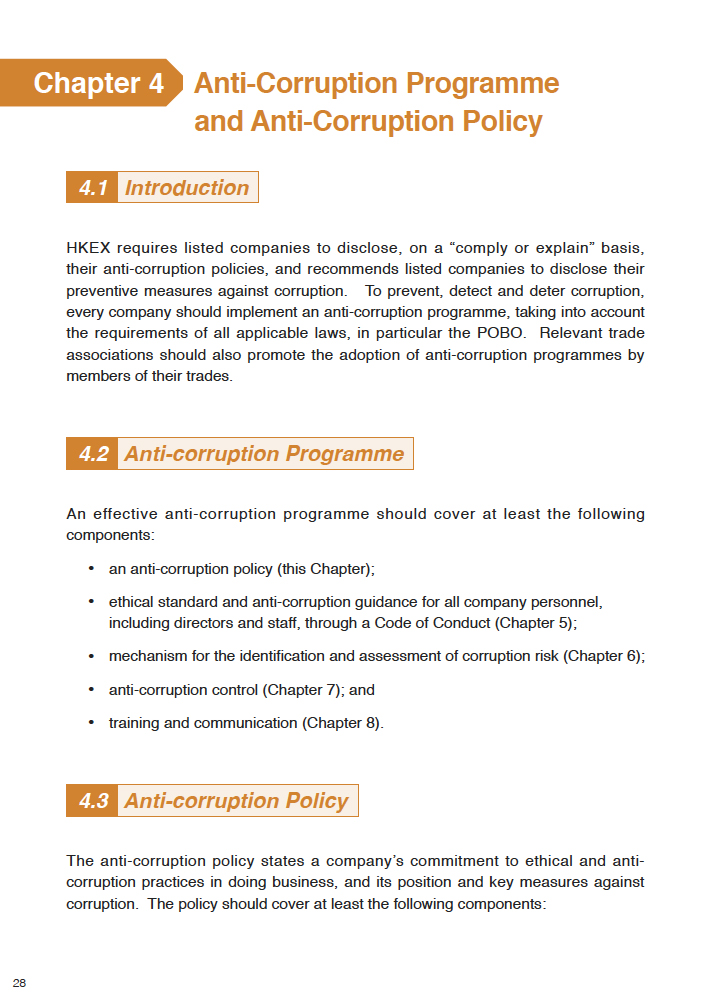


After continuous collaboration with the Hong Kong Exchanges and Clearing Limited, CPD is glad to see the enhancement of the Listing Rules to require listed companies to disclosure anti-corruption information in their Environmental Social and Governance reports starting 2016.
To assist listed companies to build up an effective anti-corruption management system, CPD published the “Anti-Corruption Programme – A Guide for Listed Companies” for their reference, at the same time offering tailored advisory service to them on request.
To help industry players build up and boost their immunity against corruption, CPD developed a corruption prevention “vaccine” – the Integrity Management System (IMS) – for “injection” into their management and operational systems. IMS consists of three key active ingredients: Integrity Policy, Integrity Training and Integrity Risk Management (IRM). In March 2021, the Development Bureau (DEVB) incorporated the first two components of IMS as a listing requirement for the “List of Approved Contractors for Public Works” and “List of Approved Suppliers of Materials and Specialist Contractors for Public Works”. The effect is that all contractors undertaking government construction projects will have to implement an Integrity Policy and arrange their senior management staff member to regularly attend Integrity Training. In April 2022, the Construction Industry Council (CIC) also added integrity management as one of the registration requirements for their registered contractors and subcontractors under the Registered Specialist Trade Contractors Scheme.
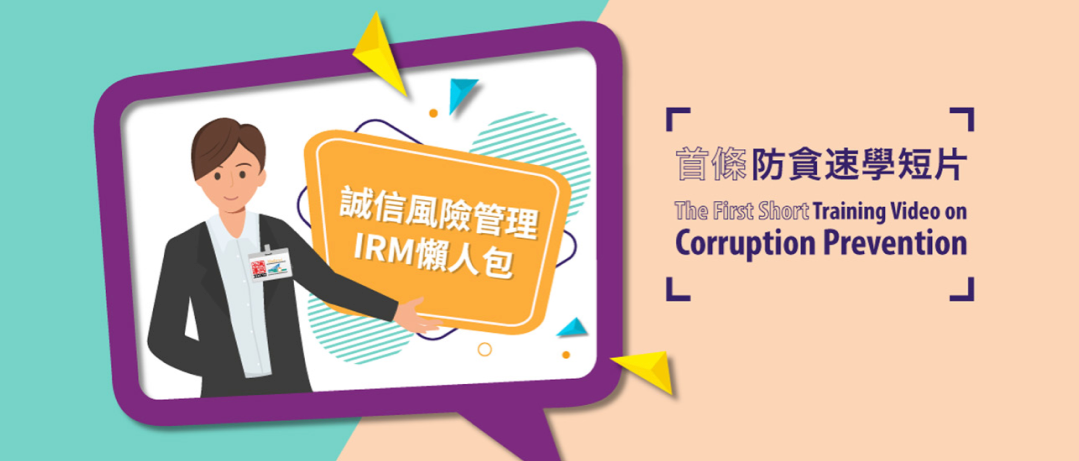
To extend IMS to all construction companies in the industry, in September 2021 the ICAC, the DEVB and the CIC jointly launched the “Integrity Charter” to promote voluntary adoption of IMS by construction companies. To assist companies to adopt the third component of IMS, i.e. IRM, CPD developed and issued a set of IRM guidelines and IRM toolkits, and produced a short training video on IRM in September 2022.
In December 2022, the “Integrity Charter” was further enhanced and renamed as the “Construction Industry Integrity Charter 2.0” to also cover consulting firms.

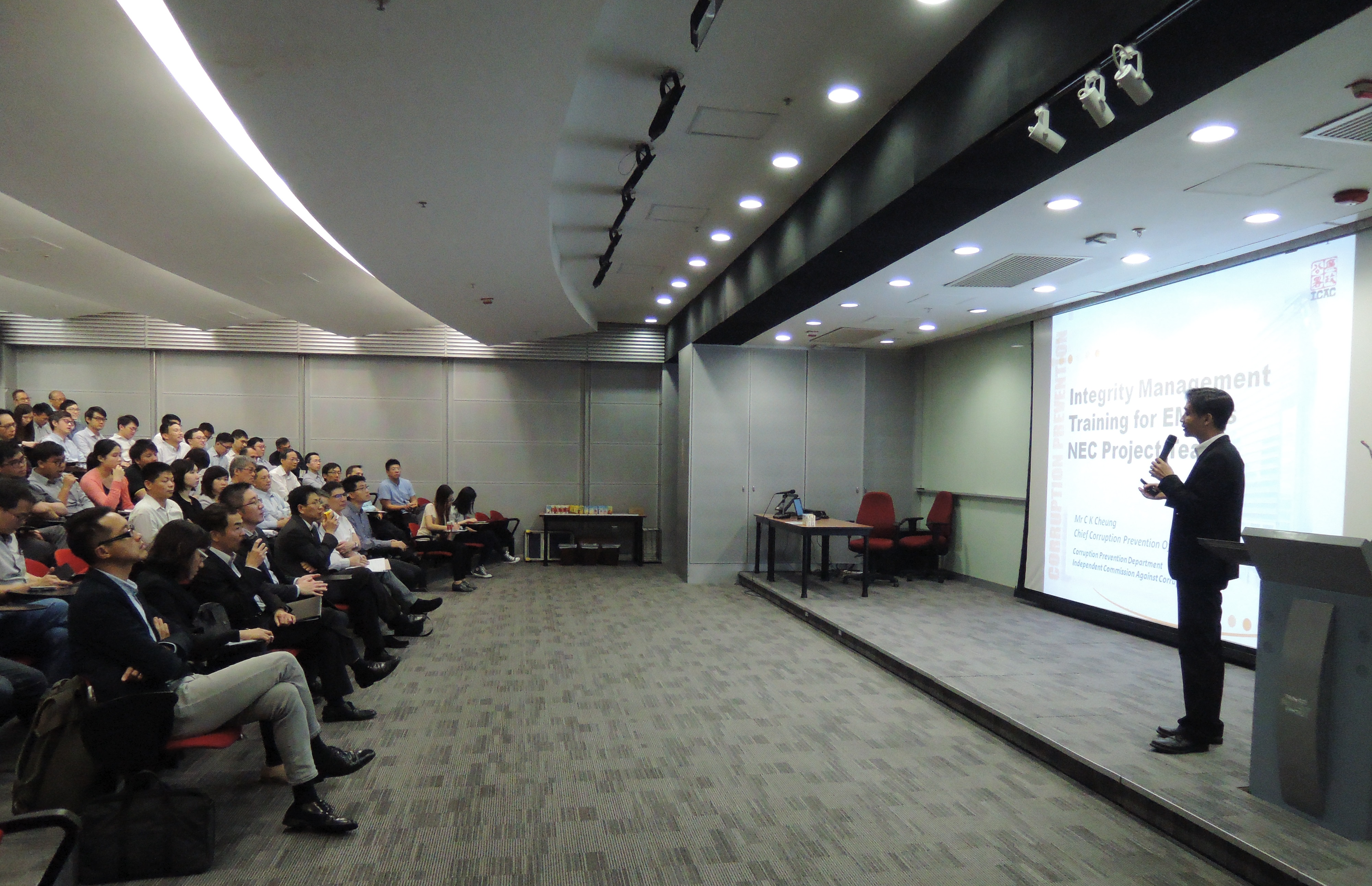
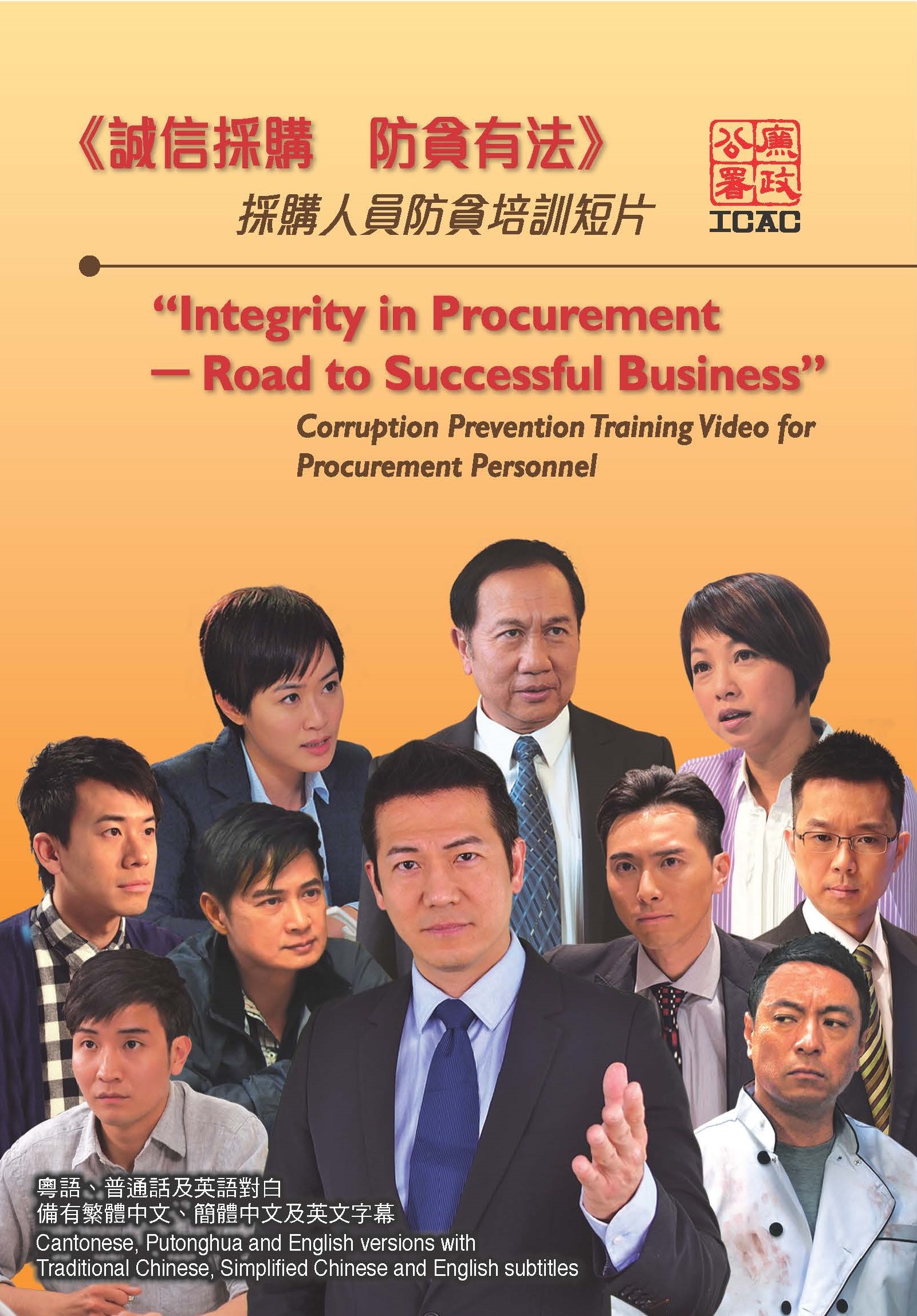



From mainly conducting corruption prevention audits in the early years, CPD has evolved to provide/adopt a diversity of services, products and approaches to cater for the changing needs of the different targets. With systems and controls reasonably in place in the public sector, capacity building for managerial staff is necessary to equip them with knowledge and tools to help prevent corruption in their companies. While this approach is most suitable for the business sector, more efficient means and modes for delivering CPD’s service using modern technology and channels are necessary.
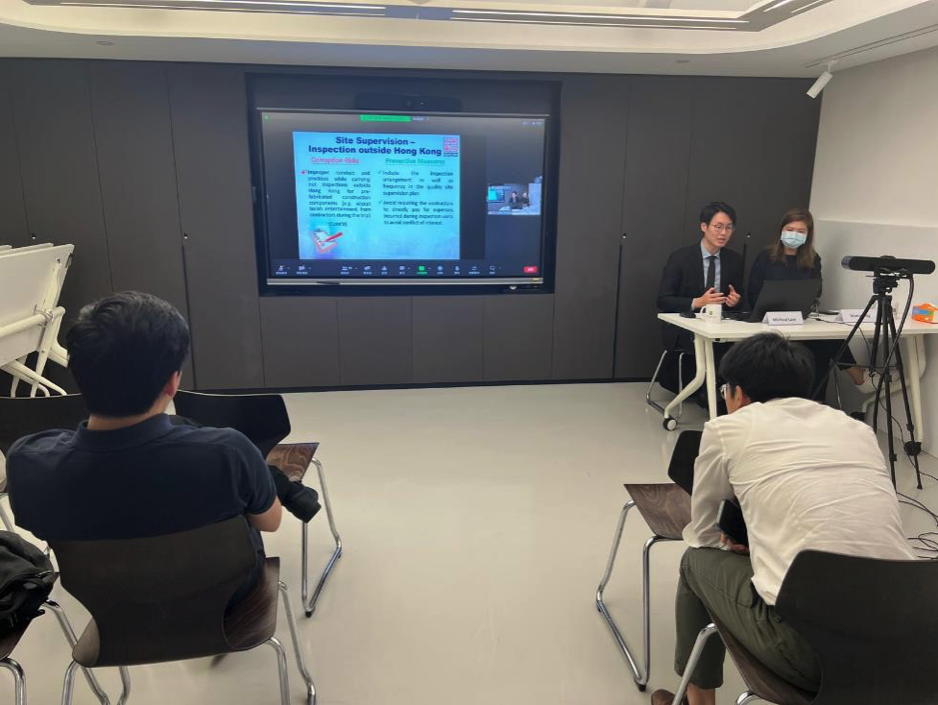
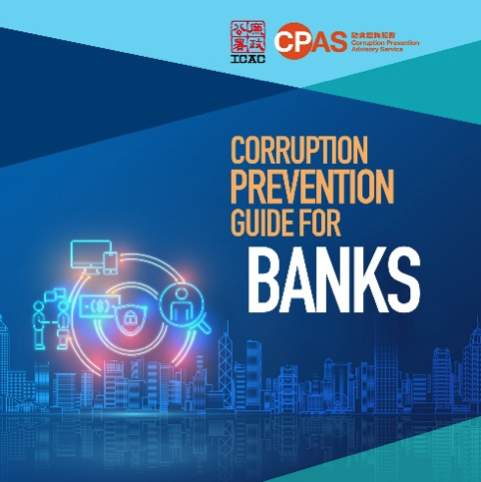
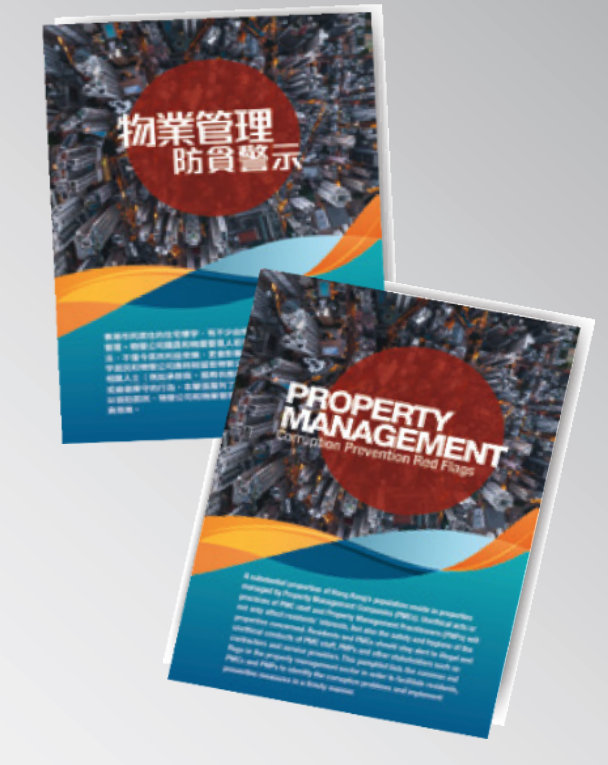
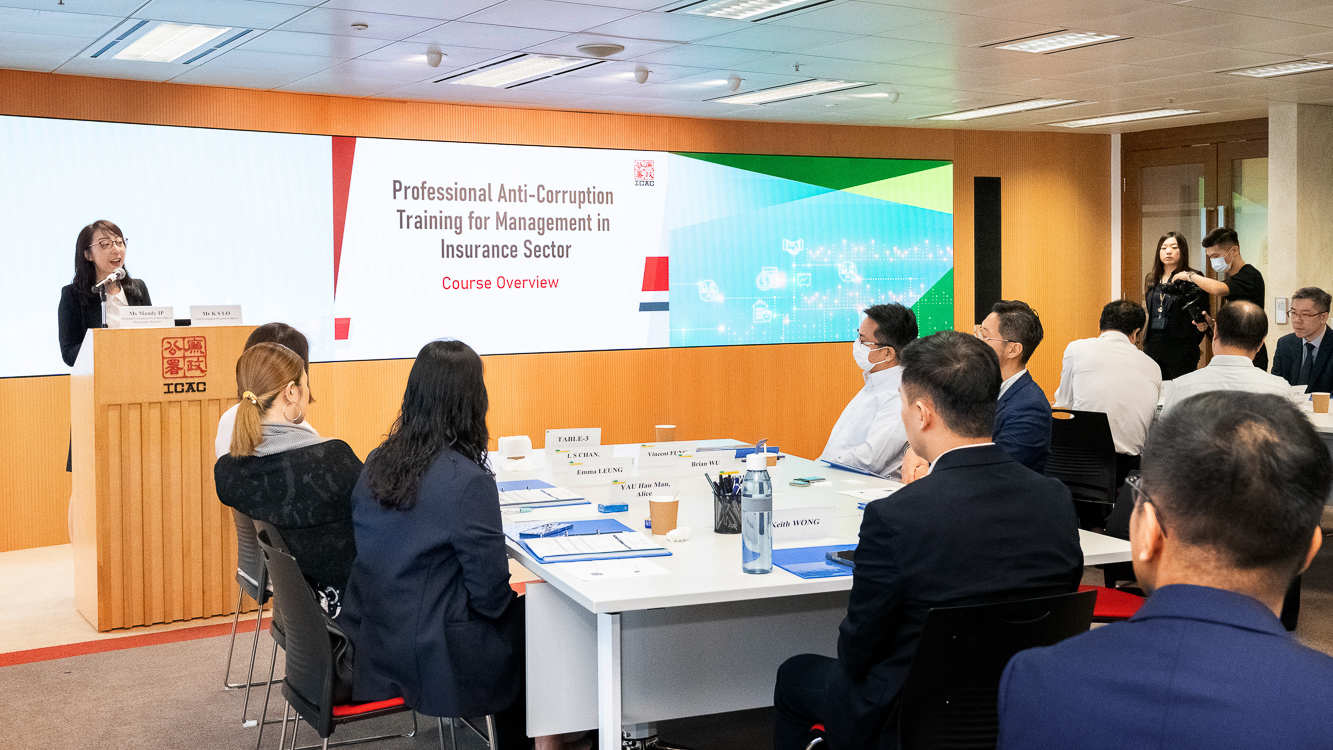

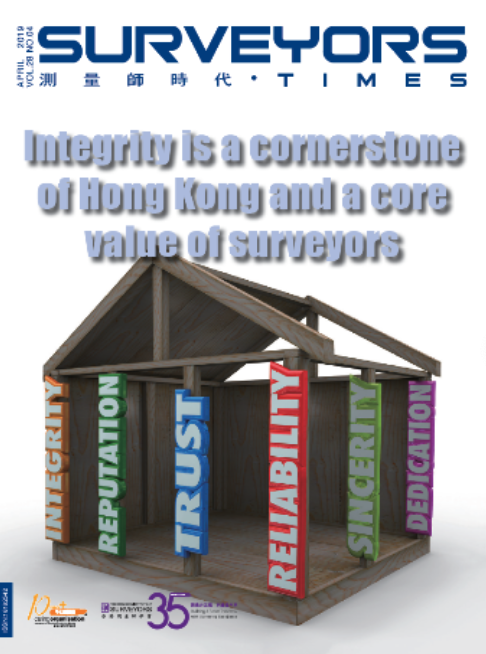
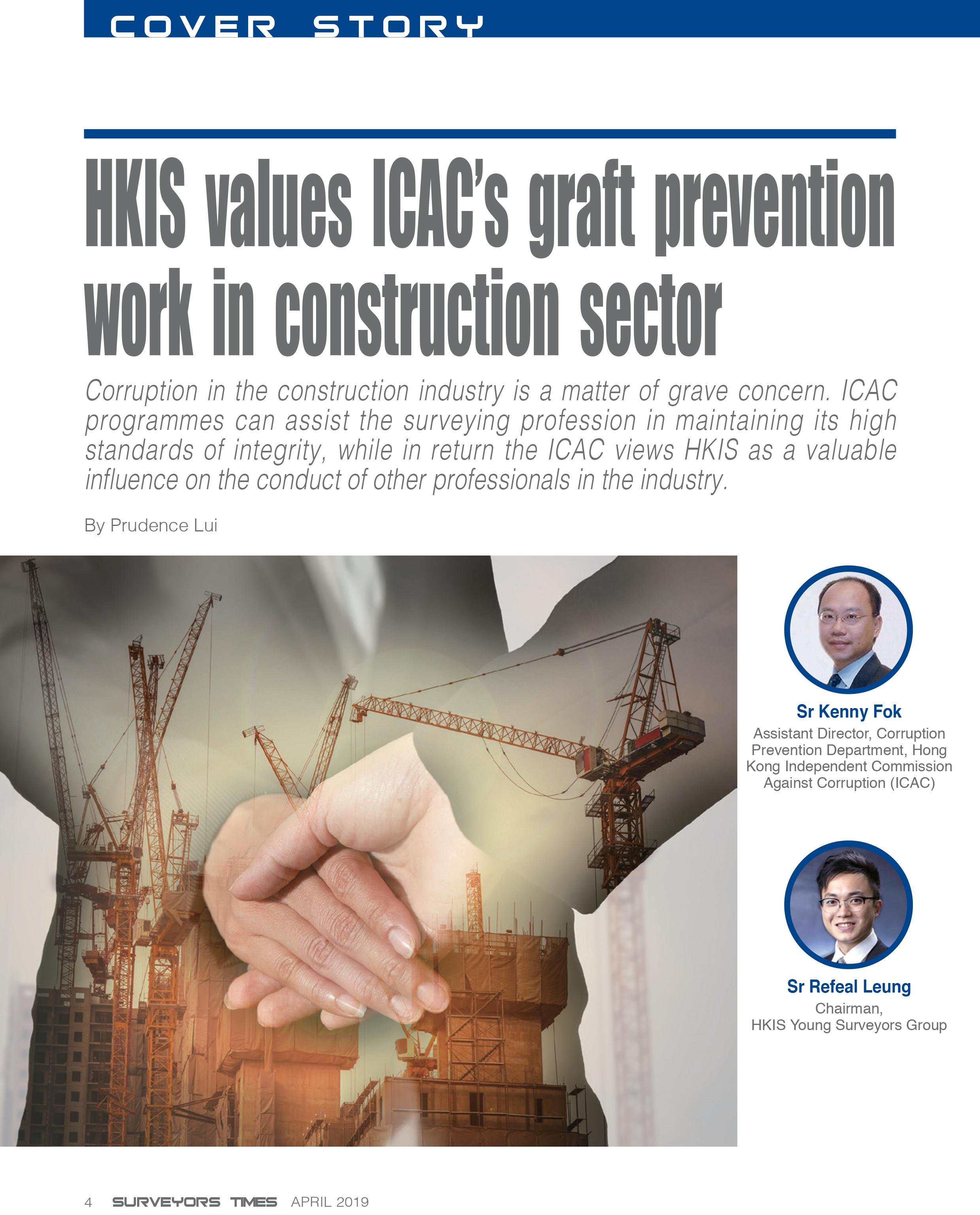


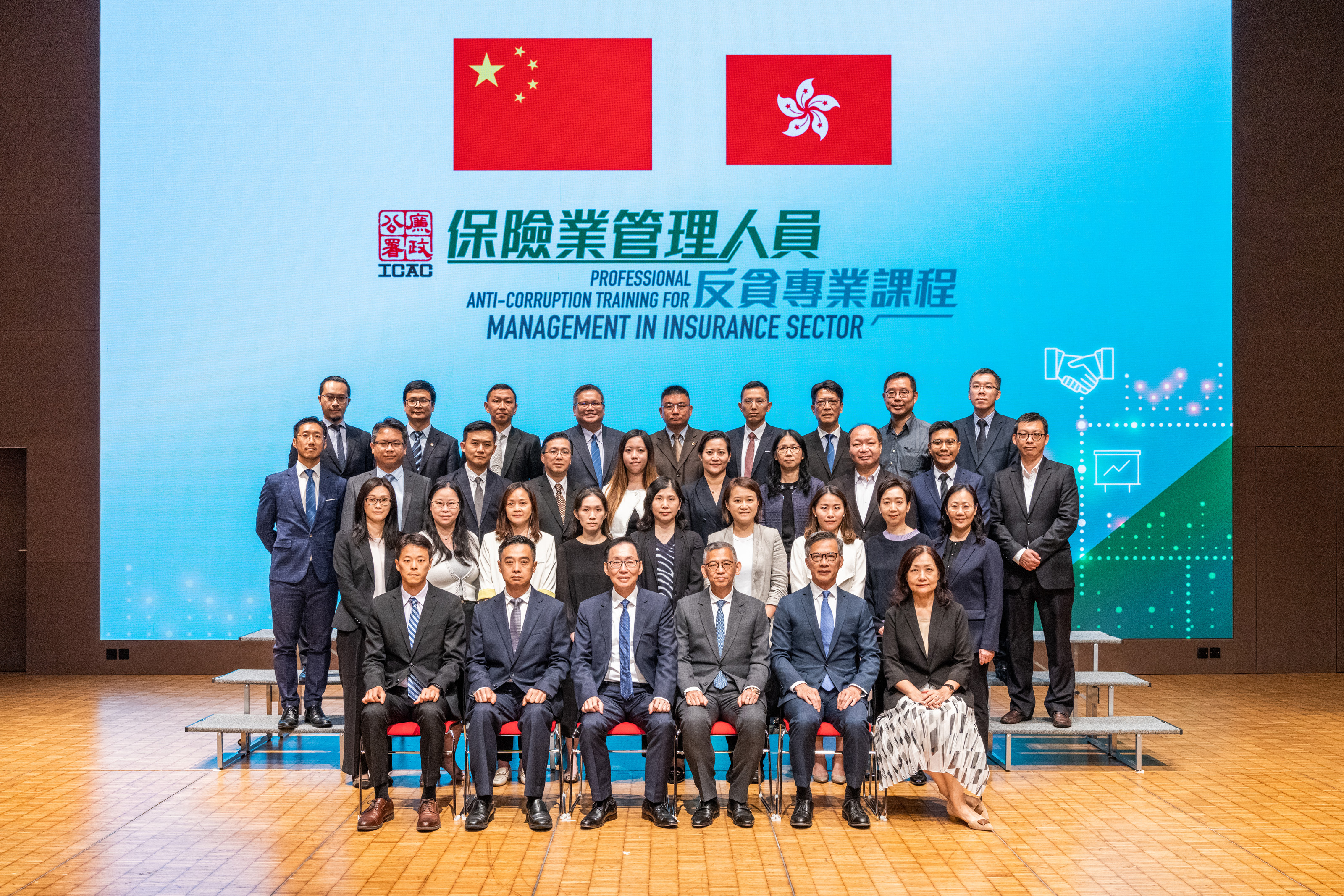
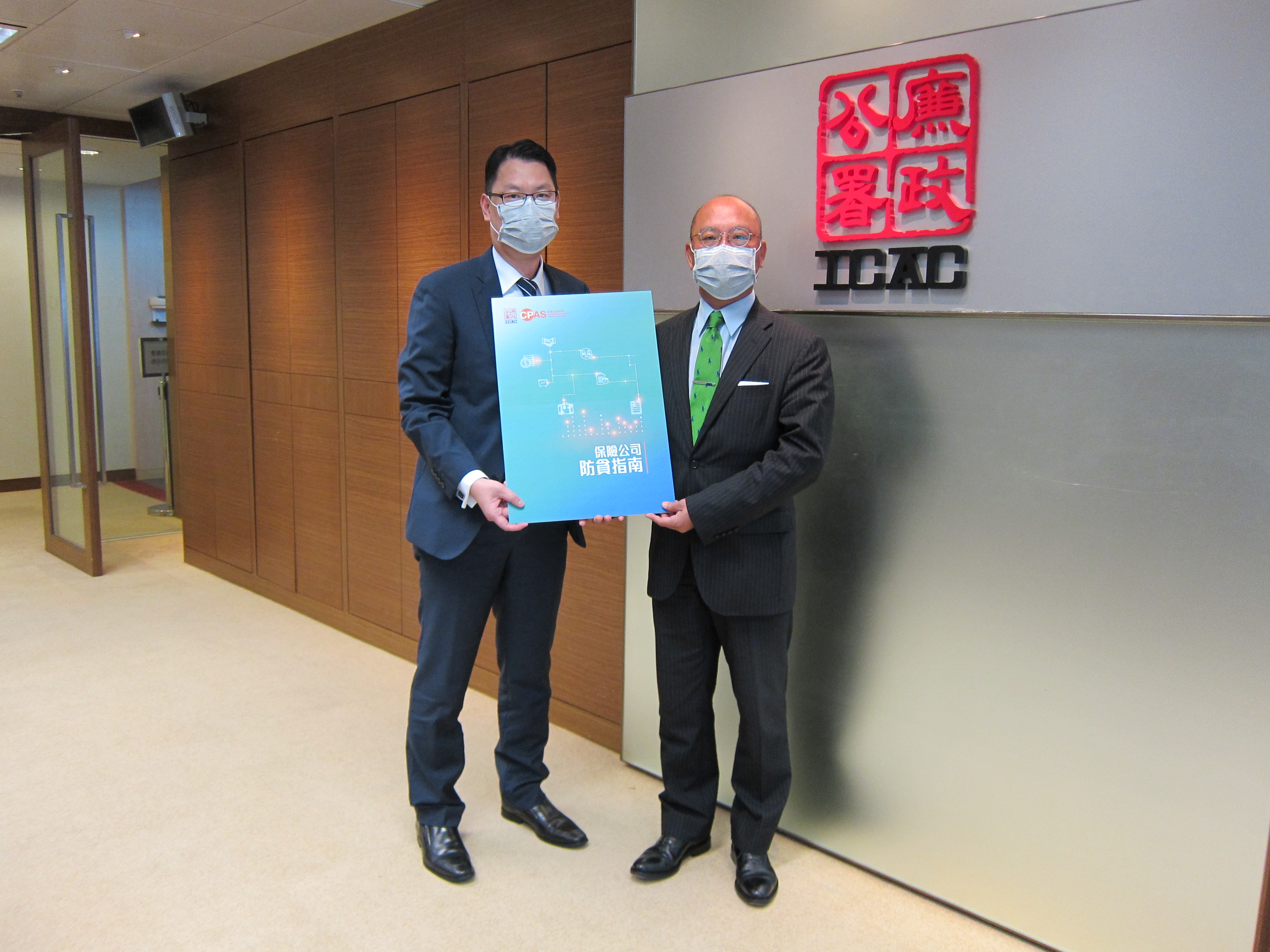

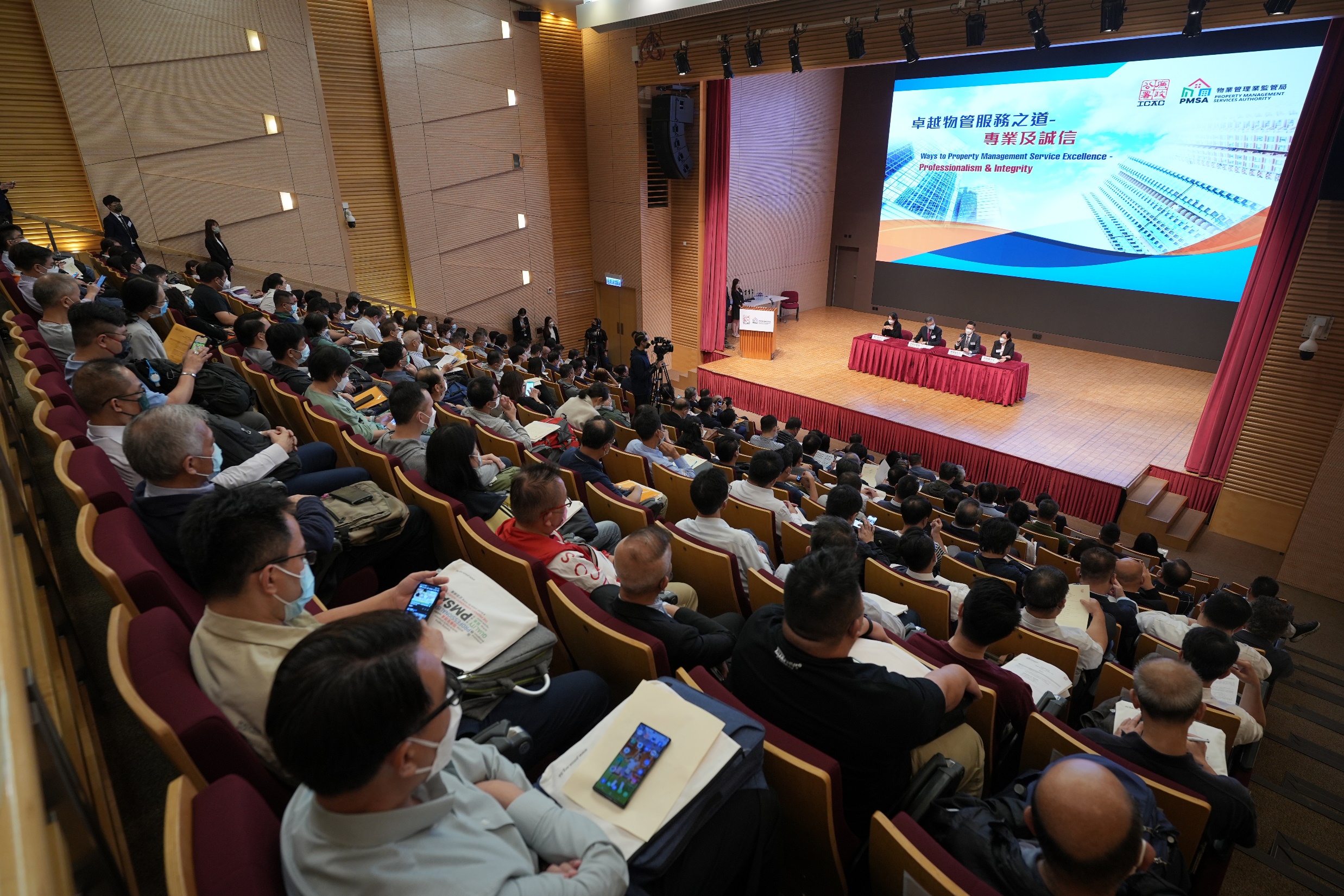
CPD establishes partnership with the regulatory authorities and professional bodies of different industries to enhance the corruption prevention capabilities and awareness of the practitioners in private sector by incorporating corruption prevention and integrity elements in the trade regulations/codes of practice and providing guidelines and training on corruption prevention.

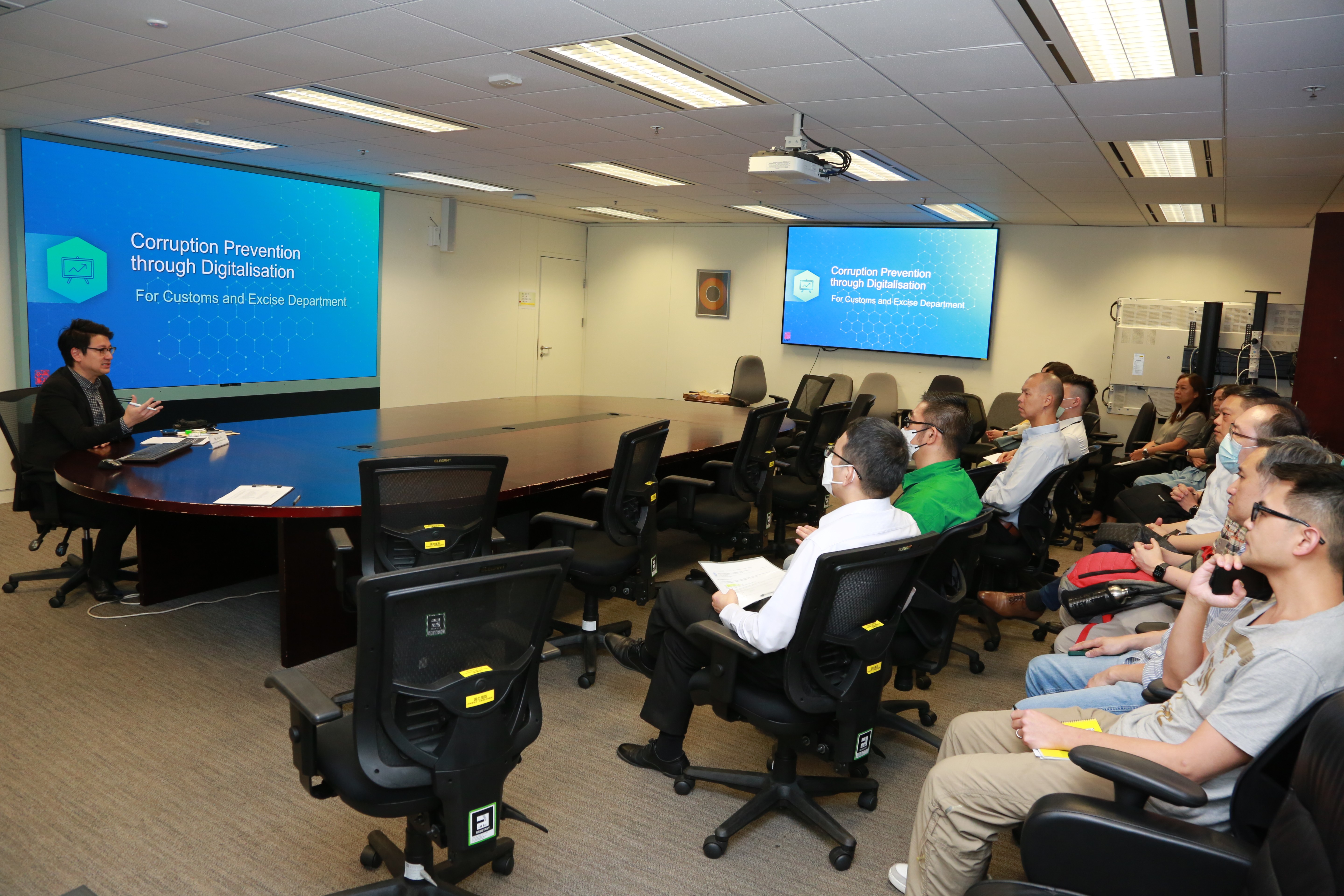


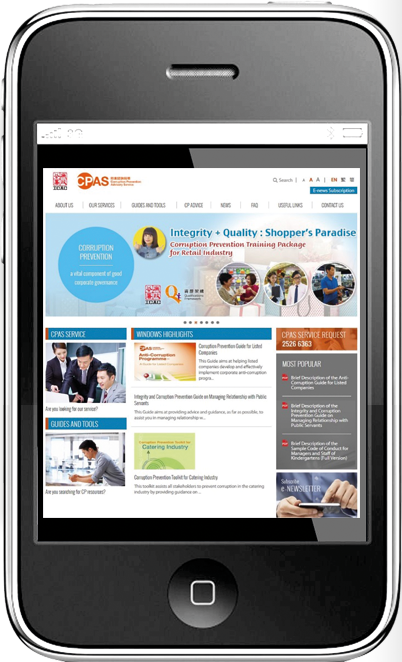

In 2017, CPD launched the user-friendly CPAS Portal to facilitate business sector users’ search of the wealth of corruption prevention concepts and tools. The Portal provides a borderless, 24x7 platform for CPD to reach far and wide to share corruption prevention knowledge, in the forms of case studies, red flags and quick tips, training videos, toolkits and guides, and newsletters/updates for subscribers. While originally aimed at local users, the Portal is also benefiting a global community.
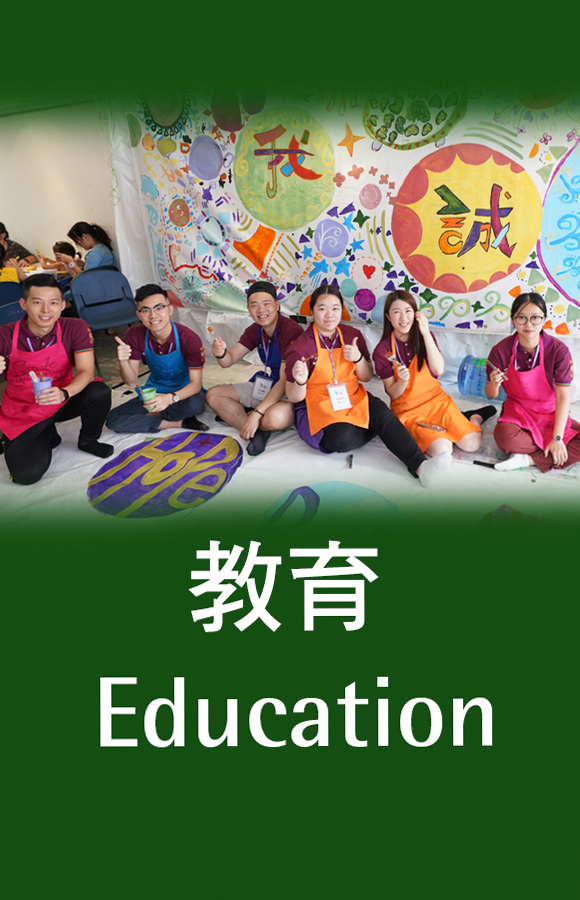

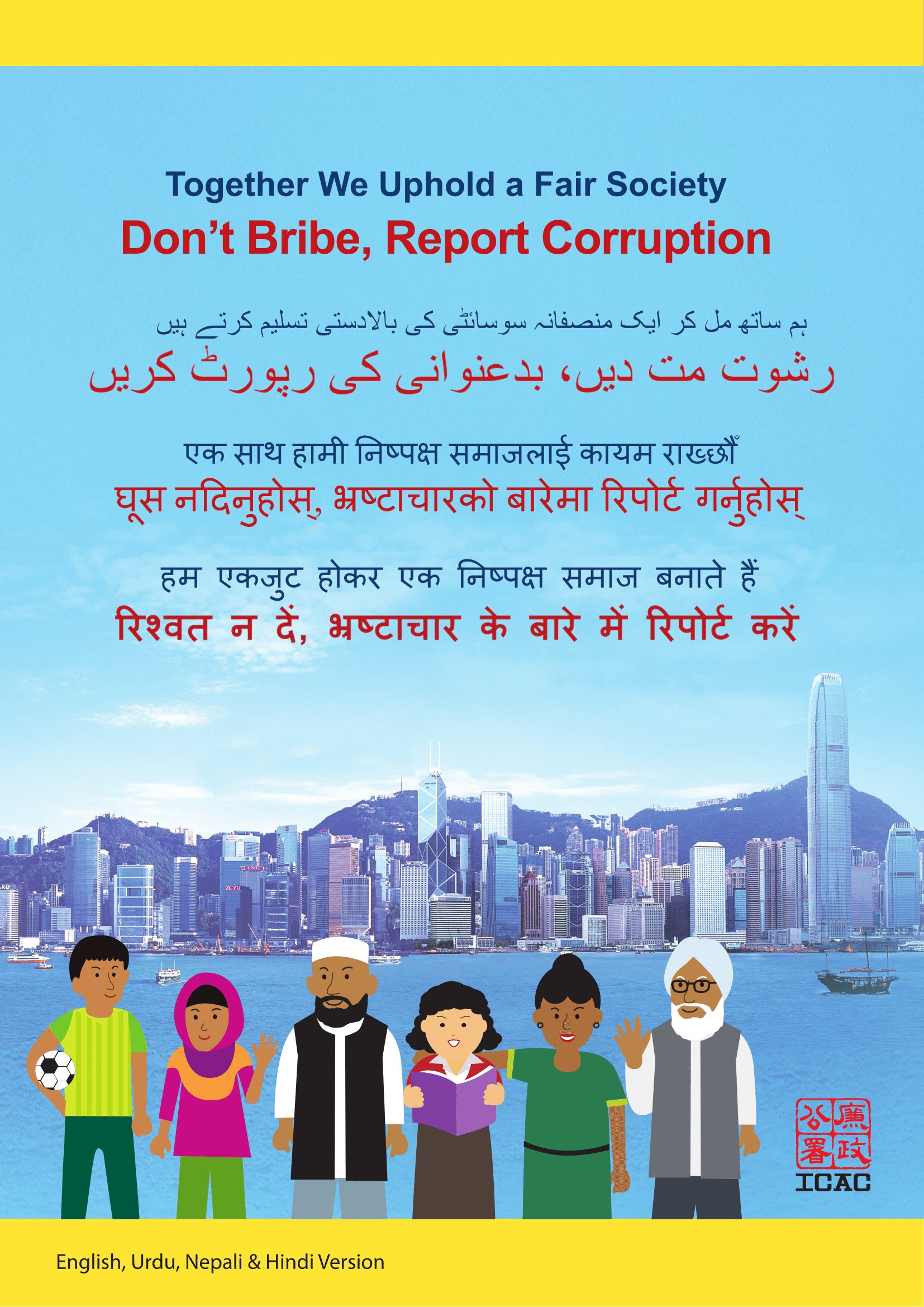
ICAC adopts an “Ethics for All” Strategy to put across anti-corruption messages to the community through face-to-face liaison, mass and social media, as well as tailor-made preventive education programmes for different sectors, including:




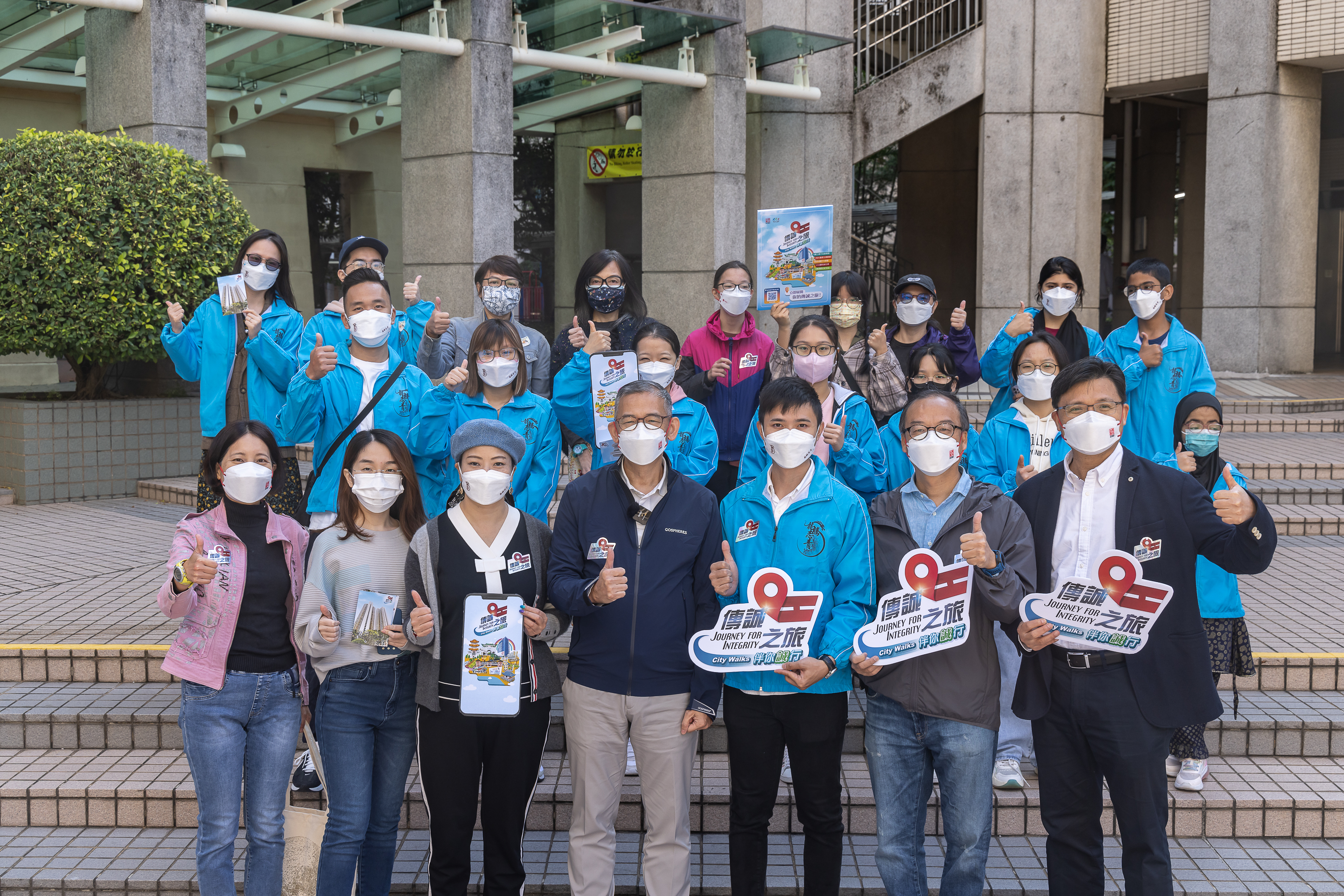





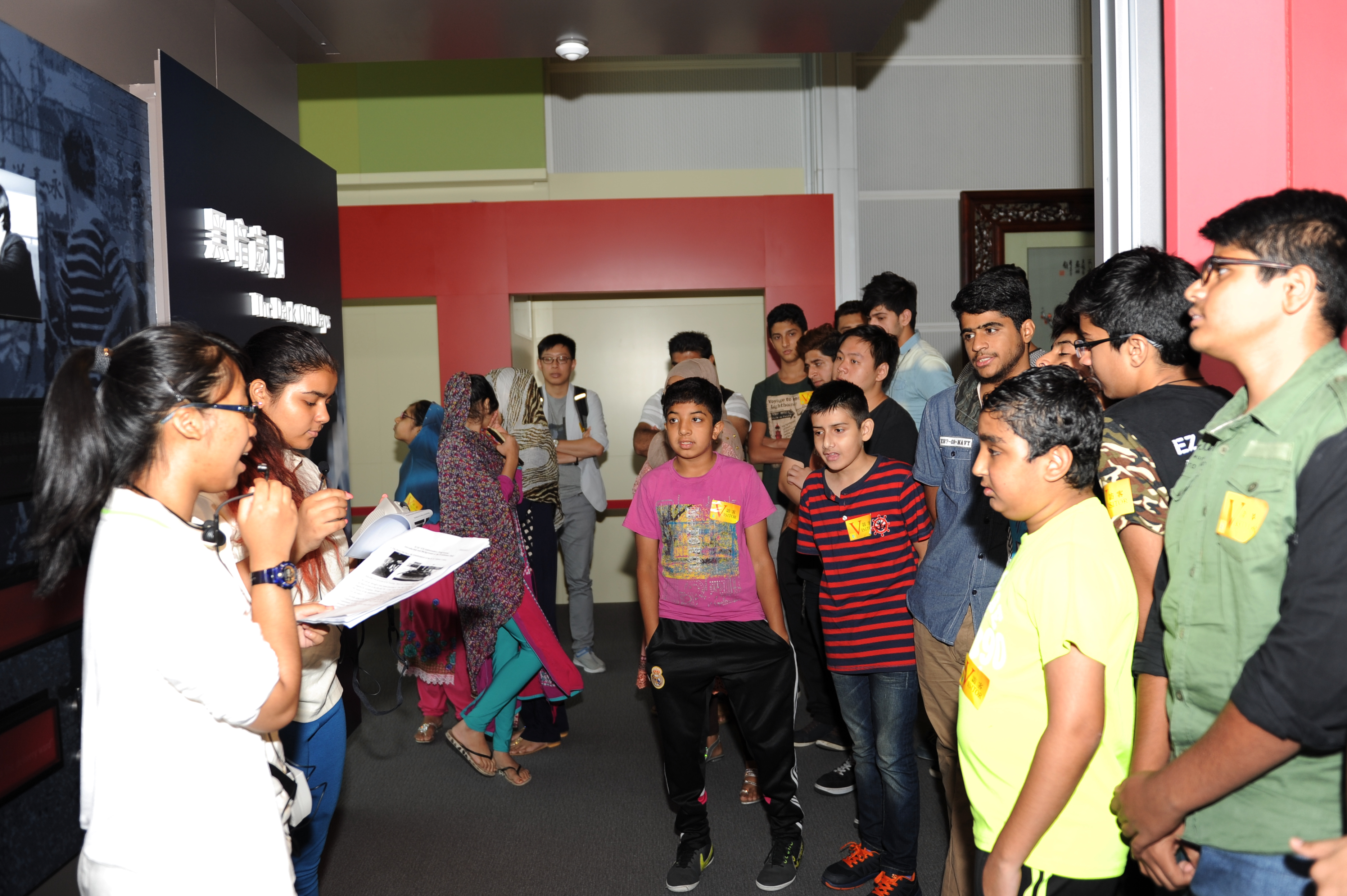
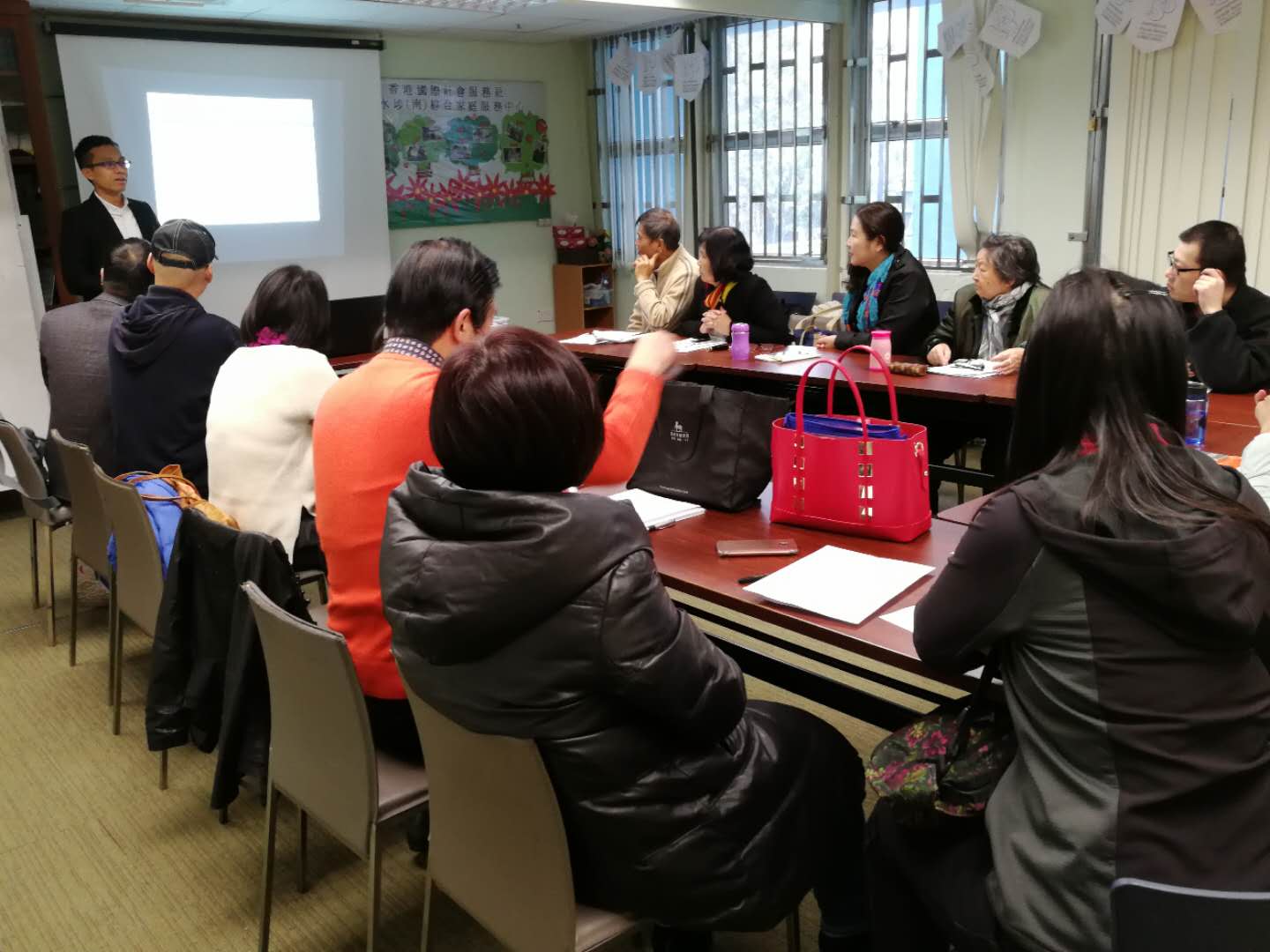

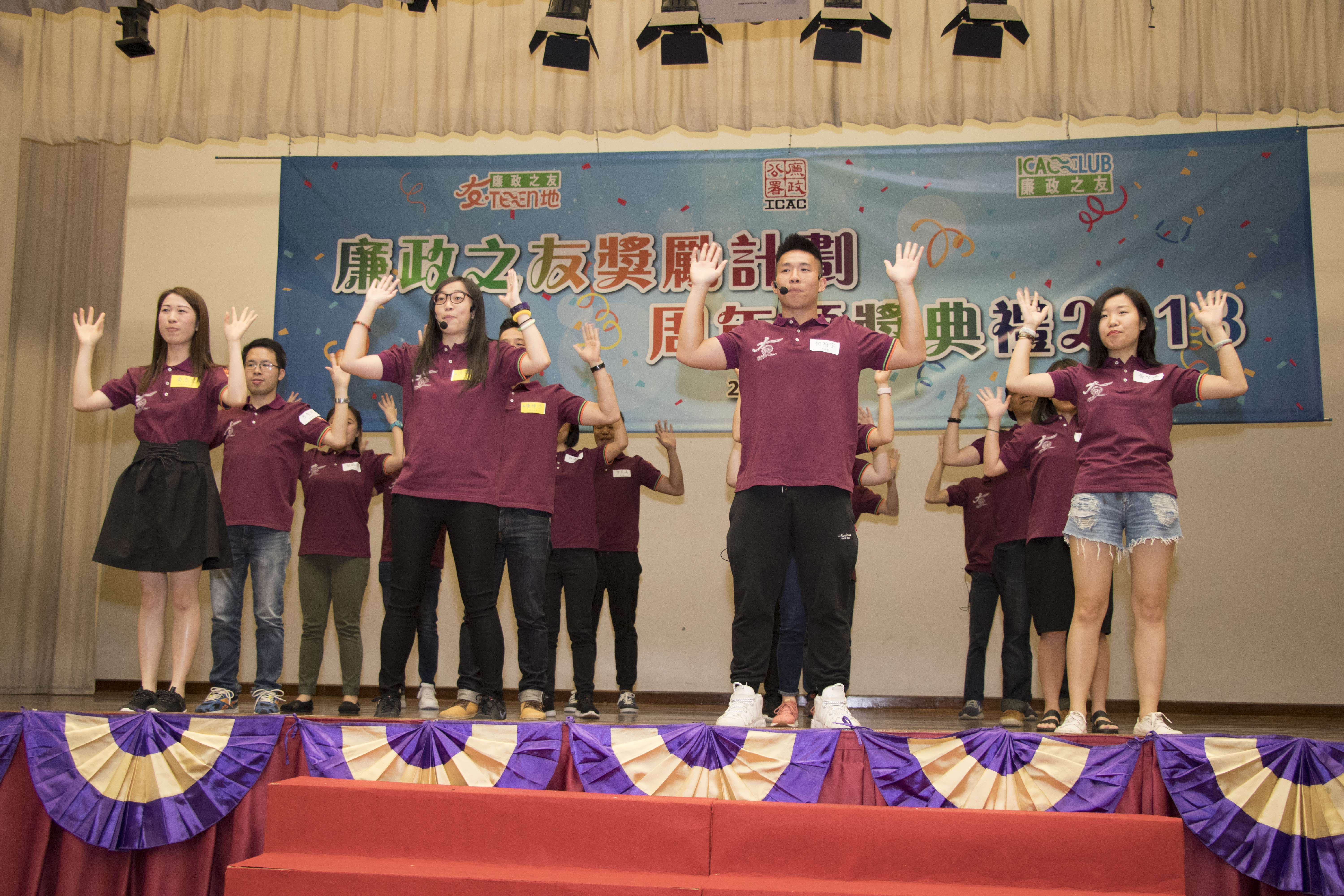



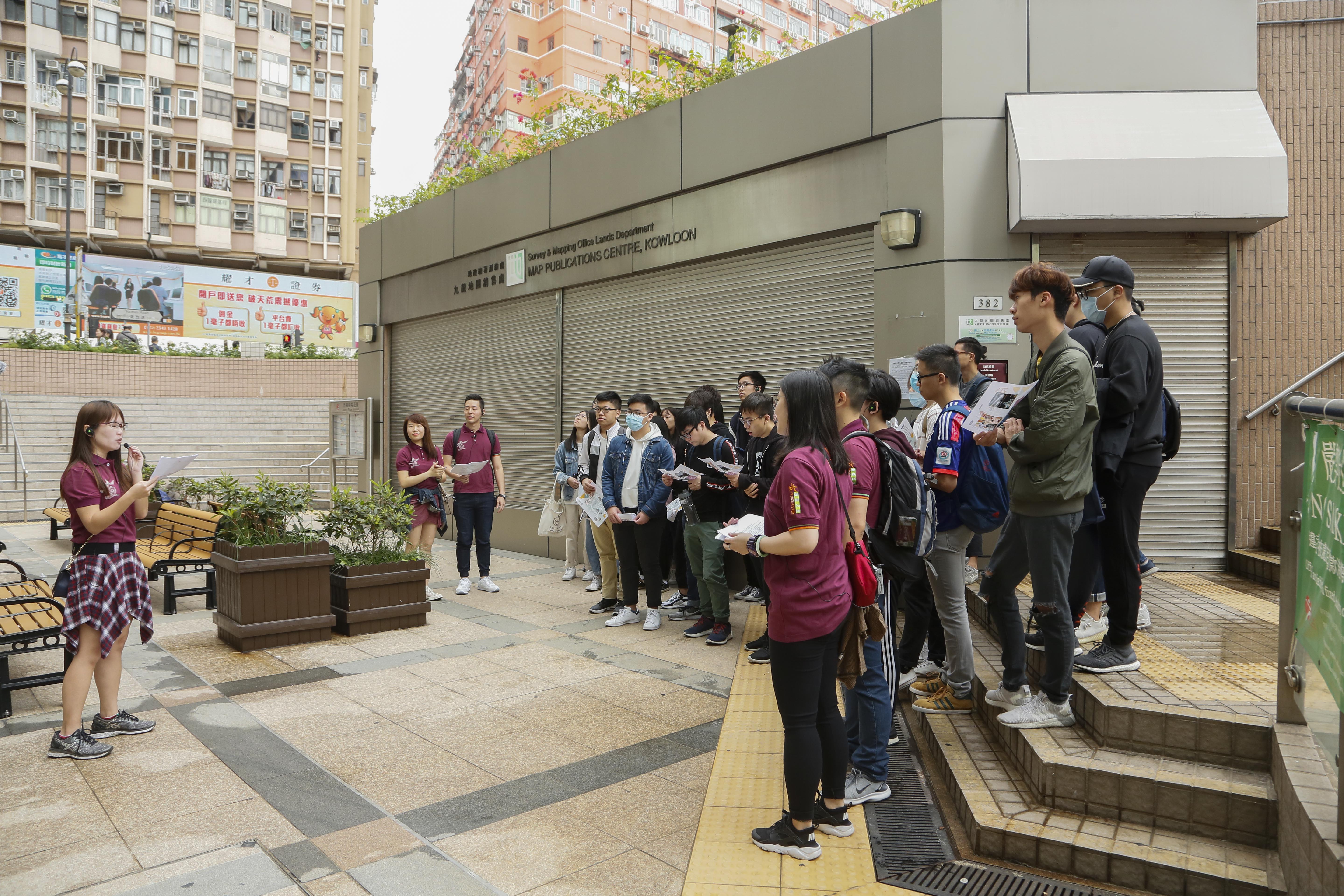
Established in 1997, the ICAC Club encourages our citizens to be partners in promoting integrity. Currently, the Club has a membership of over 3000.
In 2017, the Club set up a Youth Chapter to engage more young people in the anti-graft mission. Young Club members are given opportunities to contribute their creativity and talents in planning and executing integrity promotion projects for the Club and the ICAC.



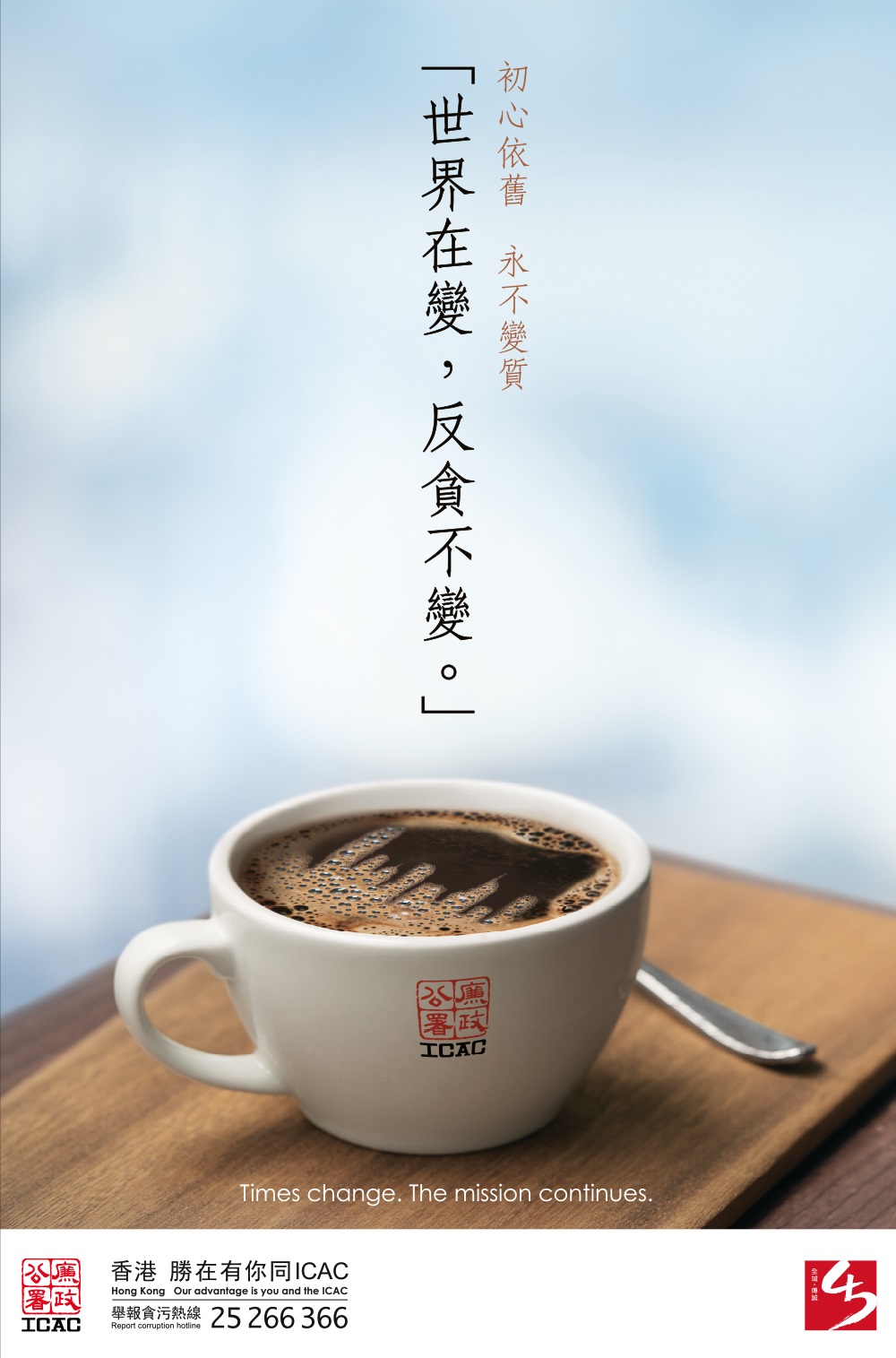

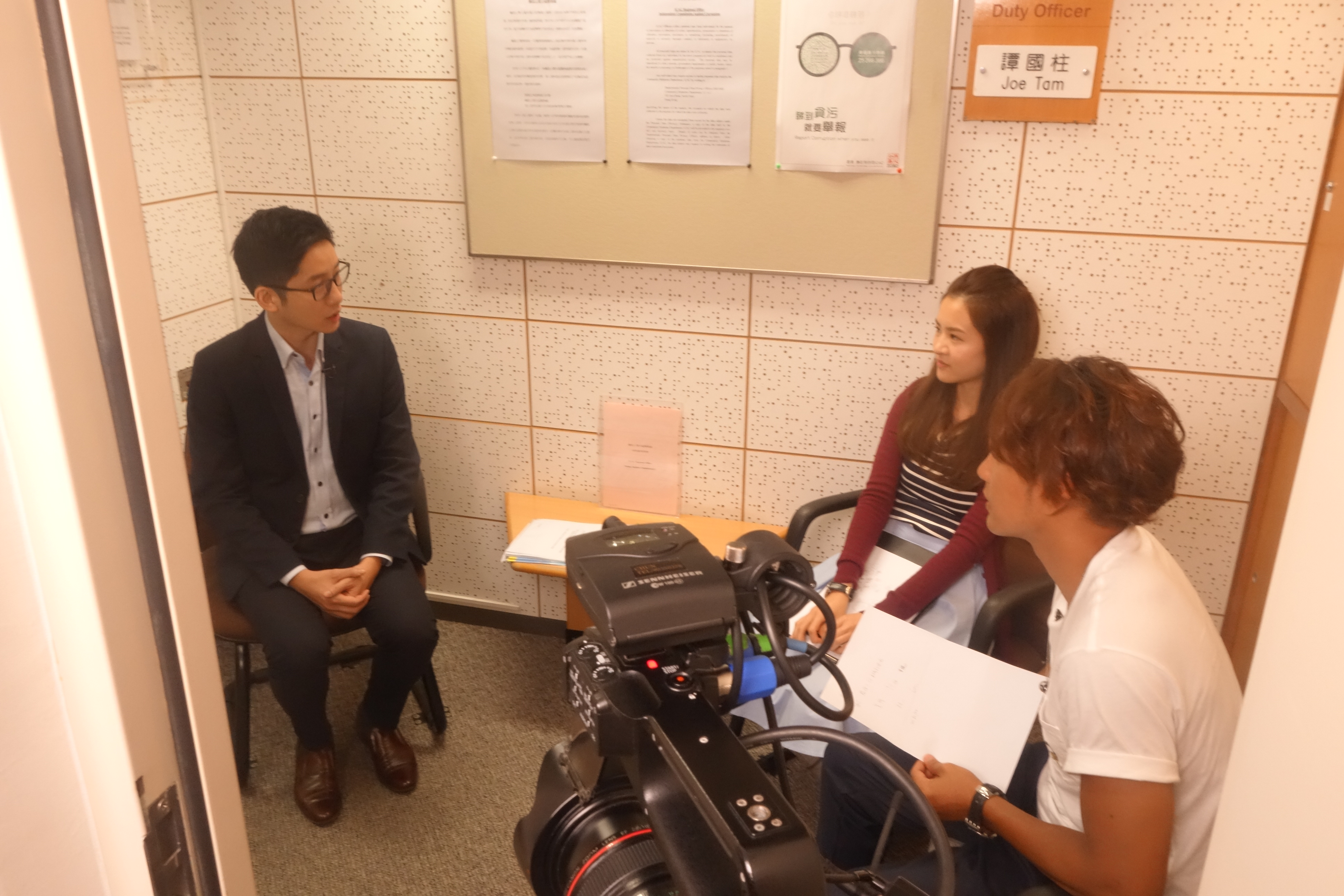



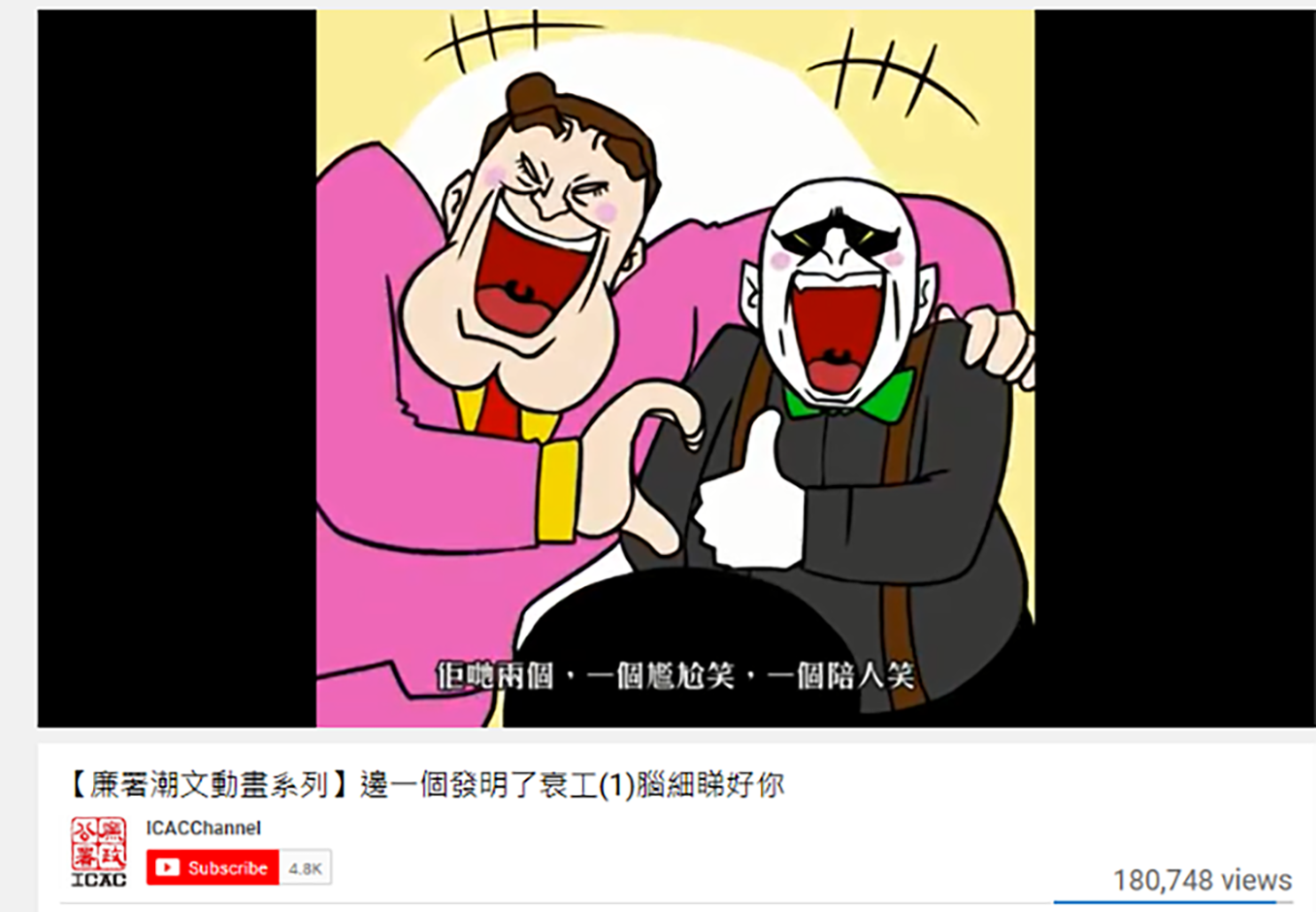
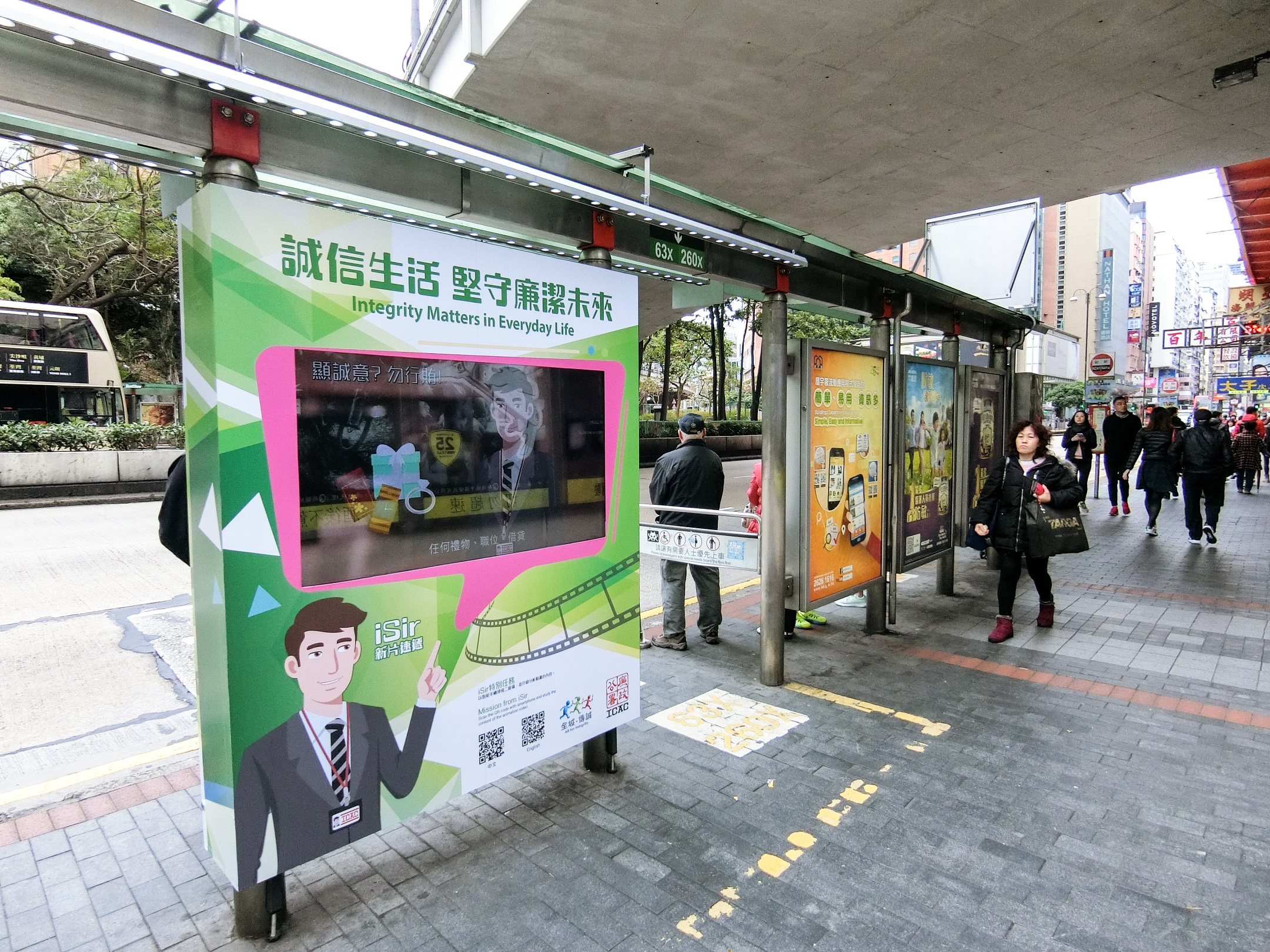
ICAC’s signature TV Drama Series and advertising campaigns continue to keep the issue of anti-corruption in the forefront. In recent years, ICAC has strengthened the use of Facebook, Instagram, YouTube, WeChat and other social media platforms and created the virtual spokespersons iSir and iMadam to drive home integrity messages in a lively and interactive manner.
Virtual reality (VR) and augmented reality (AR) experiential products, web videos, eGames and comics are also developed to reinforce the core value of integrity among youngsters.



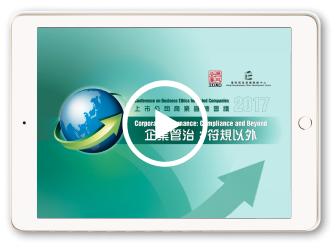
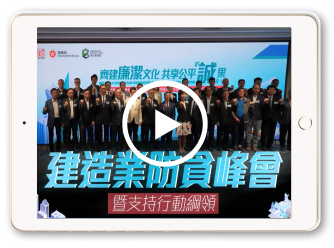
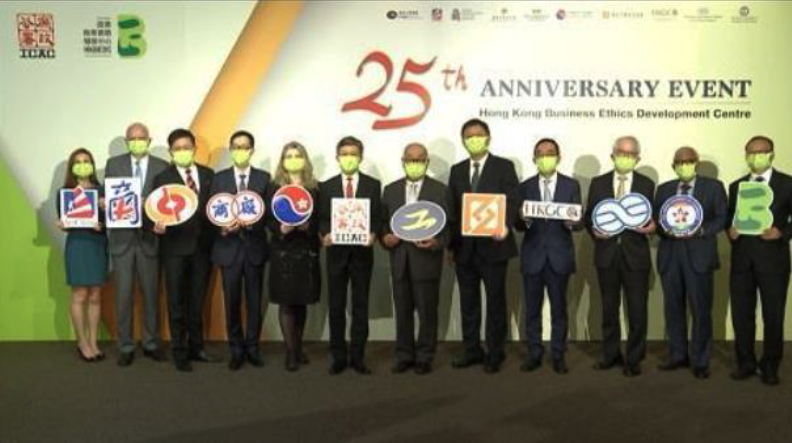
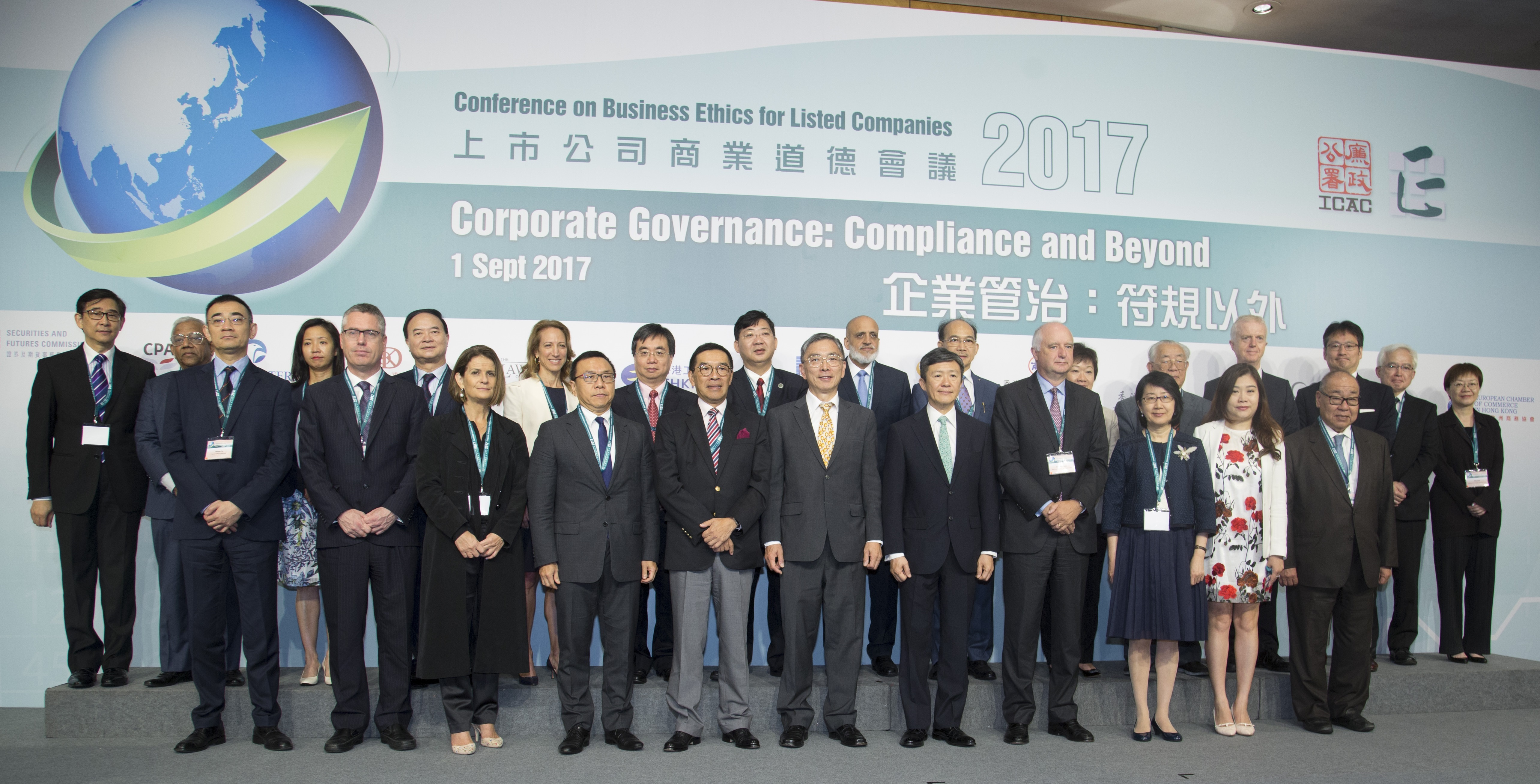
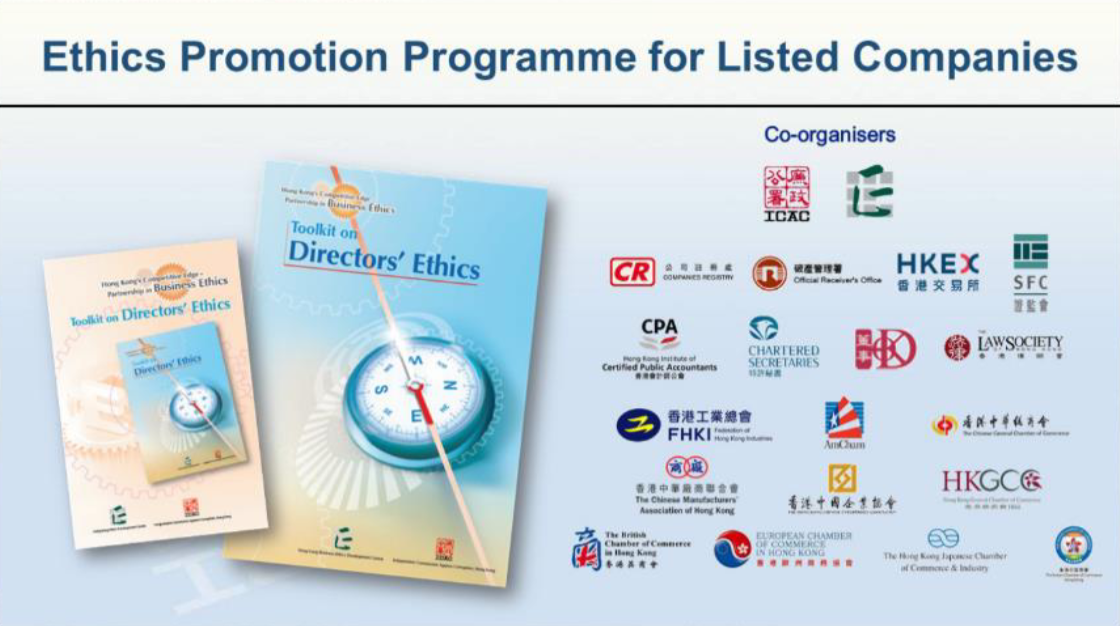

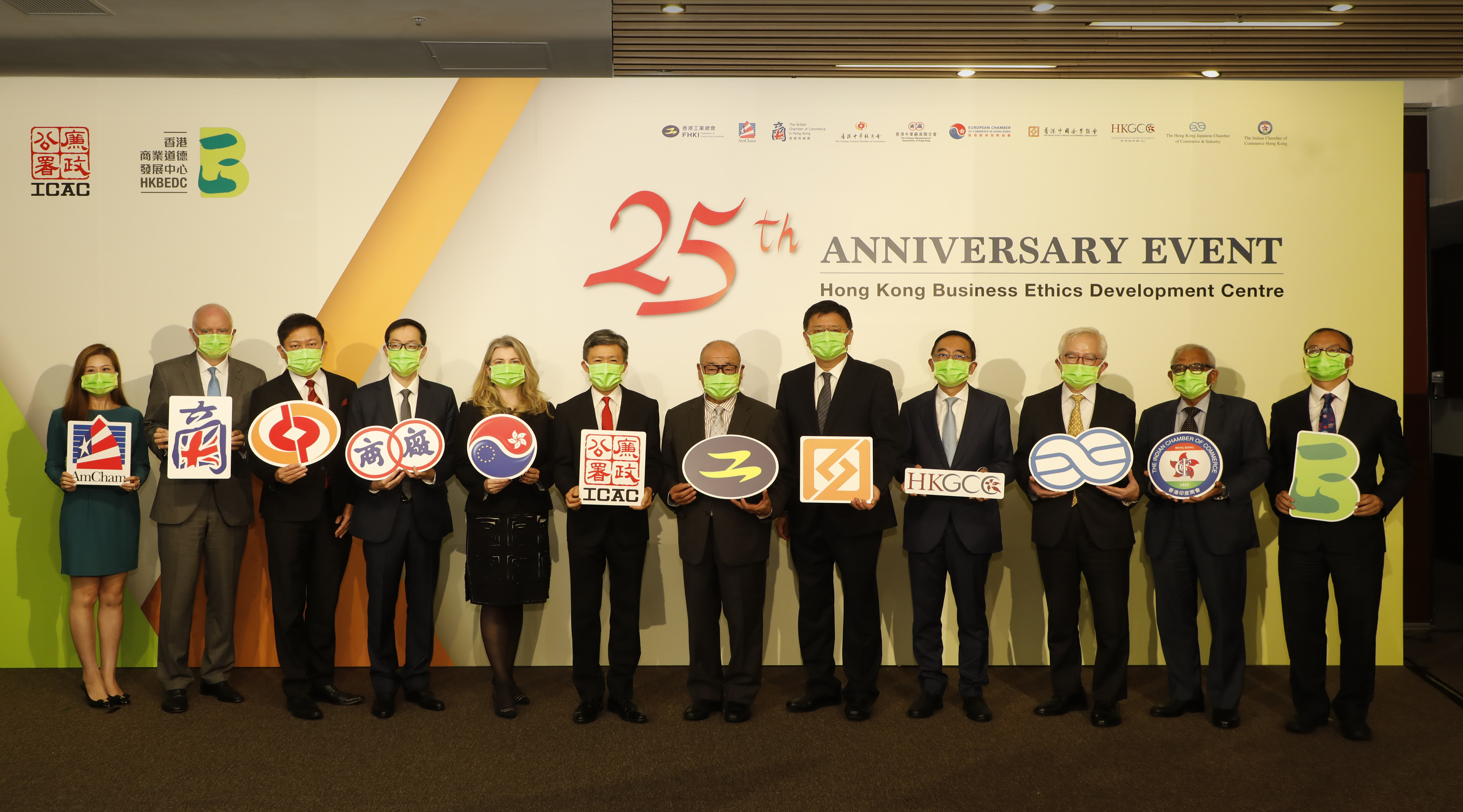
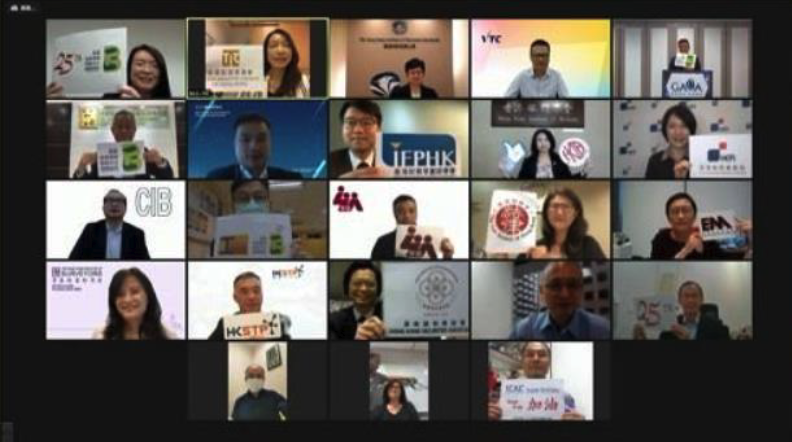

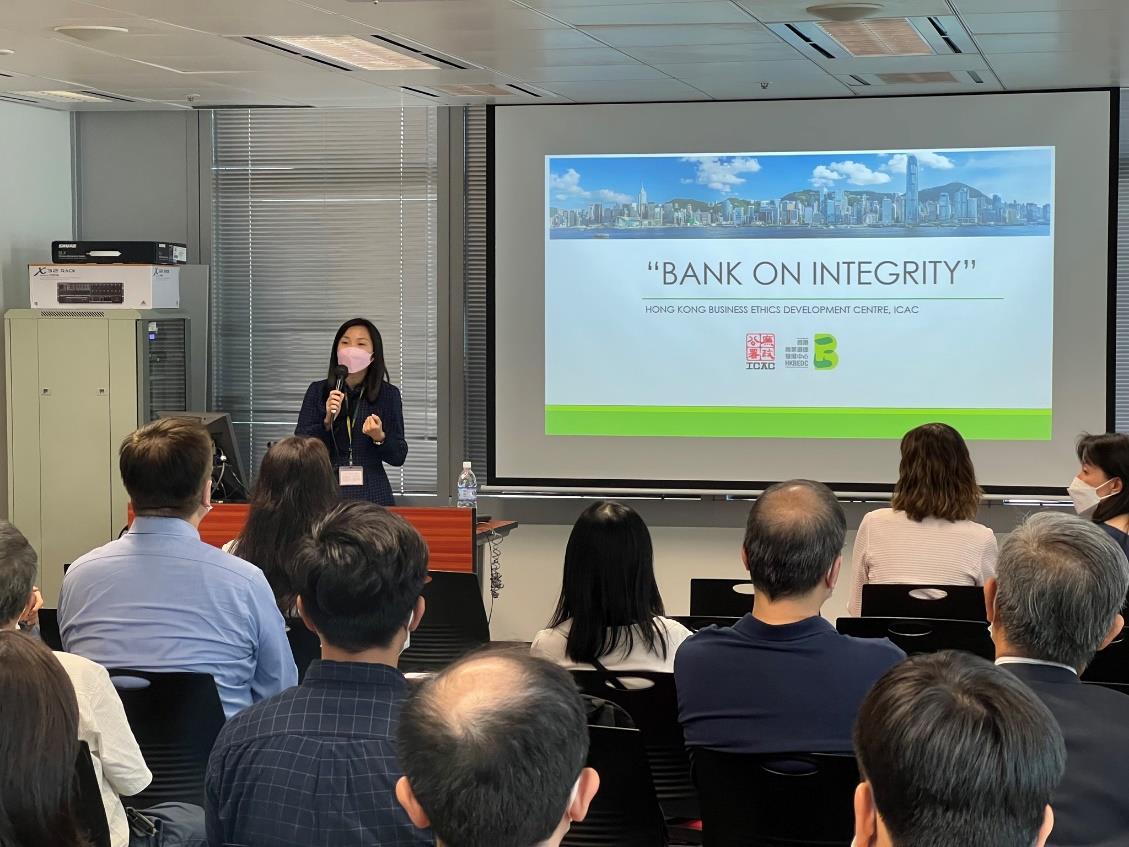
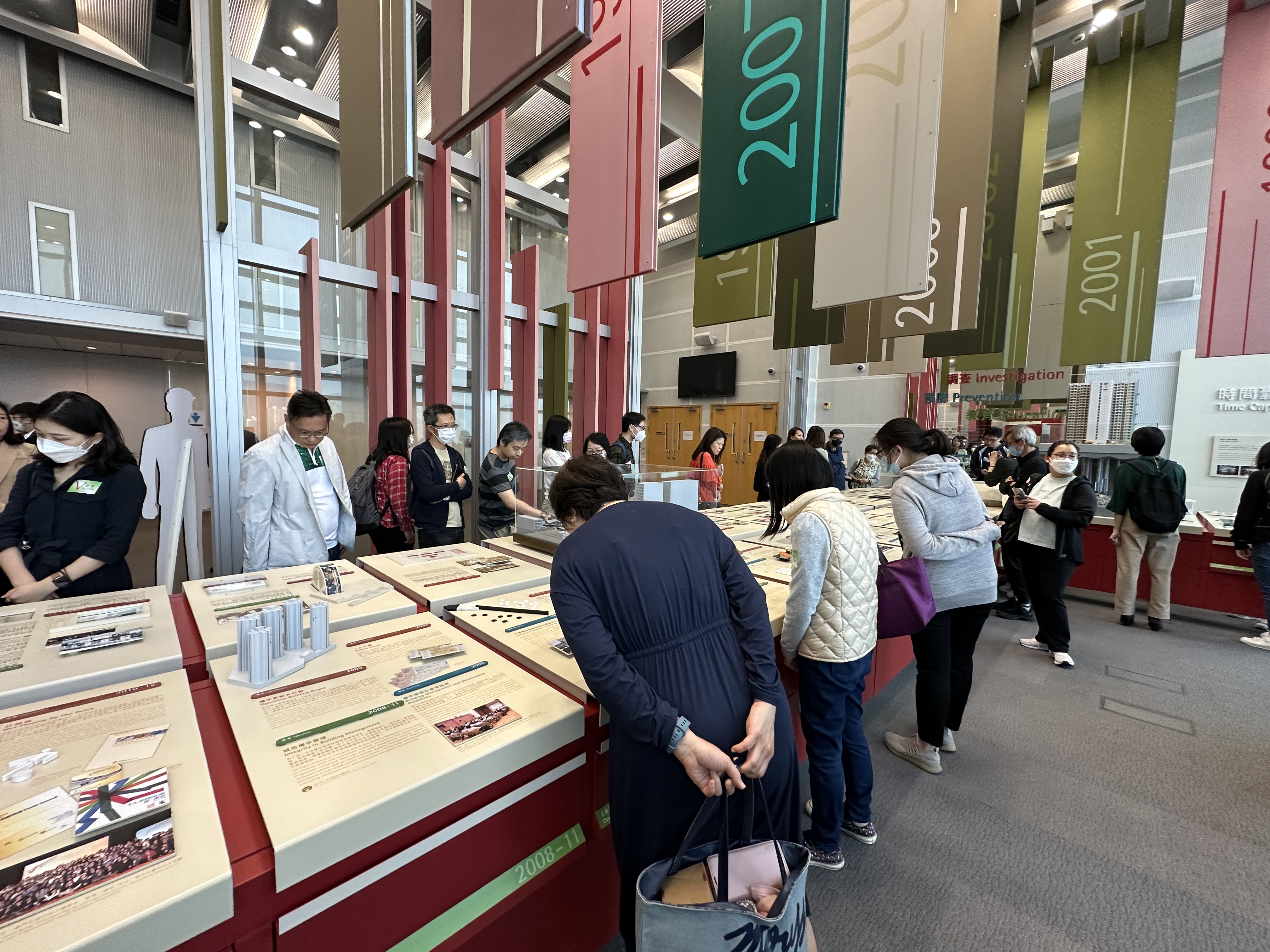
The Hong Kong Business Ethics Development Centre (HKBEDC) of the ICAC partnered with 18 co-organisers to launch the three-year Ethics Promotion Programme for Listed Companies in 2015. The Programme aims at enhancing the awareness of the top management and related professionals of the importance of practising ethical leadership and implementing good corporate governance.
2020 marked the 25th Anniversary of HKBEDC. In the years ahead, HKBEDC will remain steadfast to provide tailor-made preventive education services for different trades and industries, fostering a strong ethical business culture and strengthening the competitiveness of Hong Kong.
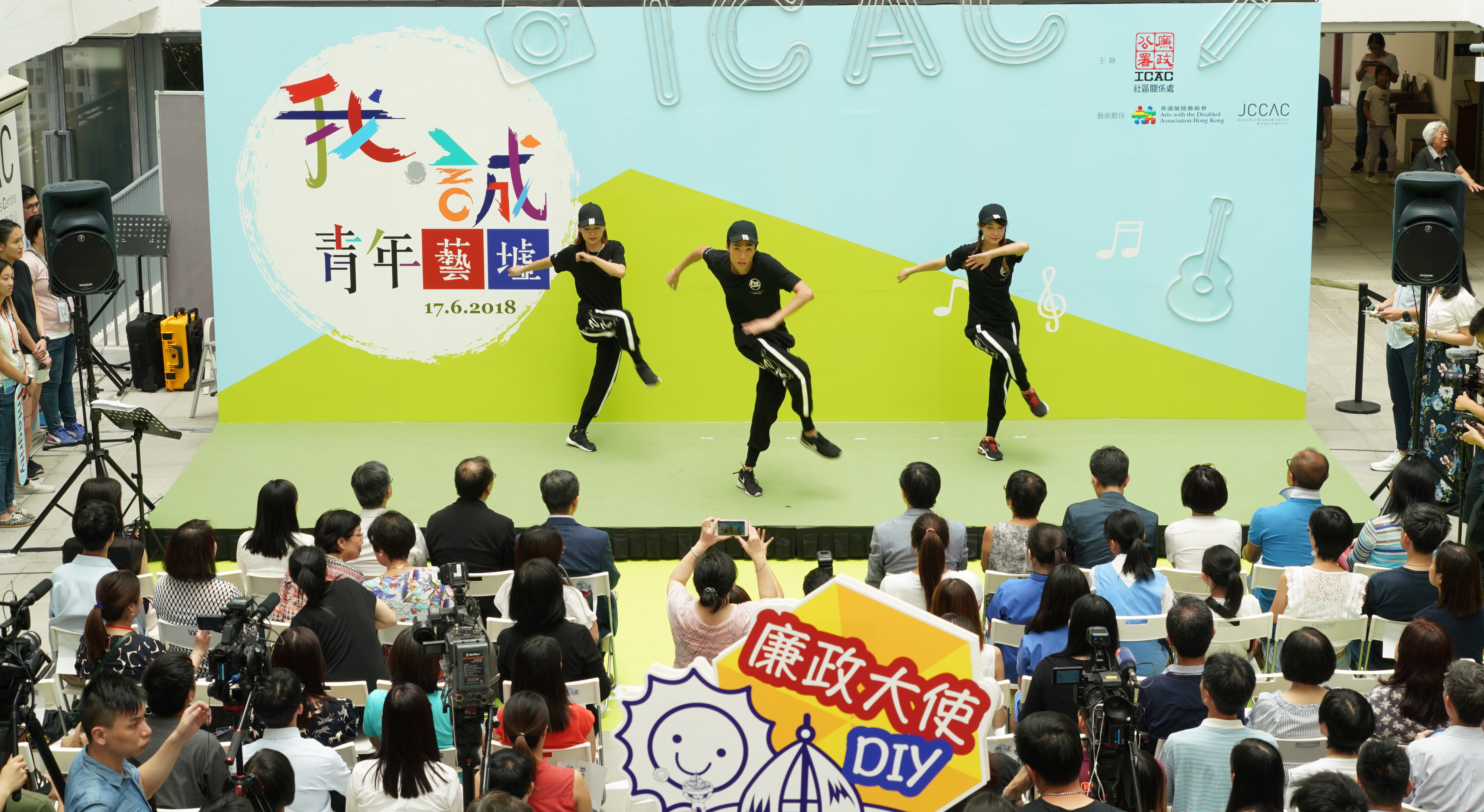
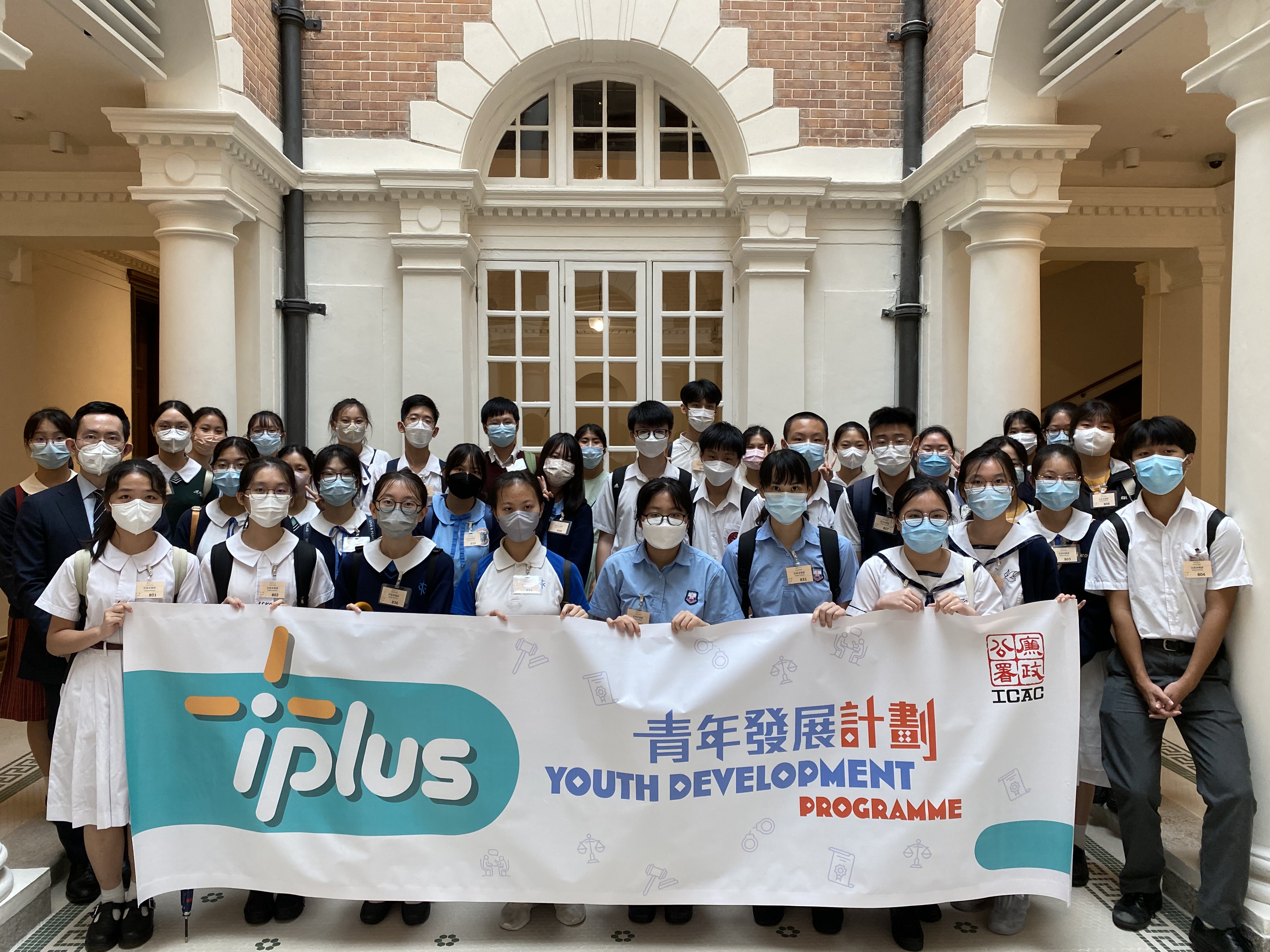





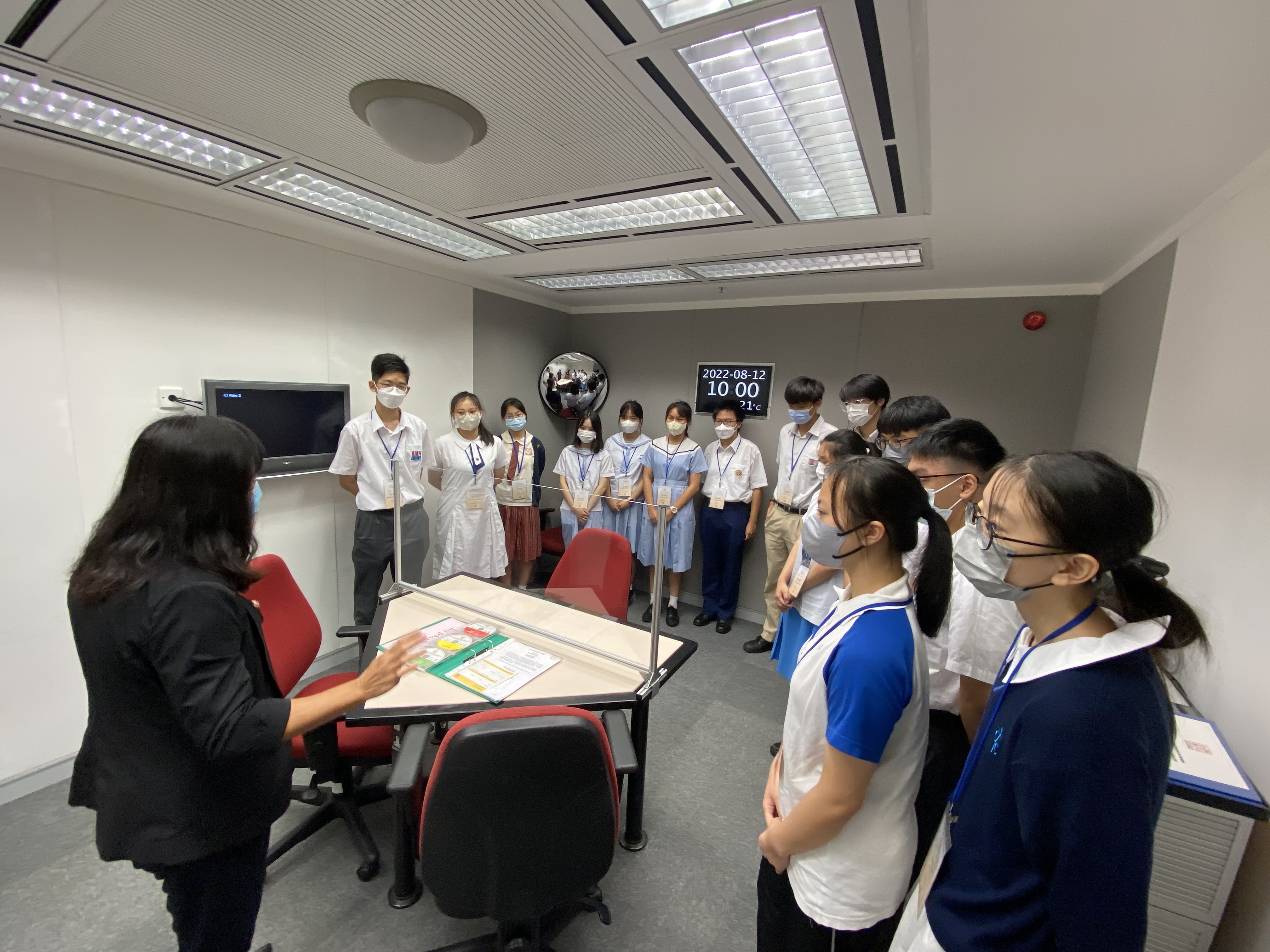
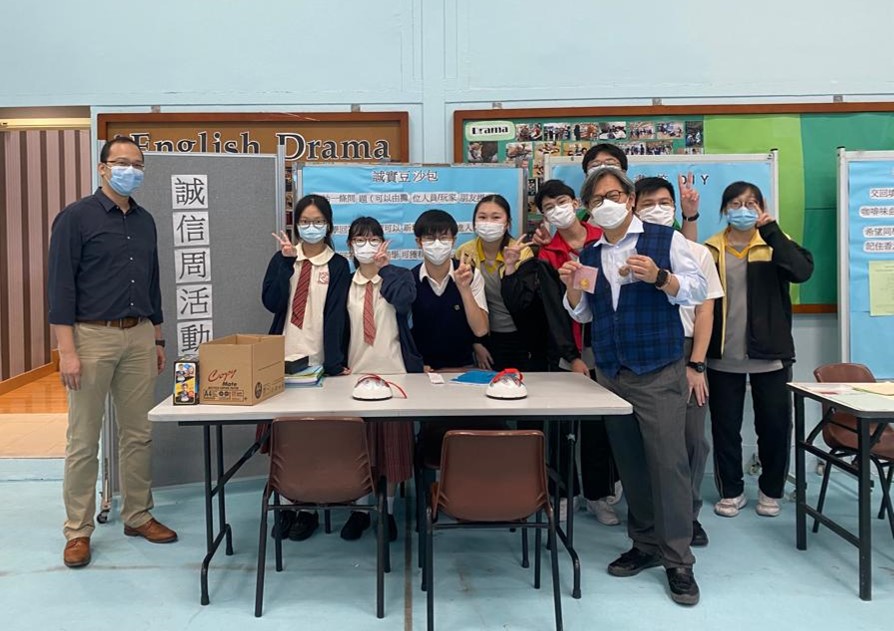

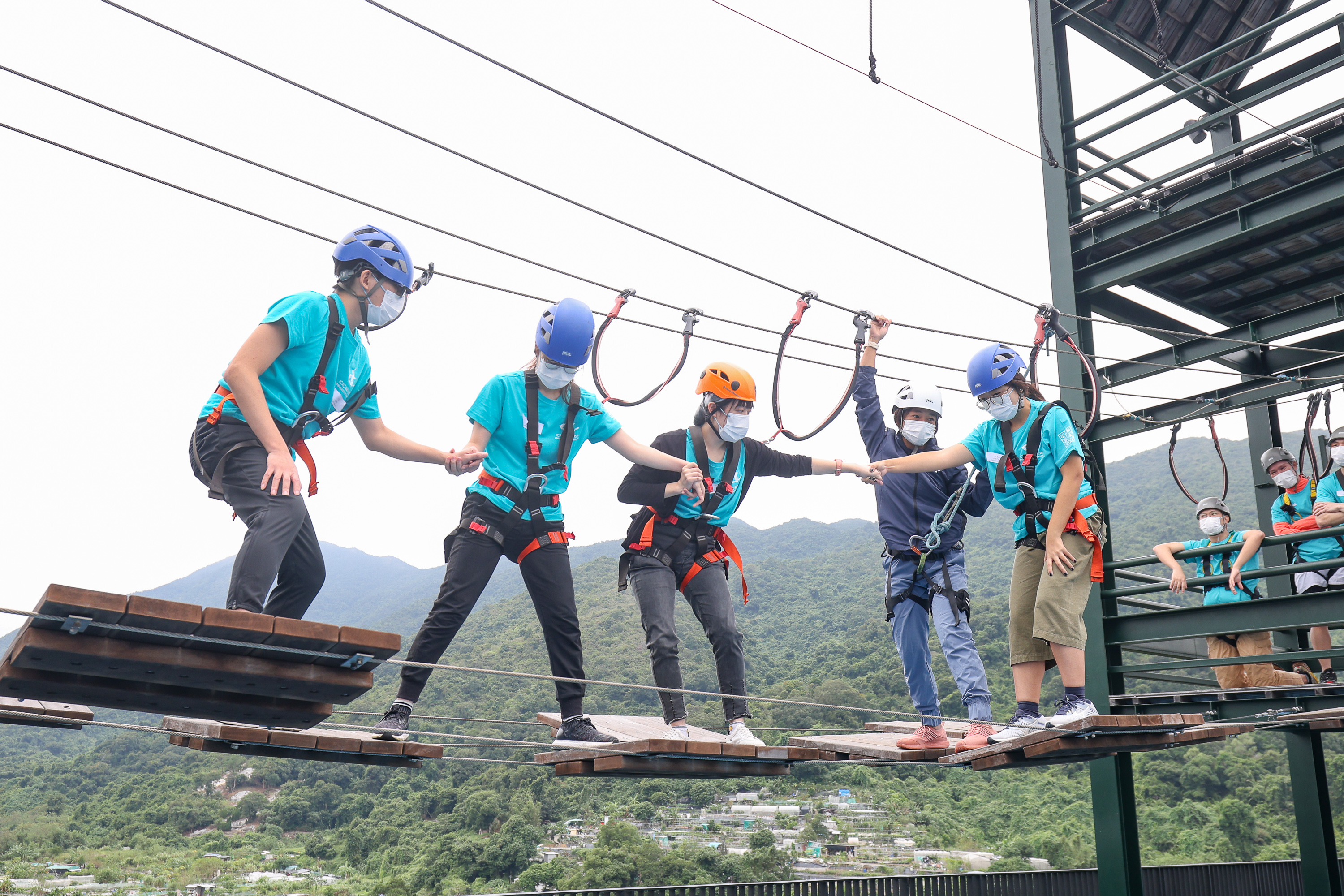
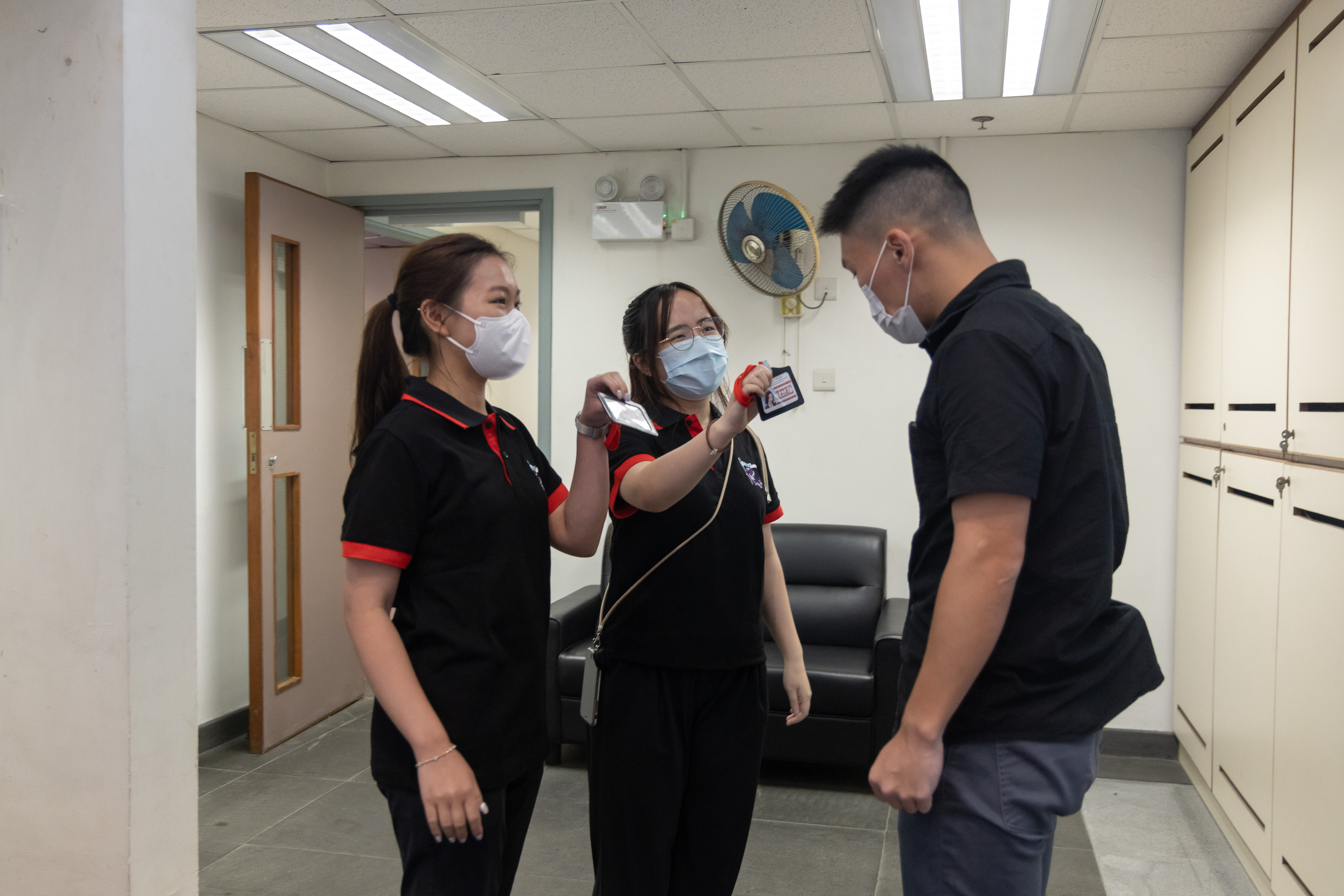
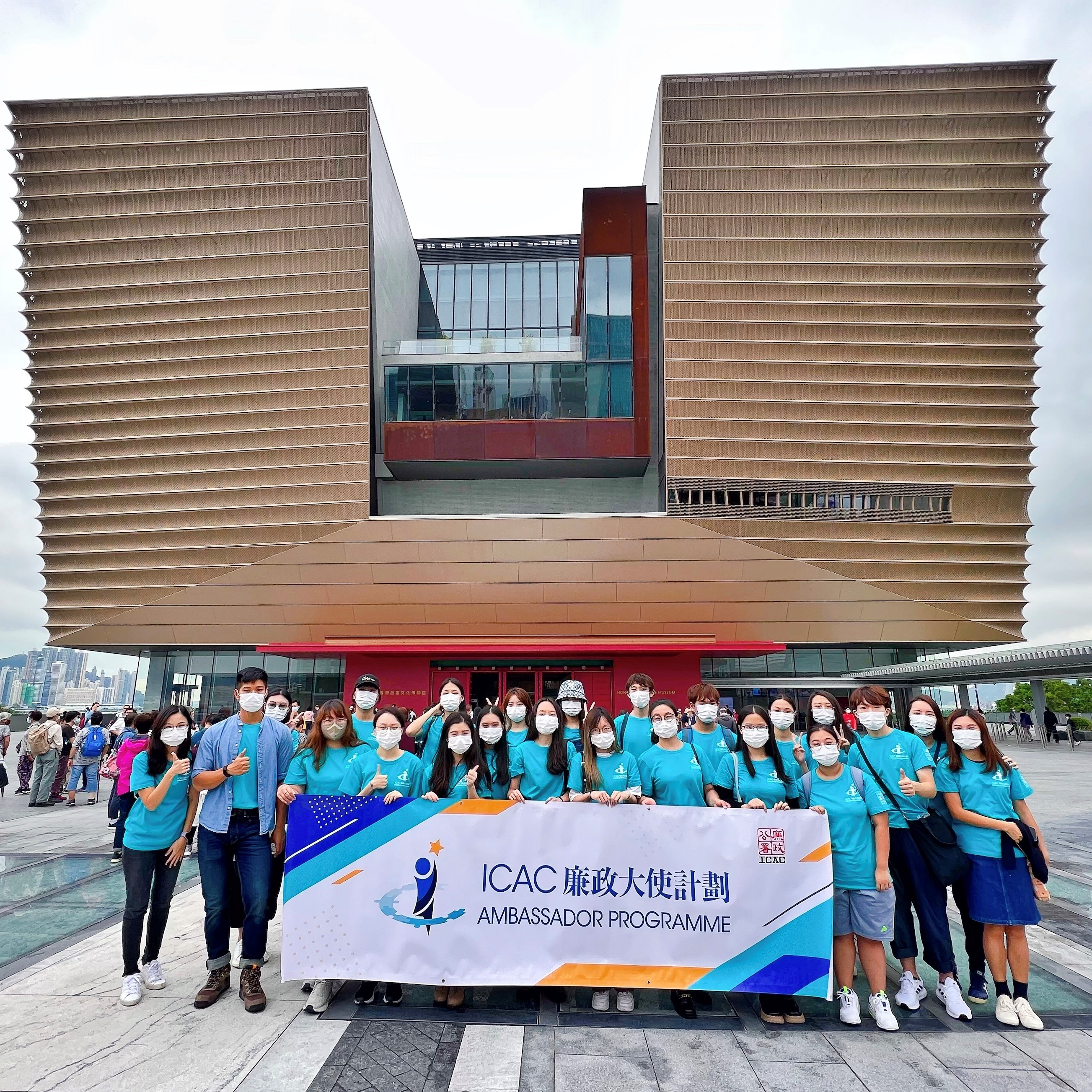
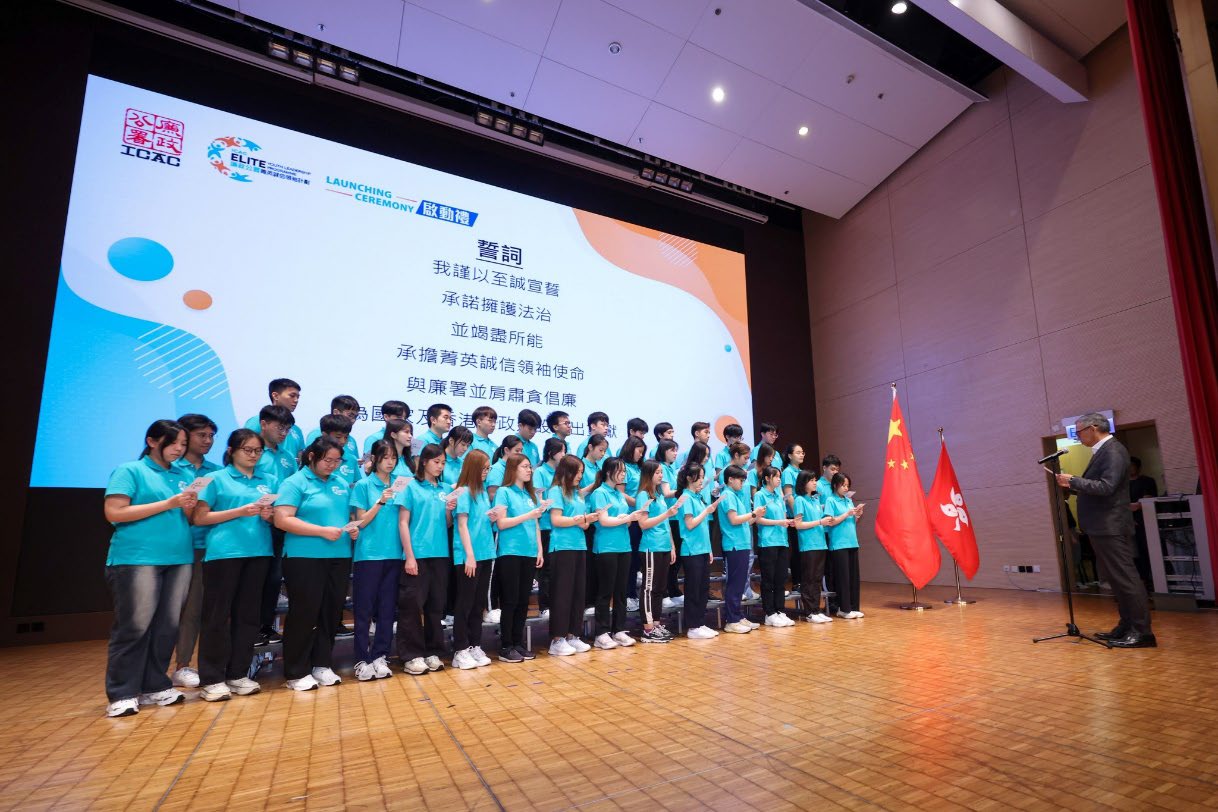
ICAC organises youth integrity engagement programmes for young people of different developmental stages. Students in their tertiary, senior secondary and senior primary education are recruited as young leaders. They are encouraged to help disseminate integrity messages to their peers.
From time to time ICAC also organises large-scale youth integrity projects to provide a platform for our young people to demonstrate their creativity and talents, and to cultivate the core value of integrity and rule of law.

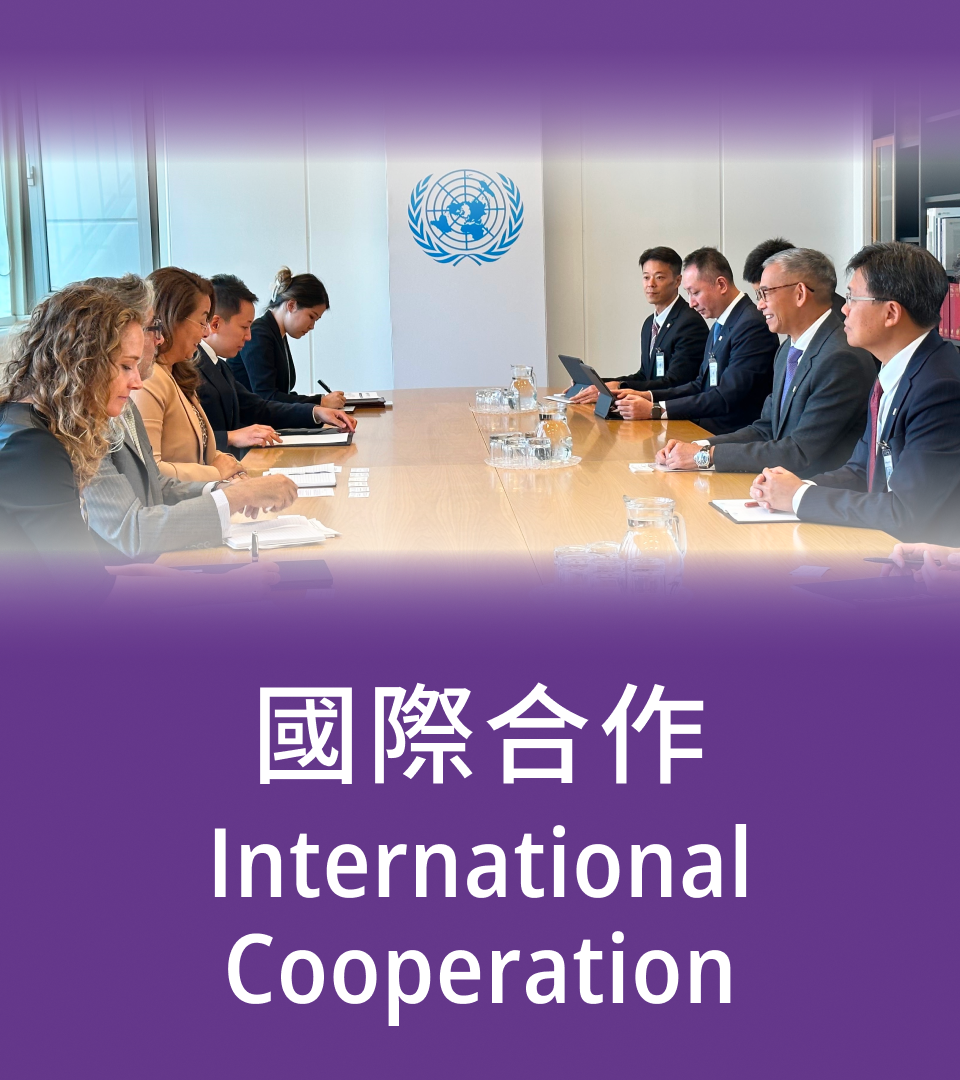
Cross-boundary cooperation is of paramount importance in the effective fight against graft. Leveraging 50 years of anti-graft experience, the ICAC contributes to the global fight against corruption through international cooperation in law enforcement and technical assistance, experience sharing, as well as anti-corruption training under the framework of the United Nations Convention against Corruption.
The ICAC also plays a leading role in the International Association of Anti-Corruption Authorities with a view to establishing a powerful global graft-fighting network together with anti-corruption agencies around the world.
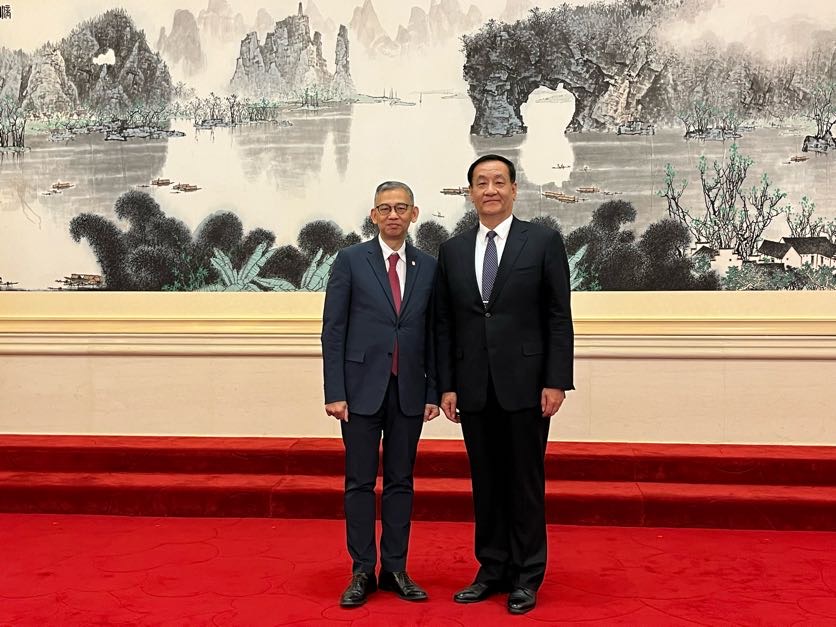
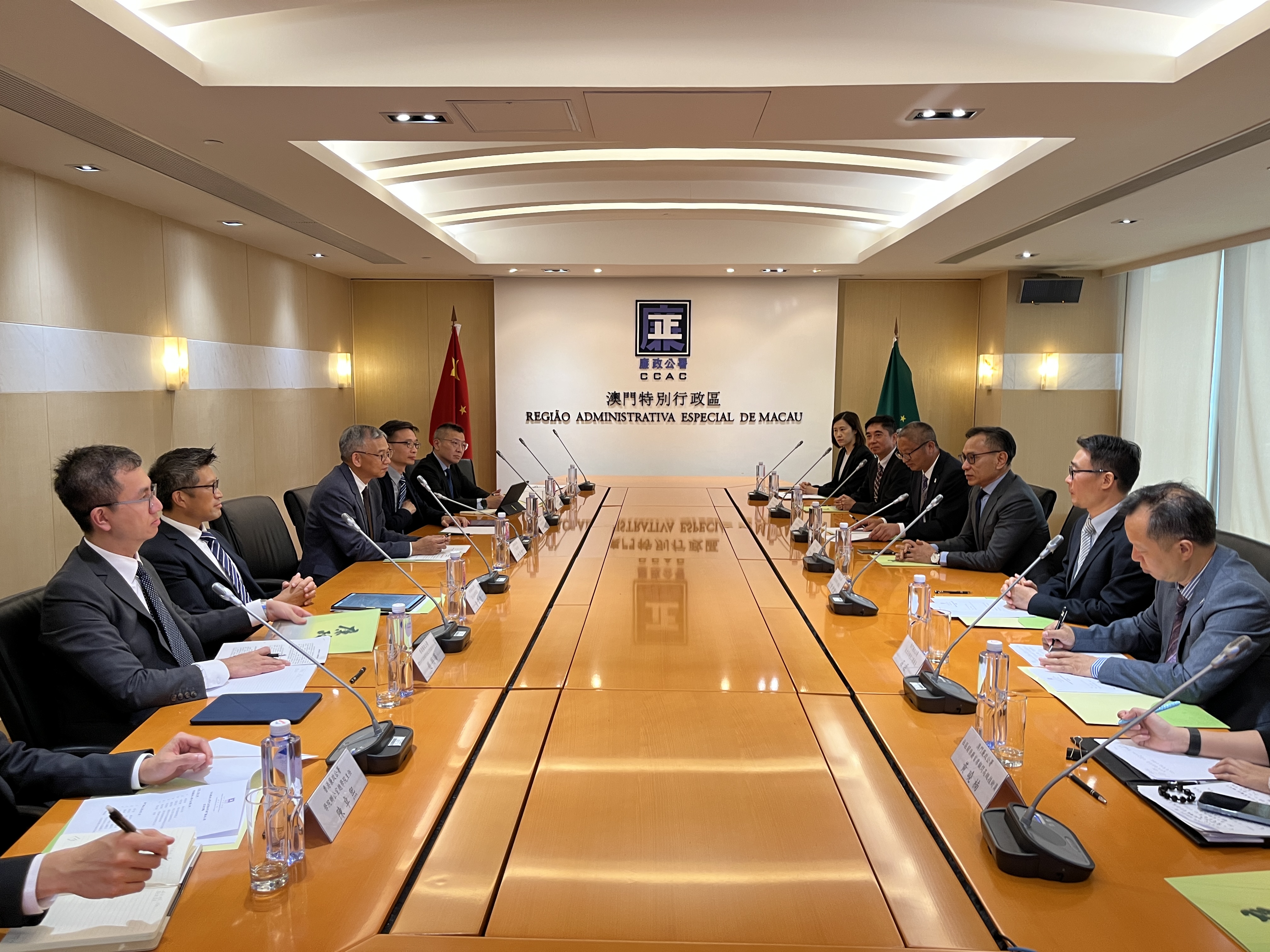
In tackling cross-boundary corruption and the development of clean culture, the ICAC maintains close cooperation with law enforcement agencies in the Mainland and Macao. The ICAC’s efforts are widely recognised by the international community. A number of anti-corruption agencies in different jurisdictions have modelled on the ICAC’s structure and three-pronged strategy.
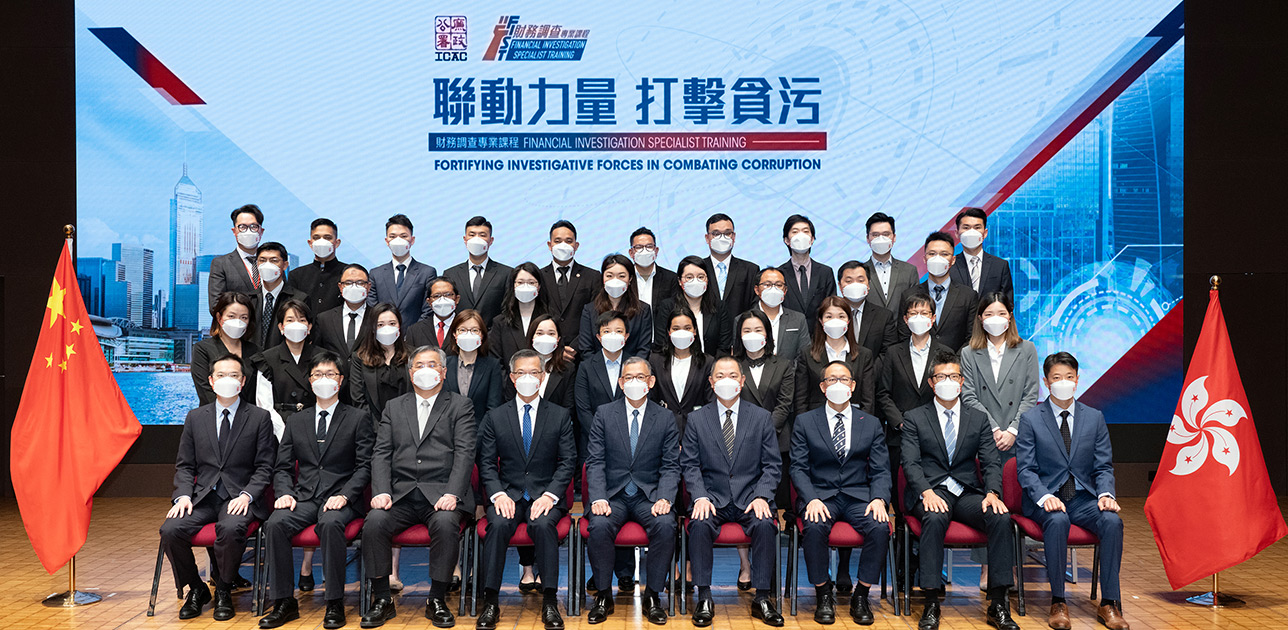
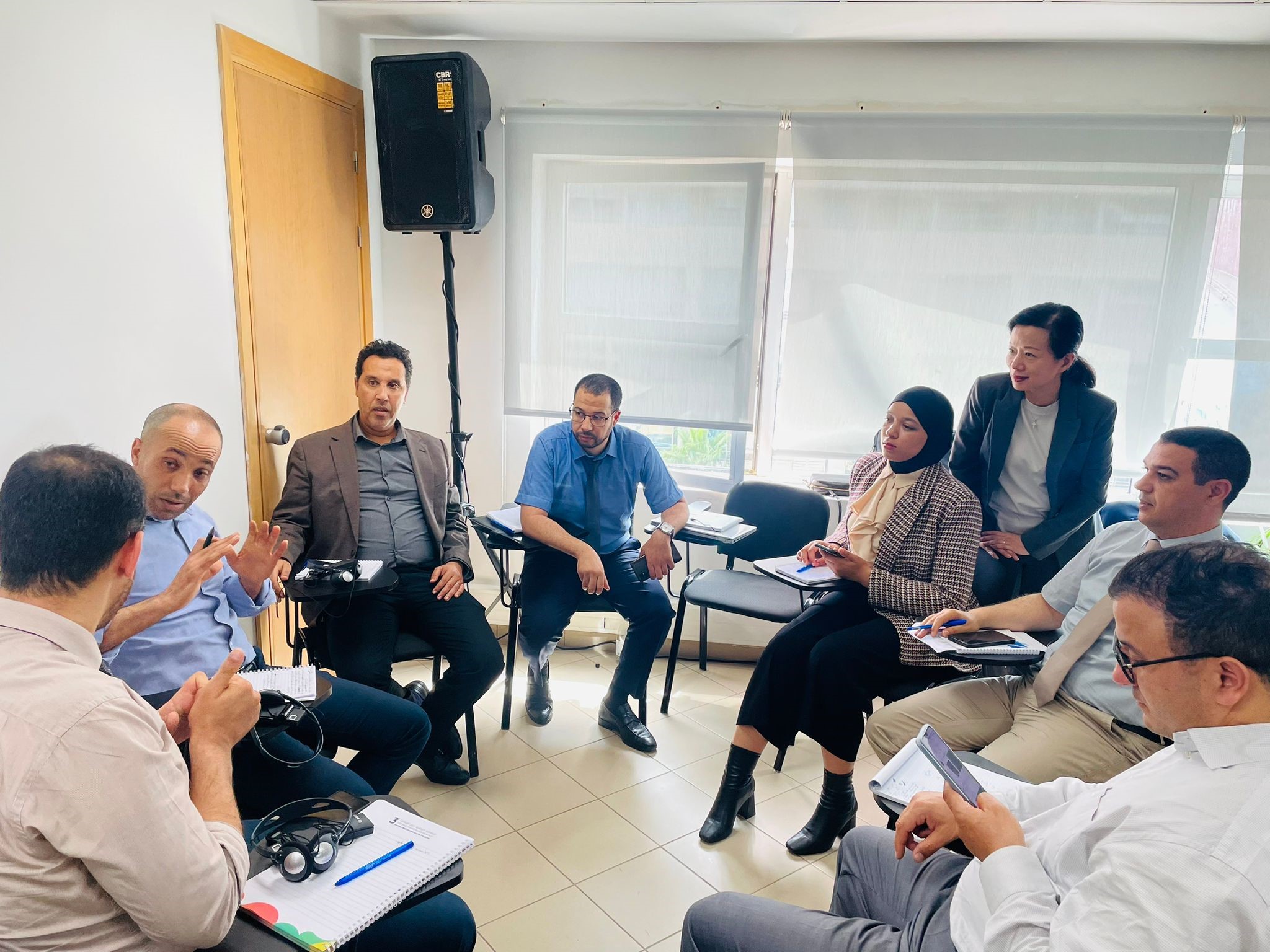
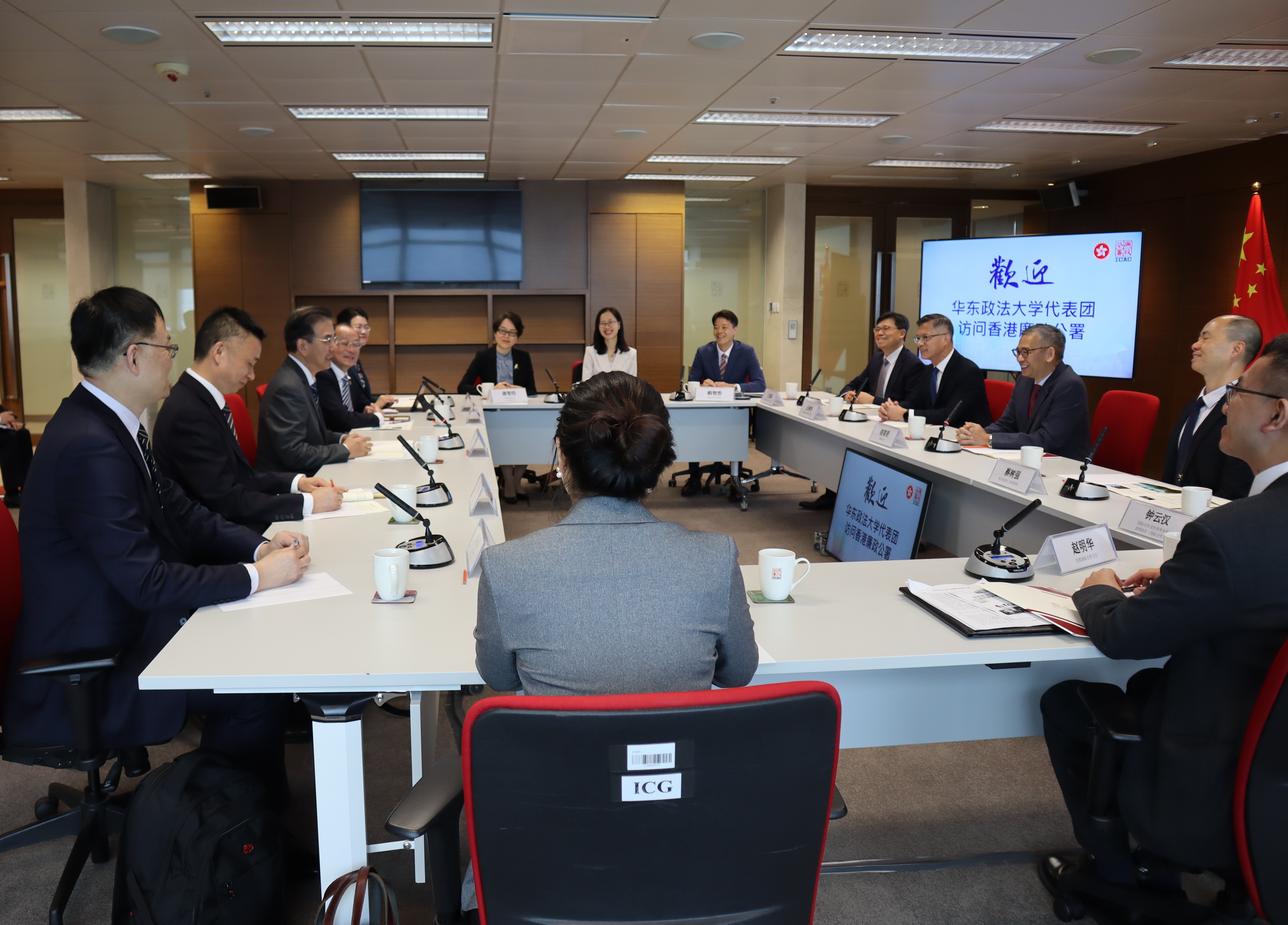
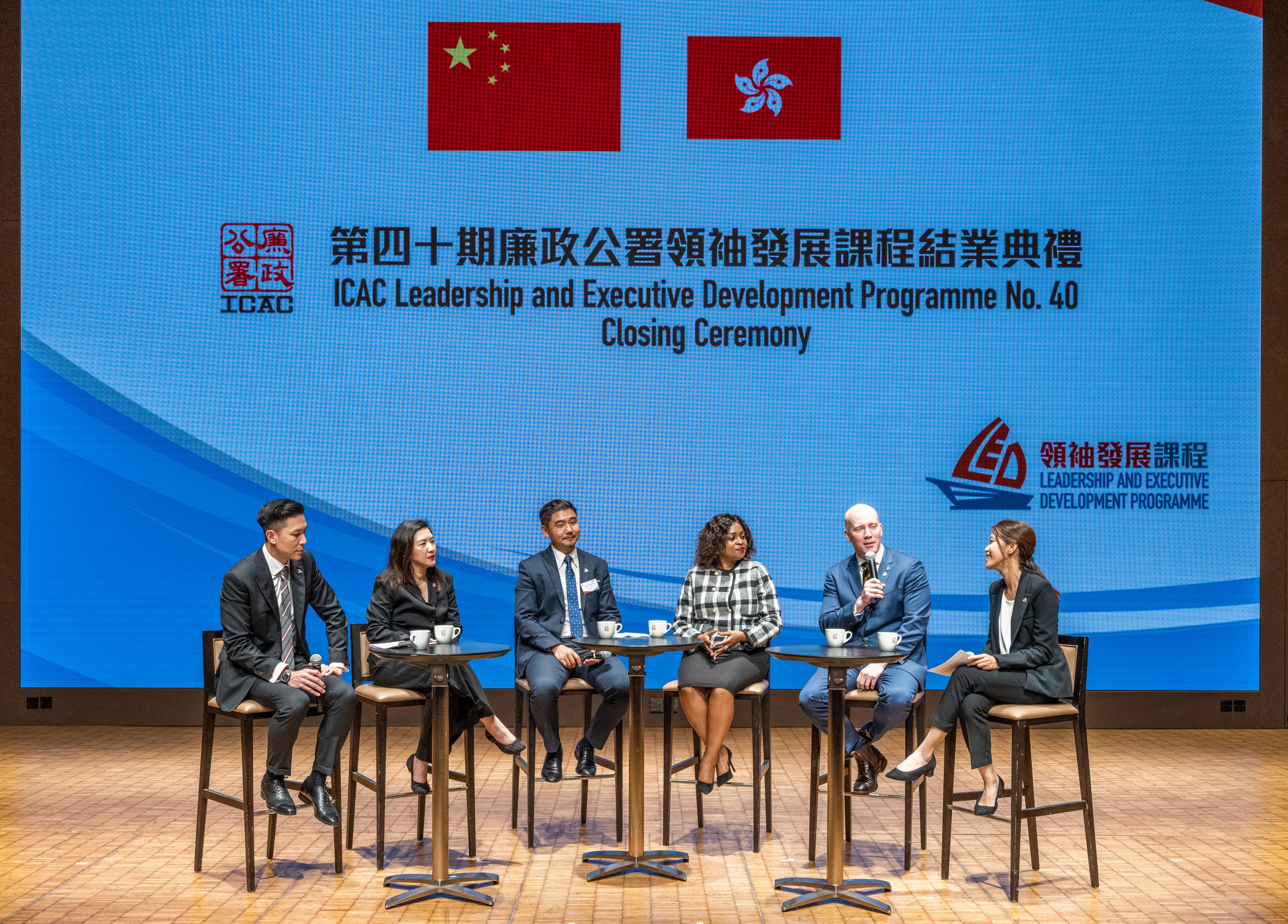
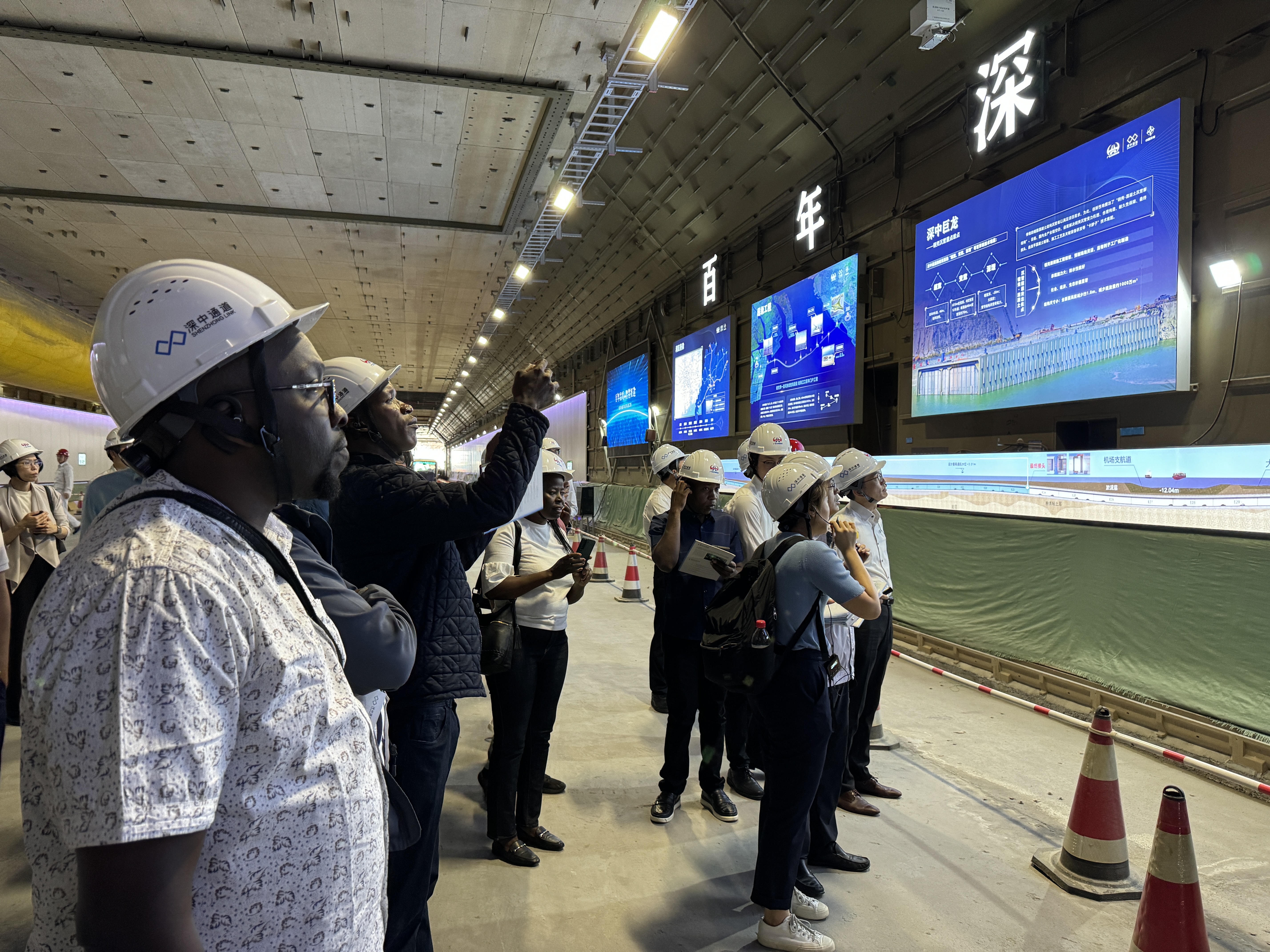





The Hong Kong International Academy Against Corruption (HKIAAC) is committed to building an international platform to foster anti-corruption development in the world. HKIAAC contributes to the fight against corruption through the following strategies:
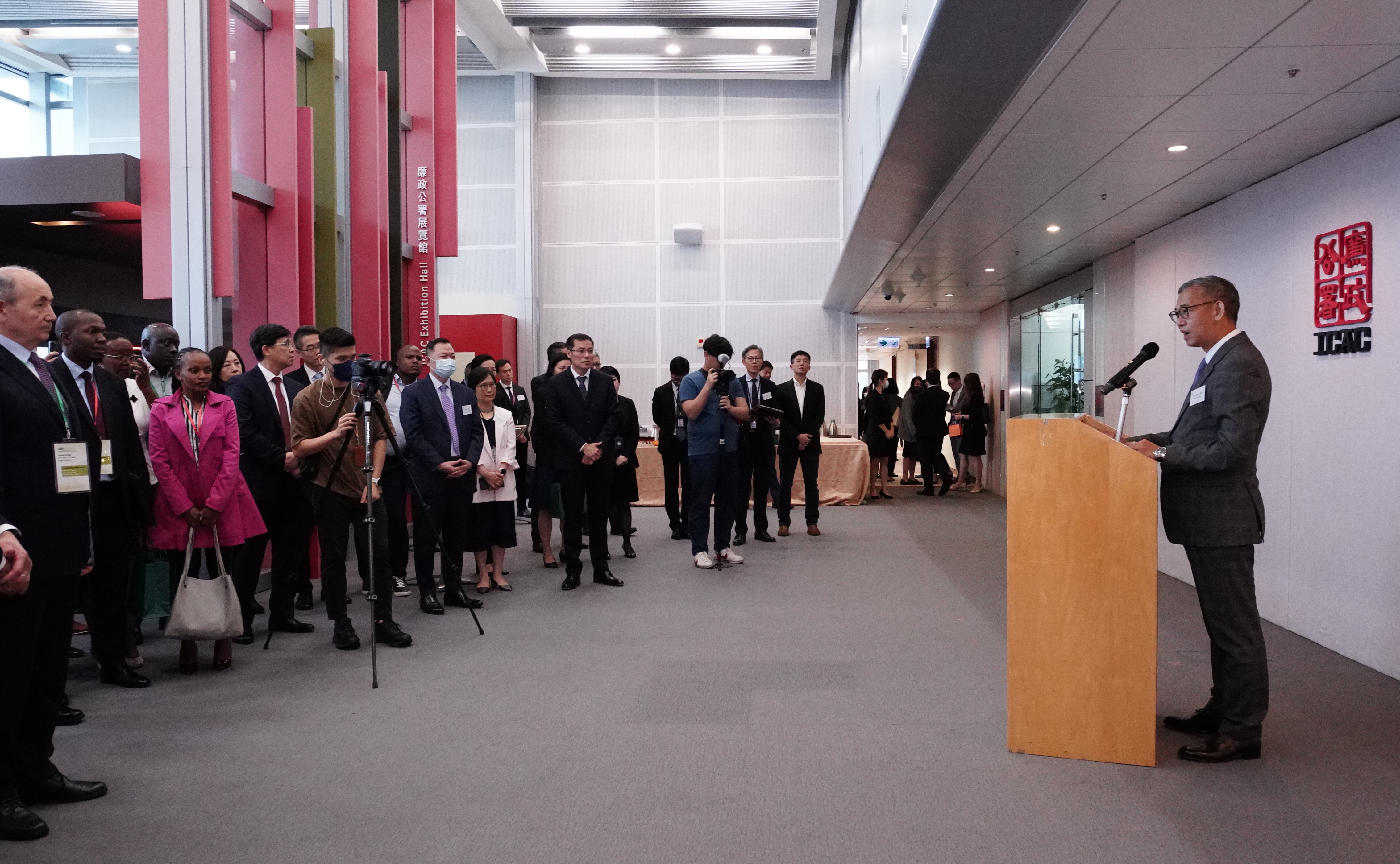

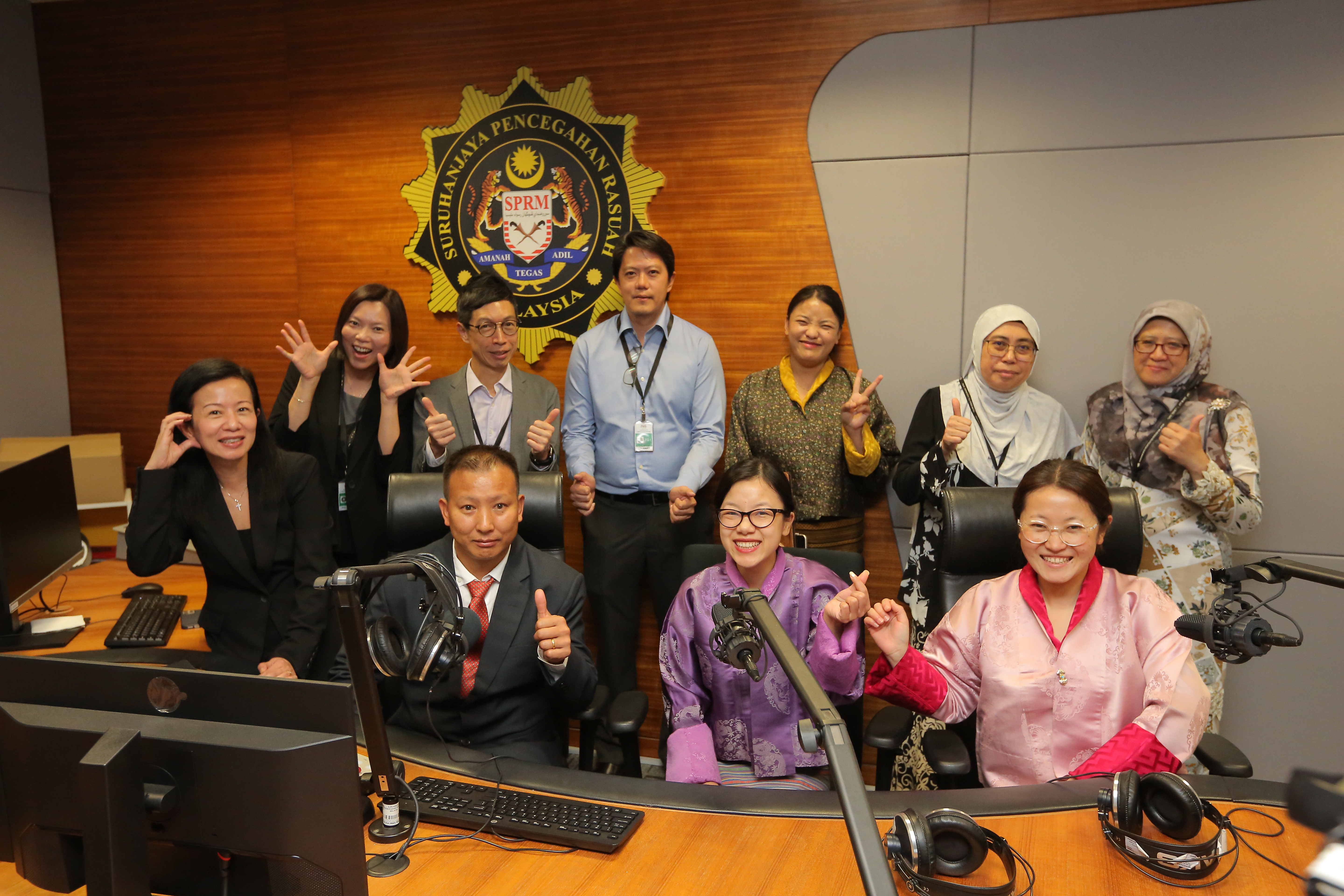
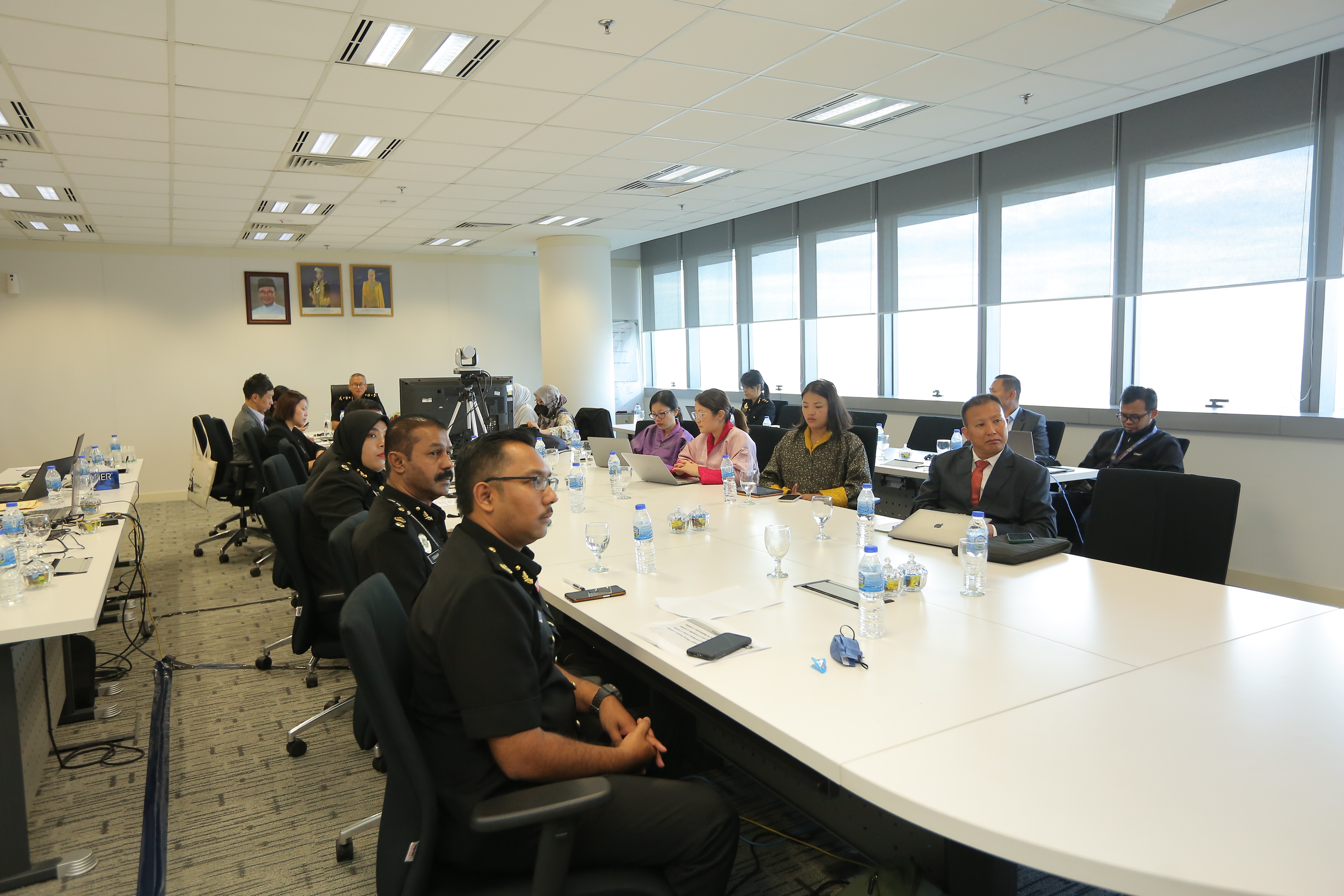
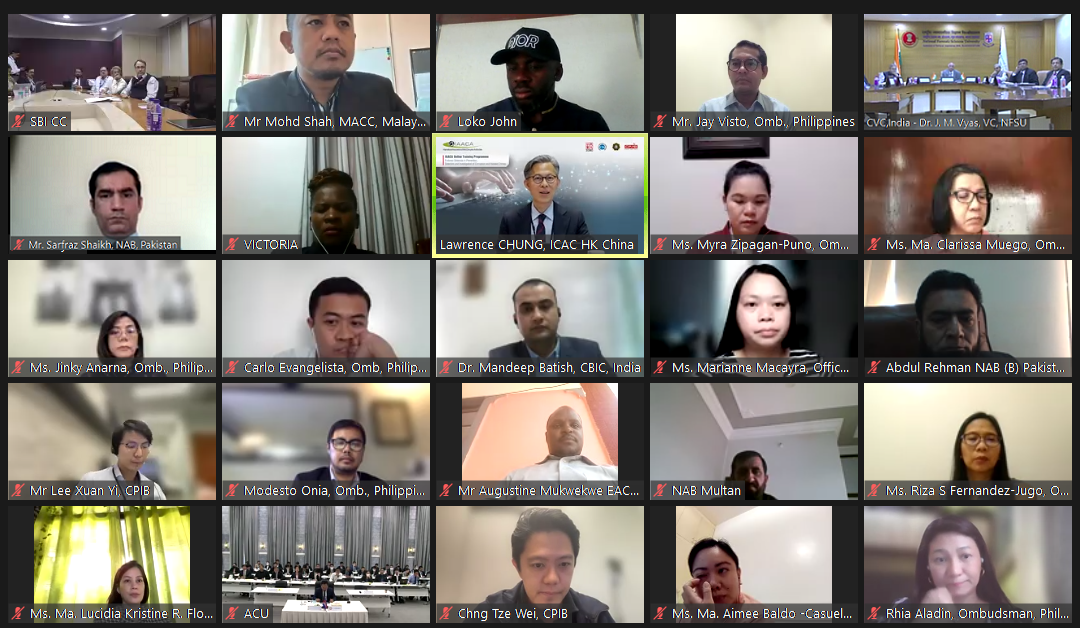
Established in 2006, the International Association of Anti-Corruption Authorities (IAACA) is an independent and non-political anti-corruption organisation with the mandate to promote the effective implementation of the United Nations Convention against Corruption (UNCAC) and assist anti-corruption agencies worldwide in the prevention of and fight against corruption. Around 170 anti-corruption agencies from different countries and regions have joined IAACA as members.
The ICAC took up IAACA Presidency and the Secretariat in 2022. Through IAACA, the ICAC works closely with the member authorities to enhance experience sharing among anti-corruption authorities and professionals, forge closer partnerships with international and regional organisations, and connect anti-corruption fighters worldwide through online initiatives.

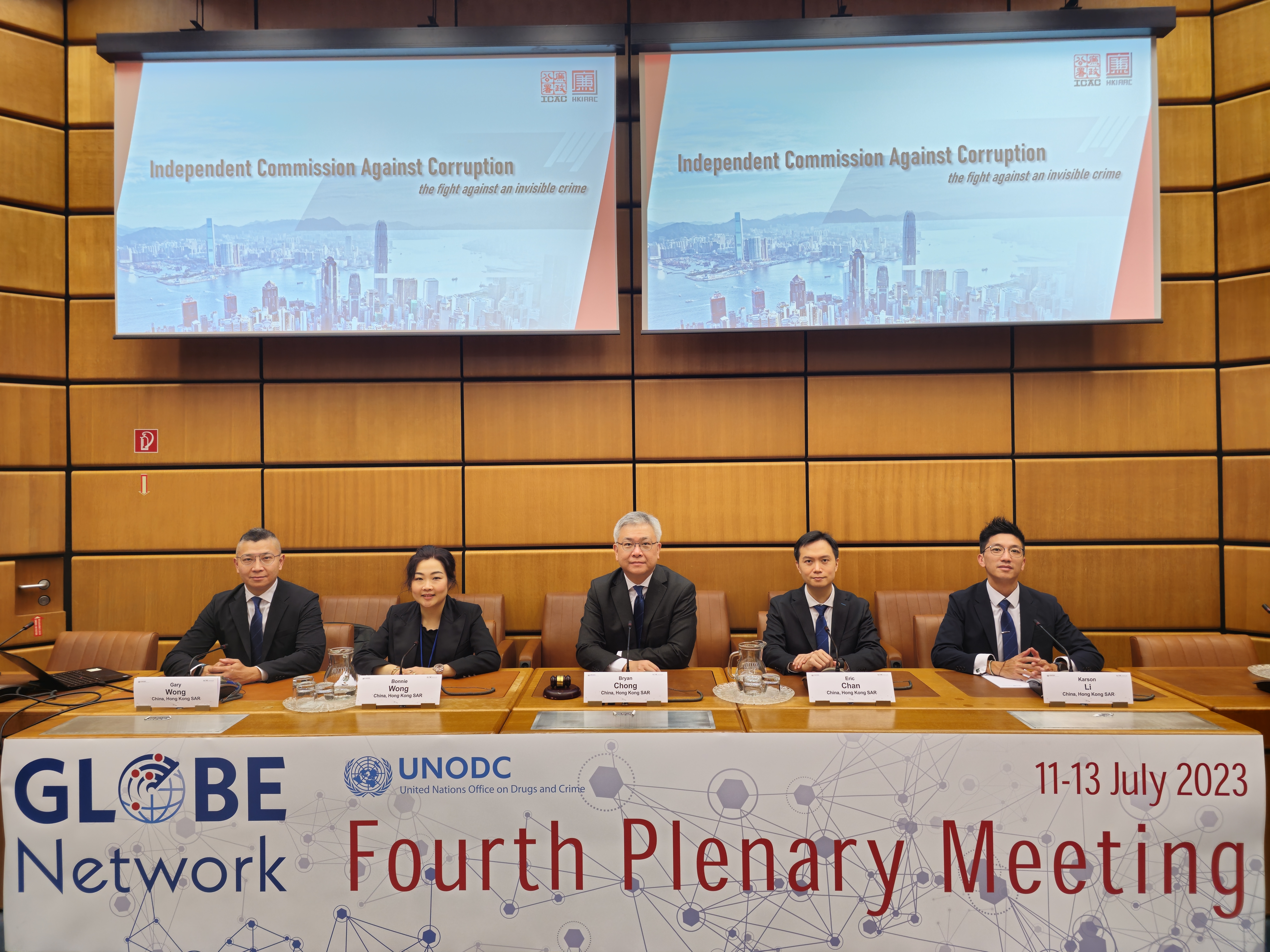
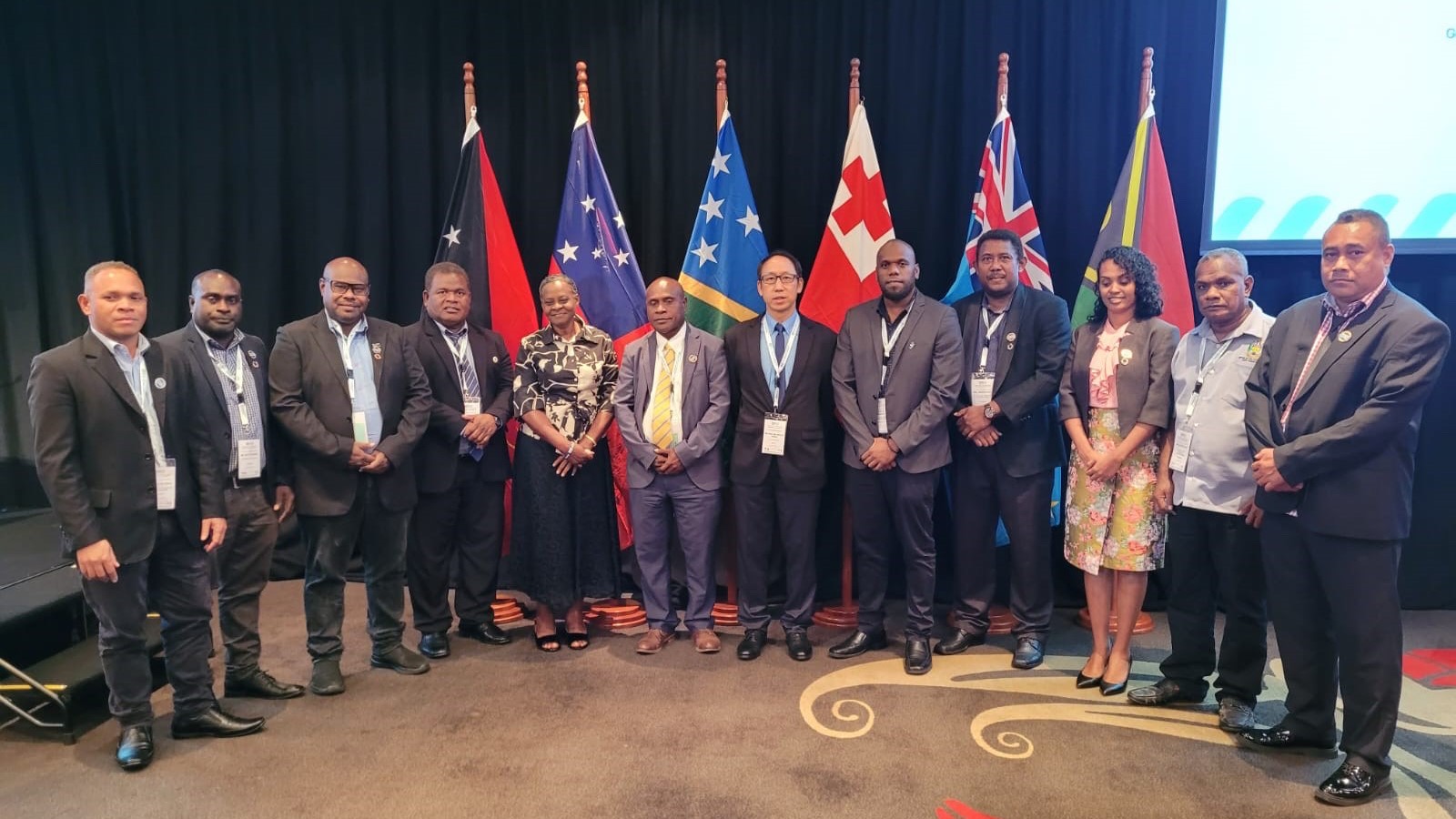
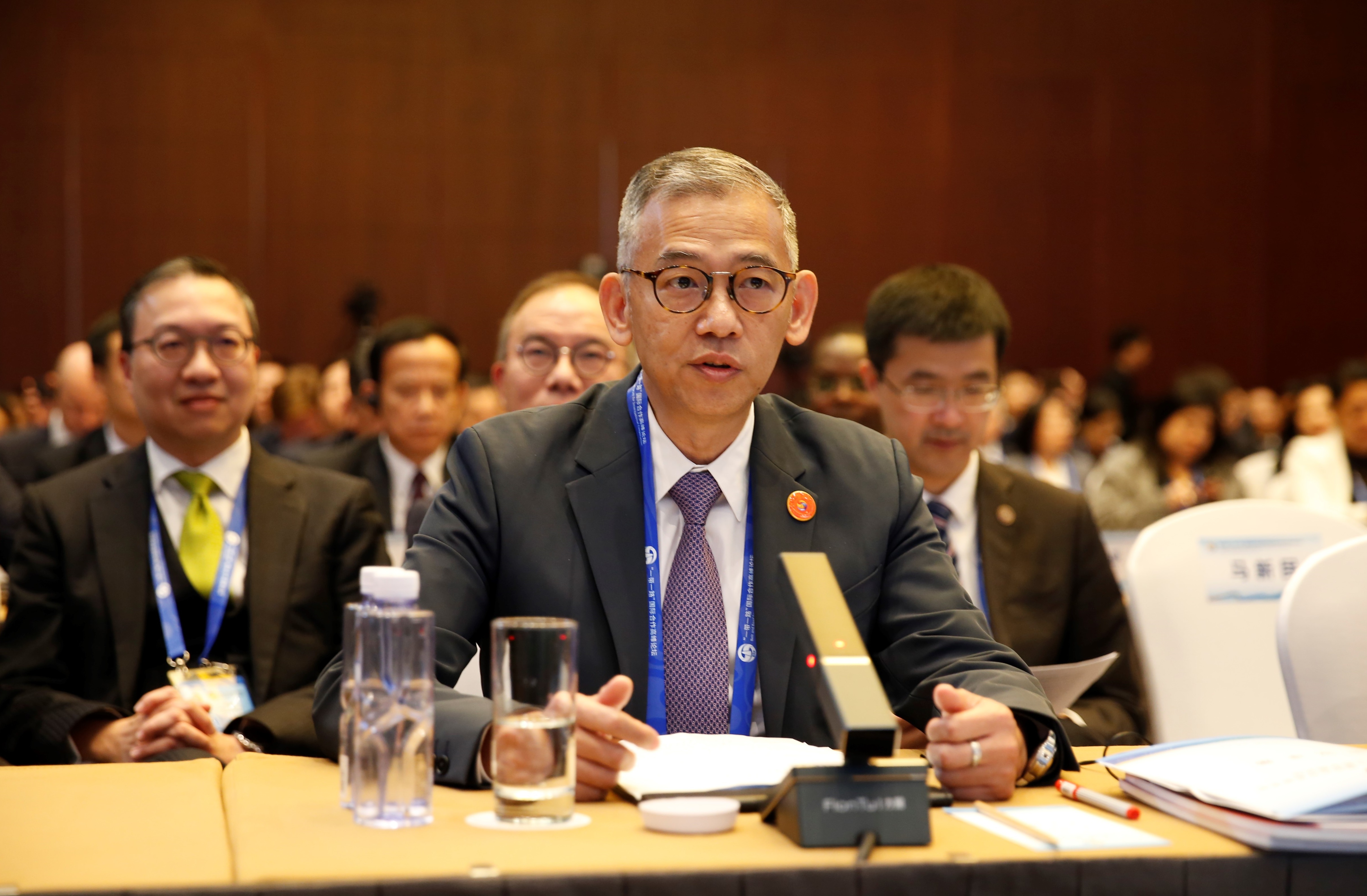
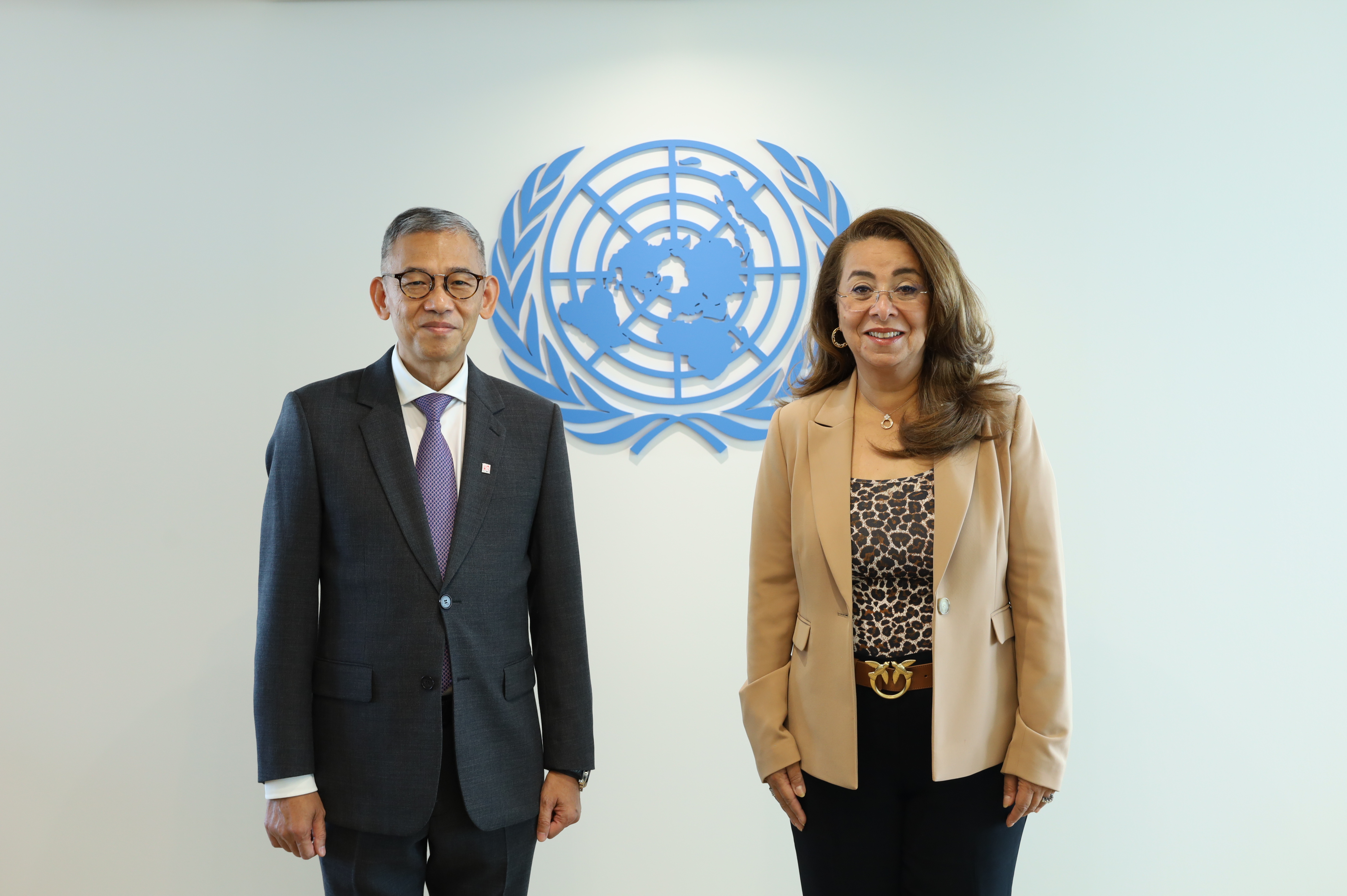
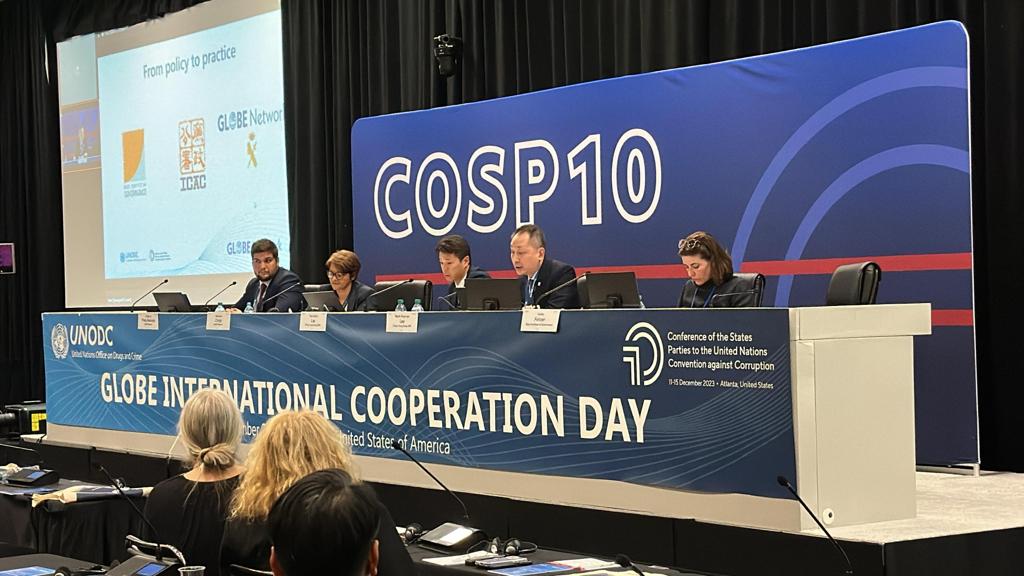
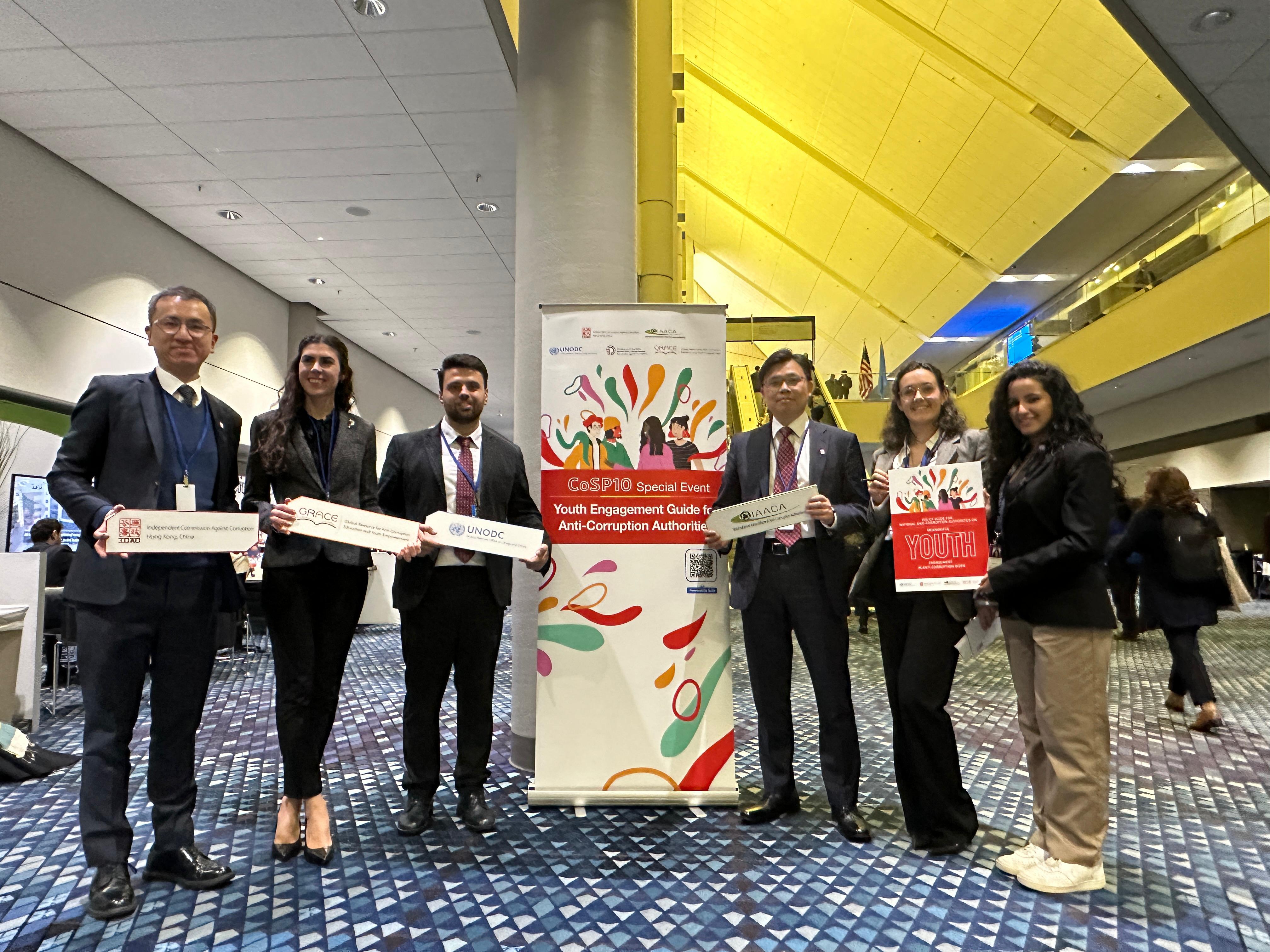
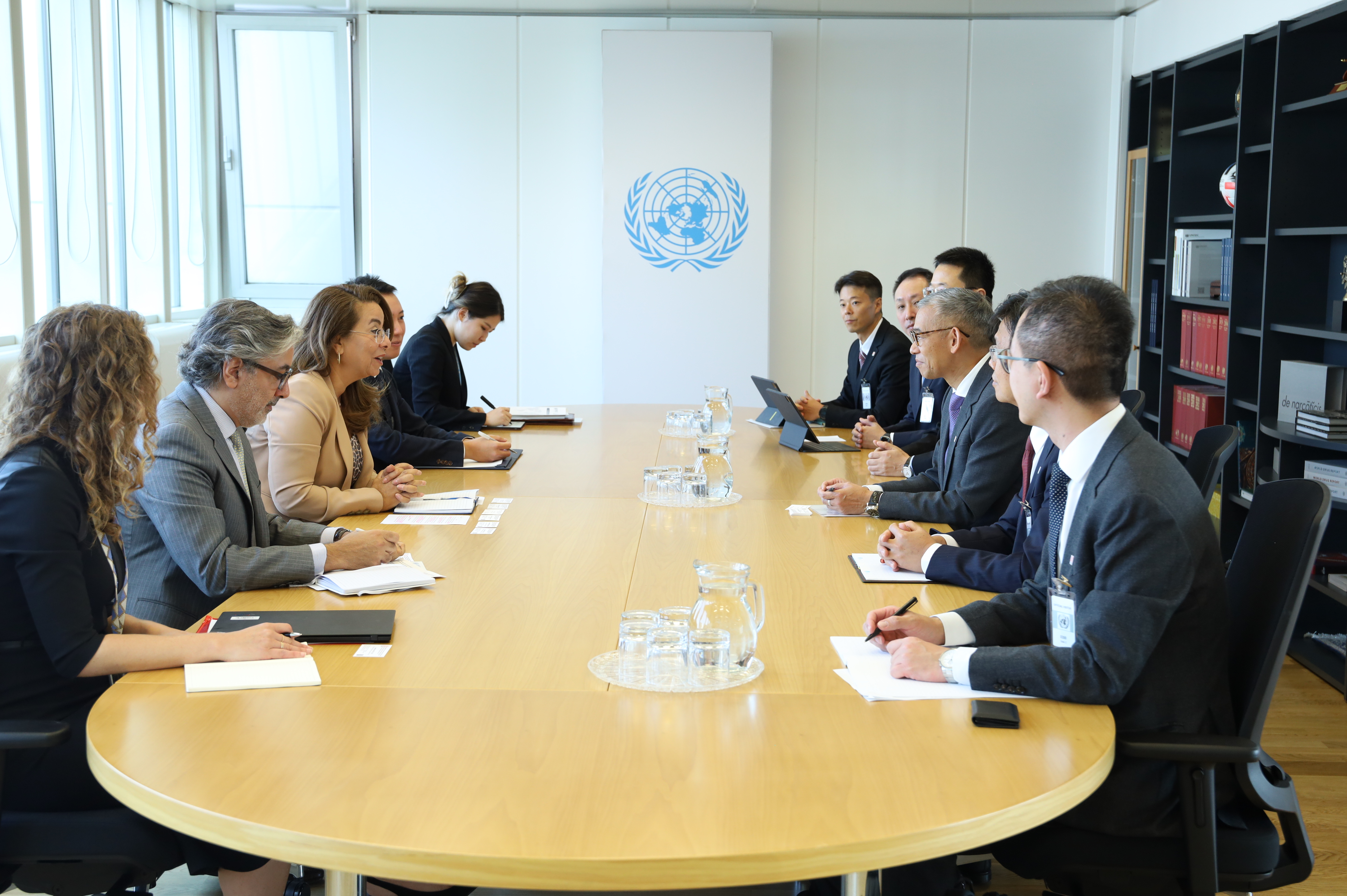
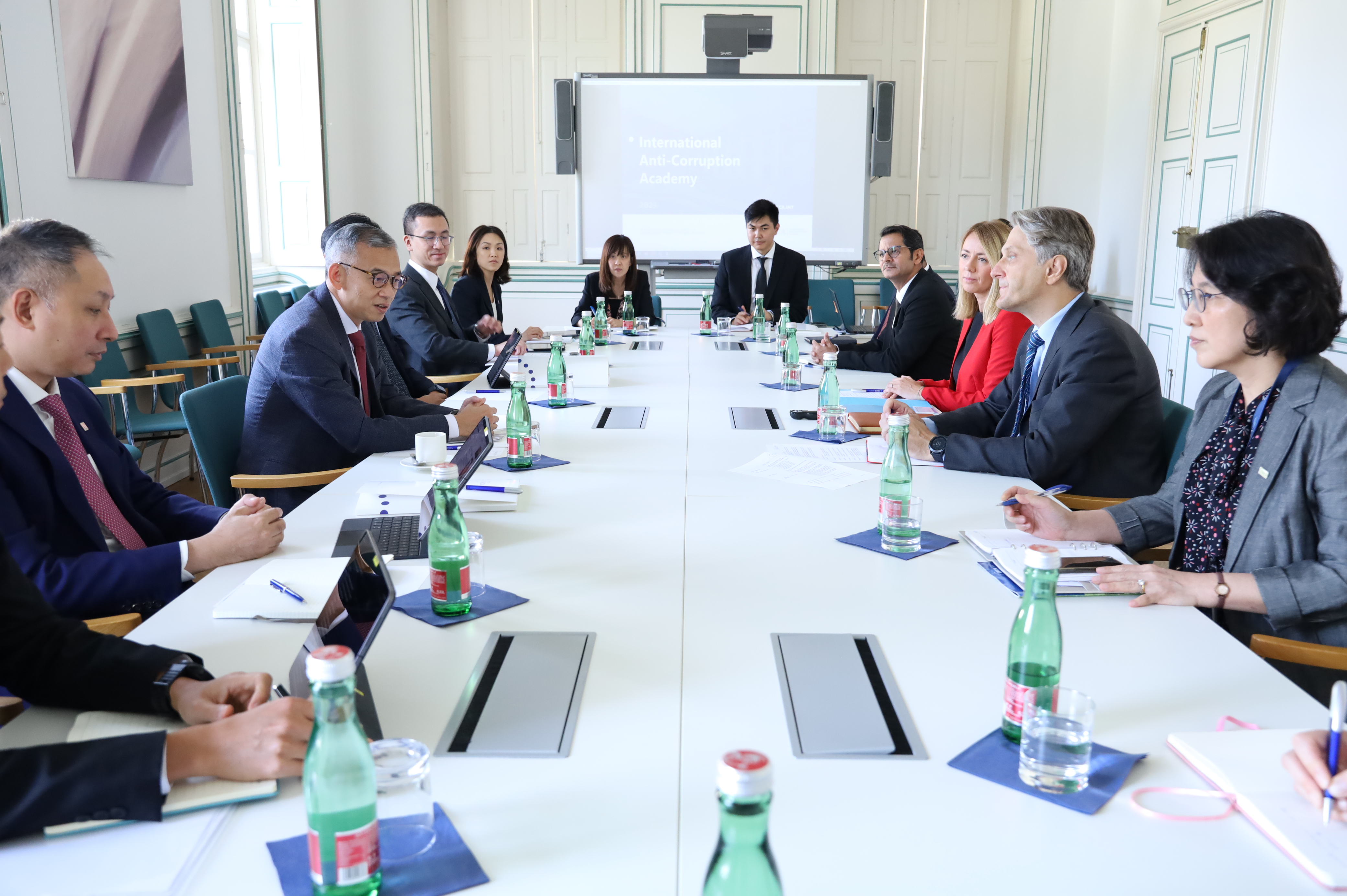
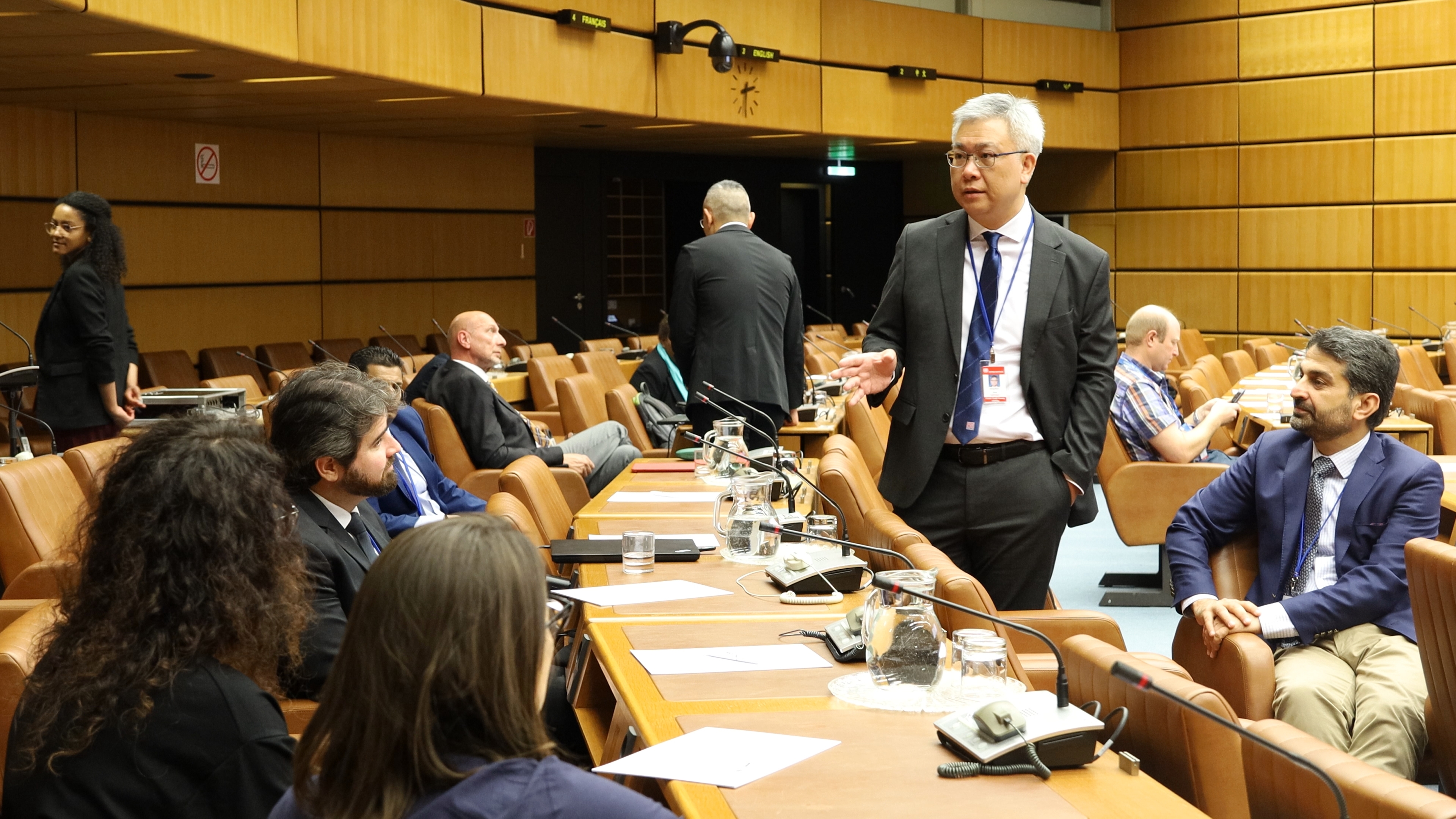
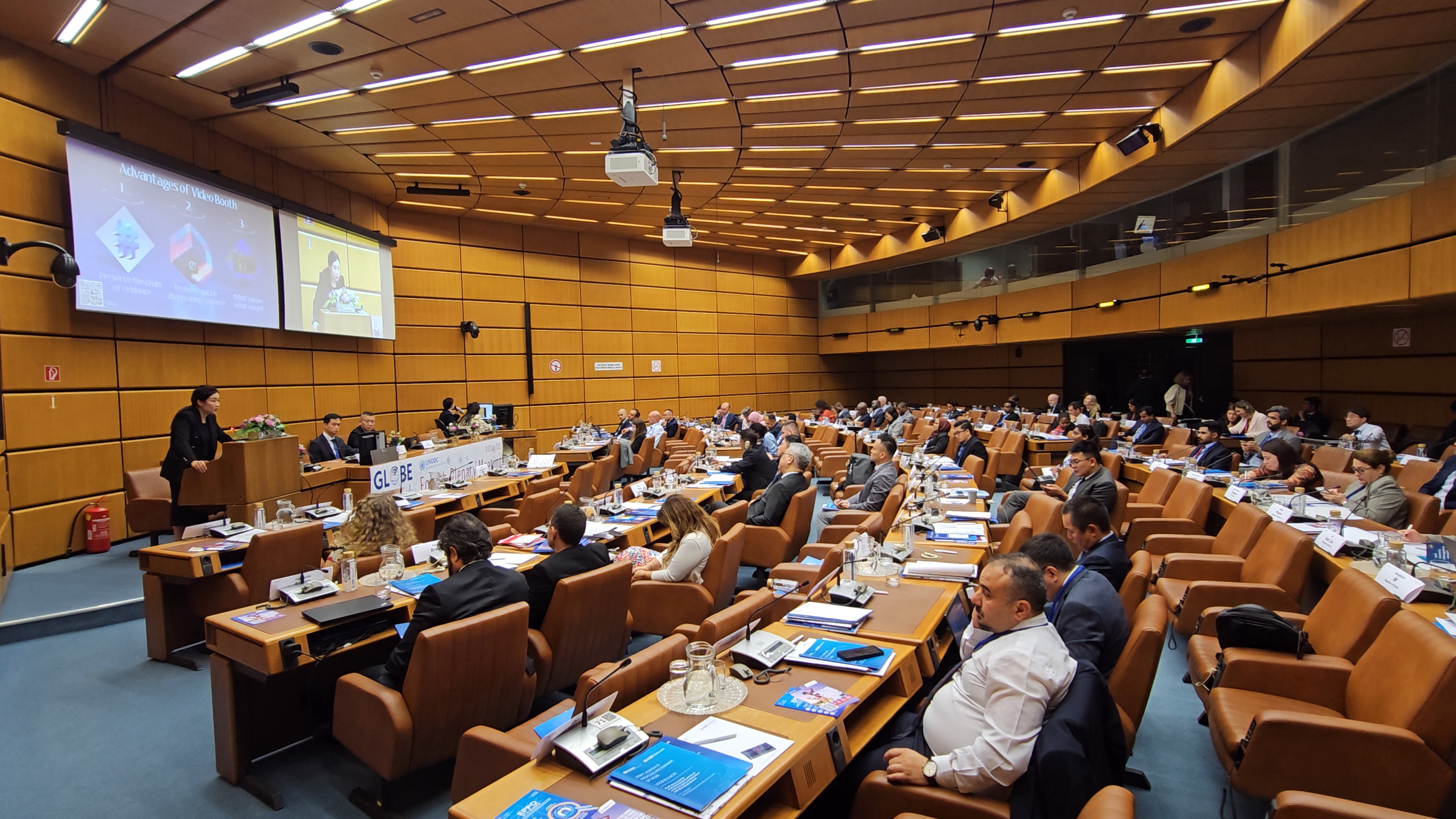
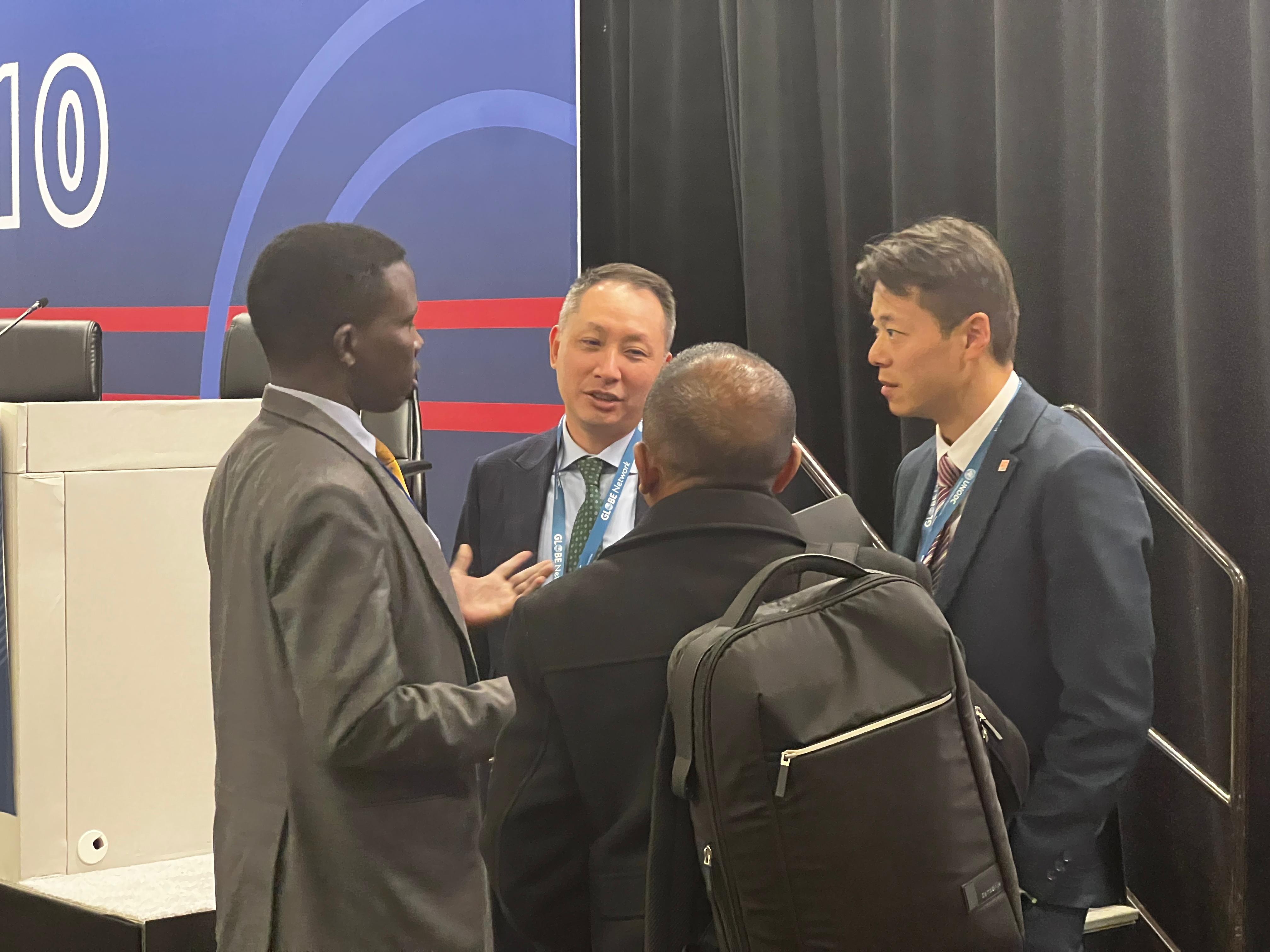
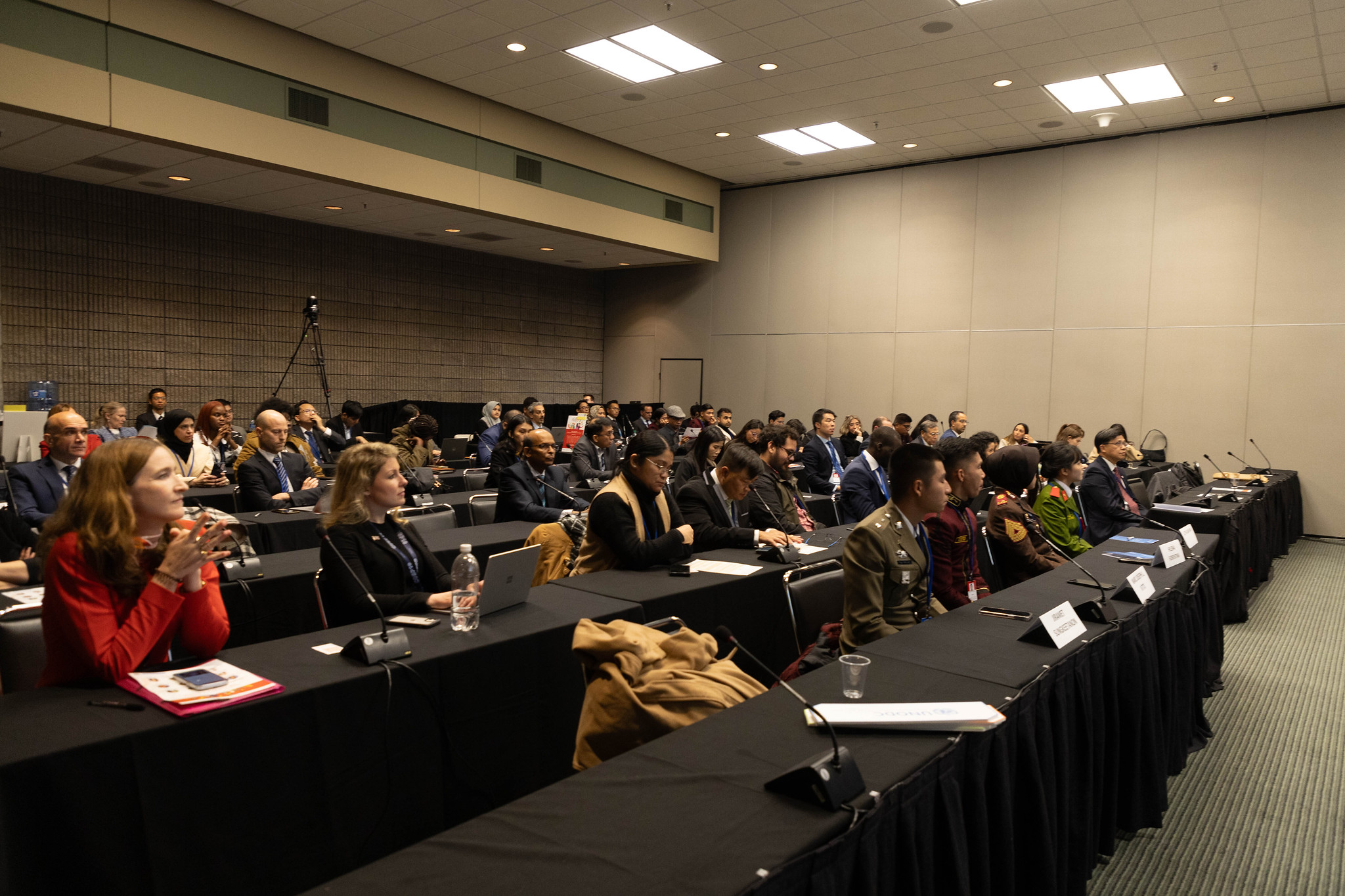
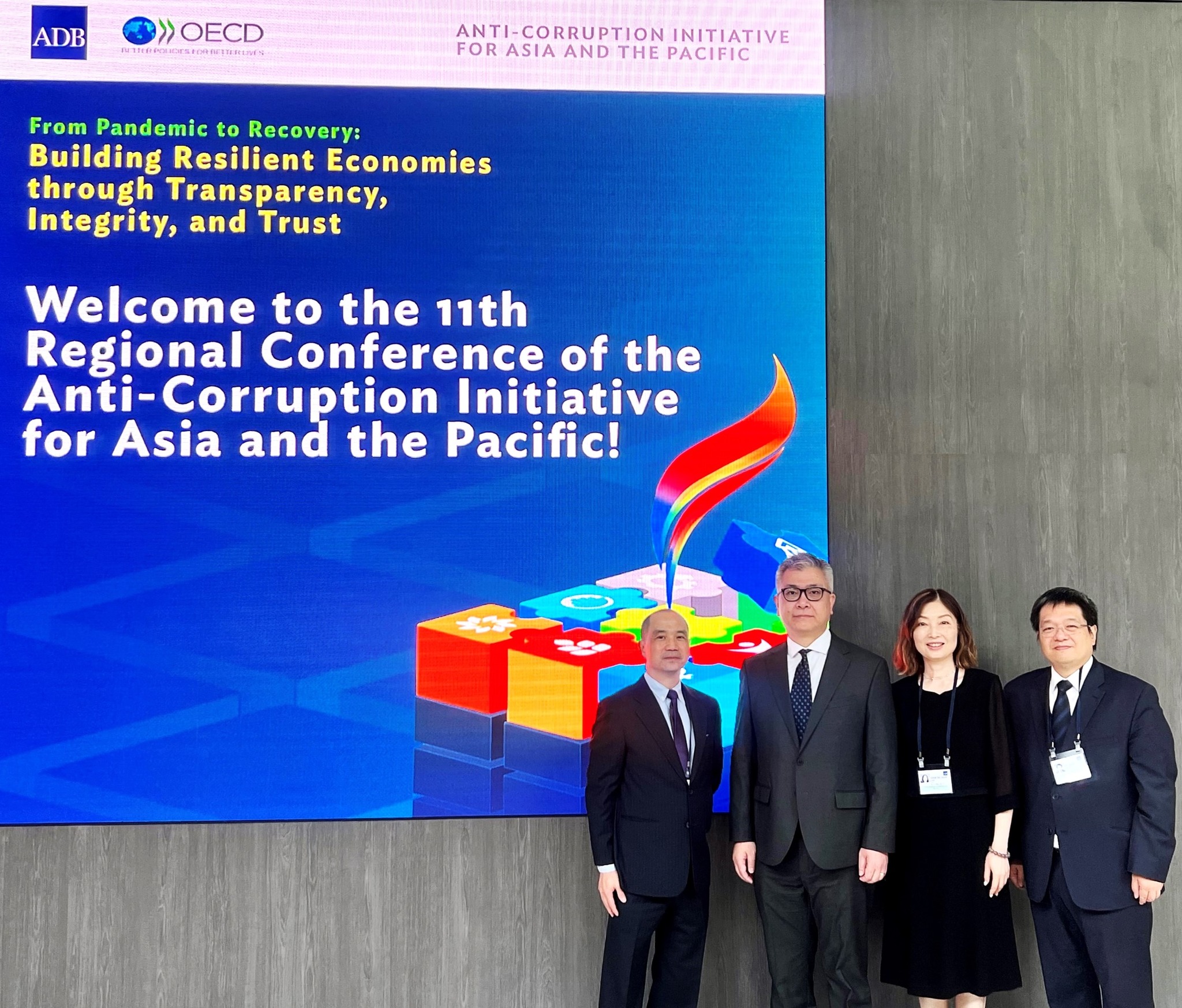
The ICAC actively maintains close communication with the international community and participate in global anti-corruption collaboration platforms. Through various channels, the ICAC exchanges experience with overseas counterparts for better understanding of the latest global corruption trend and anti-corruption strategies, and consolidates the partnerships with them for the fight against corruption in the world.
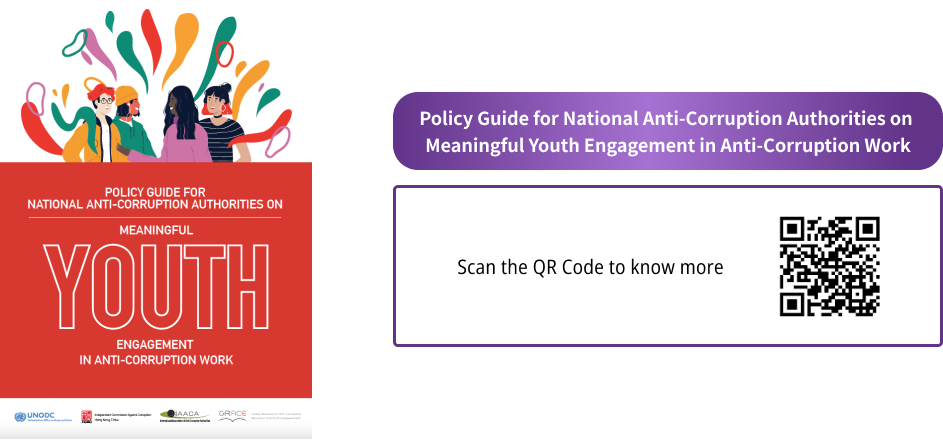
The ICAC also works on a wide range of anti-corruption initiatives with international and regional organisations. For example, the ICAC and the United Nations Office on Drugs and Crime jointly developed a policy guide for national anti-corruption authorities on meaningful youth engagement in anti-corruption work in 2023.